Where to Bet on UFC in the UK: Sportsbook Guide
 Available in US
Table of Contents
- What This Guide Cuts To the Bone
- Contents
- The UK UFC Betting Market in Numbers
- Is Betting on UFC Legal in the UK
- How I Vet a UFC Bookmaker Before Funding It
- The UK UFC Sportsbook Field: What Separates the Operators
- The UFC Markets You Will Actually Use
- Reading a UFC Price Without Getting Confused
- UFC Overround Comparison
- Live Betting and the Streaming Question
- The Paramount Deal and What It Means for UK Viewers
- Bonuses After the 2025 Levy and the 2026 Duty Increase
- Deposits, Withdrawals and How Fast You Get Paid
- Mobile Apps and Why Most UK Punters Live On Them
- Integrity, Suspicious Action and Two 2025-2026 UFC Cases
- Affordability Checks, Stake Limits and Knowing When to Stop
- Frequently Asked Questions
- How This Guide Is Maintained and What I Watch Next

I have been pricing UFC fights for British sportsbooks for the better part of a decade, and the question I get most often from UK punters is some version of the one in the title — where, exactly, are they meant to bet on UFC. The honest answer is that the UK has one of the most tightly regulated and competitive UFC betting markets in the world, and most punters walk past most of it because nobody bothers to explain what makes a UK-licensed sportsbook different from the global noise.
The practical reality is short. The UK sports betting market is now worth roughly £2.48 billion in annual gross gambling yield, and around 6.6 million British adults place online sports bets in a given year. UFC sits in an awkward but lucrative corner of that pool. Every UK-licensed bookmaker carries fight markets, but none of them streams the cards because the broadcast rights sit with a TV partner. The bets are British and regulated; the pictures live somewhere else.
I will take you through the checklist I run myself before a fight week: what the regulated sportsbook tier looks like in 2026, why a UK Gambling Commission licence is the only non-negotiable, how to read a UFC price, which markets offer edge in MMA, and how the new gambling levy, the April 2026 duty hike, and a run of betting-integrity scandals are quietly reshaping what your bookmaker can offer.
What This Guide Cuts To the Bone
- UFC betting in the UK is legal only on sportsbooks with a UK Gambling Commission remote betting licence.
- The Paramount deal worth $1.1 billion a year reshaped global UFC viewing, but TNT Sports still holds the UK broadcast. Your bookmaker shows markets, not pictures.
- The best UK operators run overround under 4% on major UFC cards; industry average is 5-7%. That gap is the largest invisible cost most punters never measure.
- Heavyweight finishes 65% of fights by KO; lower weight classes lean to decisions. Pick method-of-victory by division.
A UKGC licence and an overround you can see beat any welcome offer you cannot calculate.
Contents
- Key Conclusions
- UK Market Snapshot
- Is It Legal
- Choosing a Bookmaker
- The UK Sportsbook Field
- UFC Bet Types
- Reading UFC Odds
- Live Betting & Streaming
- The Paramount Deal
- Bonuses & the 2025 Levy
- Deposits & Withdrawals
- Mobile Apps
- Integrity & Cases
- Responsible Gambling
- FAQ
- Editorial Methodology
The UK UFC Betting Market in Numbers
A junior colleague once told me, with full confidence, that UK sports betting was a sleepy market dwarfed by the United States. He guessed an annual gross gambling yield of two billion. The real figure for the financial year ending March 2025 is £12.6 billion across the entire industry — up 9.3% year on year — with remote betting alone contributing £2.6 billion. He looked, briefly, like a man who had just discovered an extra room in his house.
The British market is mature, dense and adult. Andrew Rhodes, chief executive of the UK Gambling Commission: “Recent data published shows that total gross gambling yield (GGY) is at its highest ever level at £15.6 billion. Participation in gambling has remained stable at 48%, just under half of the adult population in Great Britain.” Sports betting alone delivered 56.64% of the UK online gambling market’s revenue in 2024, and it is still the fastest growing of the major verticals.
£12.6bn
Total UK gambling industry GGY, year ending March 2025, up 9.3% year on year.
£2.6bn
UK remote betting GGY across all sports for the same period.
56.64%
Share of UK online gambling revenue delivered by sports betting in 2024.
6.6 million
British adults placing sports bets online, around 38% of UK online gamblers.
13.5m
Average monthly active UK online gambling accounts in Q1 2025.
£2.48bn
UK sports betting market size at the start of 2026.

UFC sits inside that £2.6 billion remote betting pot, outweighed in pure handle by football (£1.3 billion) and horse racing (£766.7 million). What UFC has, instead, is engagement density. The product runs roughly 43 times a year — 13 numbered events and 30 Fight Nights in 2026 — and every card brings a watchable concentration of markets that football cannot match across 90 minutes of one match. Average fight length sits around 11 minutes, and 92% of bouts end in a finish or judges’ scorecards. UFC bet-builder material is almost without rival.
UFC is one of the few global sports where the UK regulator’s footprint is larger than the underlying broadcast deal. Every fight market on a UK sportsbook is priced under UKGC oversight, even though the bookmaker cannot show you the feed. Your money is protected by British law, even if the pictures stream from somewhere else.
The geographic profile matters. UK is in the top five global UFC markets, a position the territory has held since Michael Bisping took middleweight in 2016 and Leon Edwards won welterweight in 2022. The MMA core skews male, 25-44, and overwhelmingly mobile — 95% of UK online gambling happens at home, and in the 18-24 age band, 76% gamble on phones.
Is Betting on UFC Legal in the UK
Every January I get the same two-line email from someone who has just discovered UFC: “Is this even legal to bet on in the UK?” The answer is so dull it borders on anti-climactic. Yes, UFC betting is legal if — and only if — the operator holds a remote betting licence from the UK Gambling Commission. There is no separate MMA licence. A general remote betting licence covers everything from a darts handicap to a UFC main event.
What is not legal is betting through an offshore sportsbook without a UKGC permission. Those sites operate under licences from Curacao, Malta or somewhere even more decorative, but they have no legal standing in Great Britain. Rhodes spelled out enforcement scale: in the most recent financial year the regulator referred about 200,000 URLs of unlicensed operators to search engines and actively monitors traffic on more than 1,000 unlicensed platforms. “Year on year we saw a 300 per cent increase in the number of criminal cases we were taking as a regulator,” he told the CEO Briefing in November 2025.
You do not need to read the Gambling Act 2005. You need one thing — a remote betting licence number in the bookmaker’s footer that resolves on the UKGC public register.
Three compliance changes have already landed. Online slots stake limits came in on 9 April 2025 — £5 per spin for adults 25 and over, £2 for the 18-24 cohort from 21 May 2025. UFC sportsbook stakes are not capped the same way, but the regulator’s appetite for stake-level intervention is visible across the operator stack. Second, on 1 October 2025 the statutory gambling levy came into force — online operators contribute 1.1% of GGY, ground-based 0.4%. Third, from 28 February 2025 the financial vulnerability check threshold dropped to £150 of net losses in a rolling 30-day window. Above that level, the operator runs a light-touch background check — most commonly an open-banking or credit-reference pull.
If you ever see a UFC sportsbook advertising heavily to UK customers but listing only an offshore licence — Curacao, Anjouan, no UKGC reference — close the tab. You will have no recourse with the British regulator, your deposits sit outside UK protections, and your account can be frozen without explanation.
How I Vet a UFC Bookmaker Before Funding It
A few years ago I helped a friend open his first sportsbook account ten minutes before a UFC main event. He picked the operator whose advertisement appeared most often on the broadcast. He won his bet, walked away pleased, and never noticed he had paid roughly 7% margin on a fight where competitor bookmakers were running 4%. That gap — invisible, untaxed, never discussed — is the most expensive habit British punters keep.
The first filter is regulatory: UKGC licence number in the footer, register entry that matches the trading name, registered UK office. The second is pricing. The best UK operators run overround below 4% on major UFC cards; the industry average sits between 5% and 7%. On a £100 fight ticket, the difference is £2-£3 of expected value you keep or hand over. Across a year of cards, it compounds into real money.
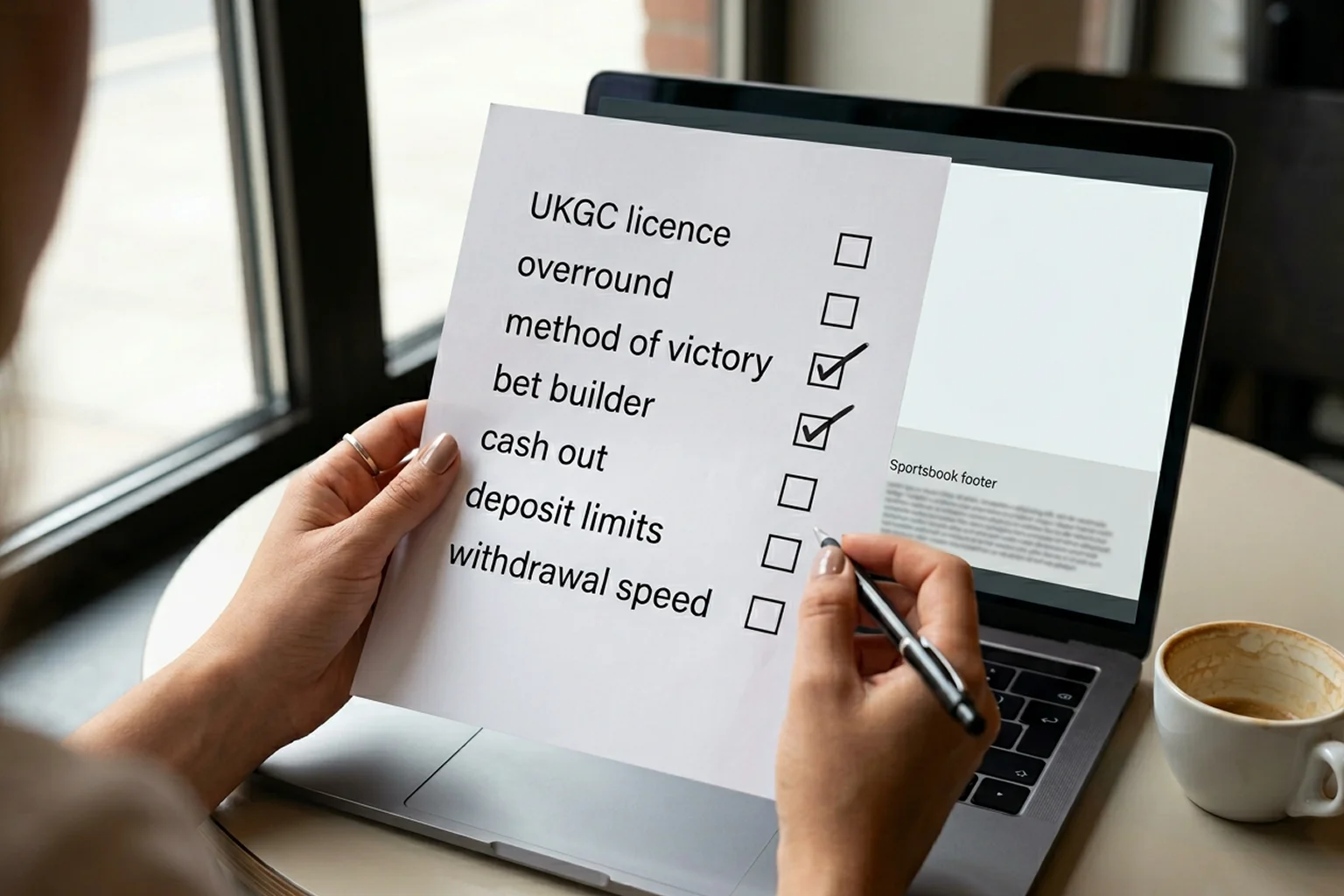
What I check before depositing on a new UFC bookmaker
- UKGC remote betting licence number displayed in the footer and verifiable on the public register.
- Visible overround under 5% on the main event two-way market.
- Method-of-victory market posted for at least the main and co-main, not just the headliner.
- Bet builder support for UFC with overround disclosed in some form.
- Cash-out enabled for fight markets, with the option to disable from inside the bet slip.
- Deposit limit, loss limit and time-out tools available at sign-up rather than buried in settings.
- Withdrawal method matching deposit, with stated processing times under 24 hours for e-wallets.
The third filter is operational. UK-licensed sportsbooks now process the bulk of payouts automatically — 96.3% within minutes, 3.5% within 24 hours, 0.1% longer than 48 hours, across 44.2 million payments in the most recent dataset. That is the floor. The fourth filter is uncomfortable. UK sportsbooks restrict winning customers. Rhodes told the IAGR conference in October 2025 that “over the course of 12 months 4.31% of accounts were restricted for commercial reasons. Many of these accounts belonged to winning customers.” Roughly one in 23. The mitigation is to spread your action across two or three operators and keep your records.
Do
- Open two or three UKGC-licensed accounts and split UFC stakes across them.
- Set a monthly deposit limit before your first bet, not after a bad night.
- Compare prices on the same fight across at least two books before confirming.
- Read bonus terms in full — wagering, expiry, market eligibility and minimum odds.
- Withdraw winnings the same day a fight settles.
Don’t
- Don’t reuse one email and phone number across offshore and UK accounts.
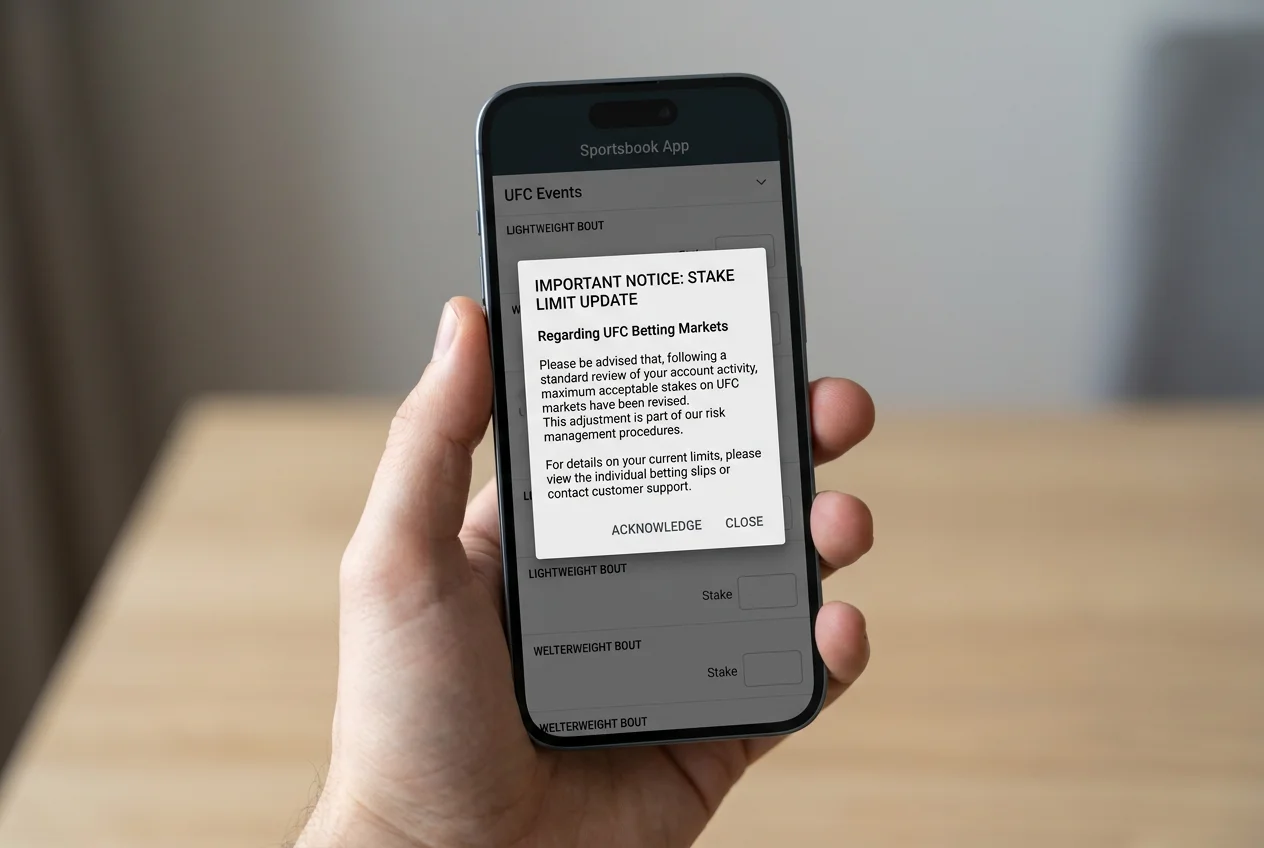
- Don’t ignore a sudden stake-limit cut — log it, screenshot it, ask in writing.
- Don’t chase a missed bonus across multiple deposits in a single night.
- Don’t deposit by credit card — UK rules have banned this since April 2020.
- Don’t bet under the influence on a card you have not researched.
The UK UFC Sportsbook Field: What Separates the Operators
“Which is the best bookmaker?” is the most common question I am asked and also the worst one. There is no single best UK UFC sportsbook — there are roughly a dozen UKGC-licensed operators carrying competitive MMA markets in 2026, and the right one for you depends on which characteristics you value. I refuse, on principle, to hand you a ranked list. Let me show you how the field separates by type.
The UK regulated landscape is broadly three layers. At the top sit large multi-product operators owned by global gambling groups — Flutter Entertainment alone (Sky Bet, Paddy Power) reported group revenue of $15.91 billion across the full year 2025, up 17% year on year. They have the deepest liquidity, widest market sets, the most polished bet builders, and the strictest internal limits on winning customers. The middle tier are British heritage brands and focused sportsbook operators — typically tight UFC pricing, more aggressive promotions, sometimes more forgiving on stakes. The bottom layer is the long tail of smaller UK-licensed operators including newer crypto-aware brands; they can be price-competitive but operationally thin.
Rather than rank brands, I work from a characteristic table. The same checklist scales from casual punter to professional, with different weights at each level.
| Characteristic | Why it matters for UFC | What good looks like |
|---|---|---|
| Overround on main events | Direct cost of every bet | Under 4% on two-way fight winner markets |
| Market depth per card | Whether prelims, props and builders are available | Method-of-victory and round betting on every prelim, 72 hours before |
| Bet builder support | Combine winner, method and rounds at one price | Three-plus leg same-fight builders with on-screen pricing |
| Live betting latency | Pricing lag during a round is your enemy | Lines refresh within seconds of strikes or takedowns |
| Cash out availability | Bank or cut a position mid-fight | Available on fight markets with optional disable |
| UKGC display | Compliance and consumer protection | Licence number in the footer, register linkable |
| Deposit and withdrawal speed | Capital efficiency on PPV nights | E-wallets under an hour, card and bank transfer same day |
| Stake tolerance for winners | How long the account stays useful if you are profitable | Stake limits applied transparently, not silently |
| UFC-specific promotions | Expected value on bonus-eligible bets | Clear terms, no buried minimum-odds clauses |
| Customer support window | You will need help on a Saturday night | Live chat through fight nights, not just business hours |
Two characteristics deserve a longer note. Overround is the silent tax — the largest line item in the lifetime cost of betting on UFC. Find an operator that runs nearer 4% on the cards you bet most, and your long-term return moves by a noticeable margin without you doing anything cleverer than picking a different logo.
Bet builder quality is the second. MMA suits same-fight accumulators almost perfectly — you can stack fight winner, method, total rounds and even specific strike counts onto one bout. A good UFC bet builder is the difference between settling for a 1.8 favourite and constructing a 4.5-priced ticket on a thesis you actually have. Bookmakers that have invested in their UFC bet-builder engine are visibly ahead; bookmakers that have not will glitch when you try to combine round 1 KO with under 1.5 rounds, even though those are obviously correlated.
The honest test for “is this UFC sportsbook serious about MMA?” is whether the bet-builder accepts five legs on a prelim fight you have never heard of. If yes, you have a vertical-aware operator. If it refuses to combine more than two legs on anything off the main card, you have a football-first bookmaker that happens to take UFC bets.
The right operator for you is the one whose flaws you can live with on the markets you actually bet. Pick by characteristic, not by adverts on the broadcast.
The UFC Markets You Will Actually Use
Here is a thought experiment I run with new analysts: if you could place only one bet per UFC fight for the rest of your career, which market would it be? Most people guess fight winner. Wrong answer. Fight winner is the most efficient market in MMA — it is where every bookmaker concentrates pricing effort, and where the public concentrates money. The interesting bets sit one or two steps off the centre.
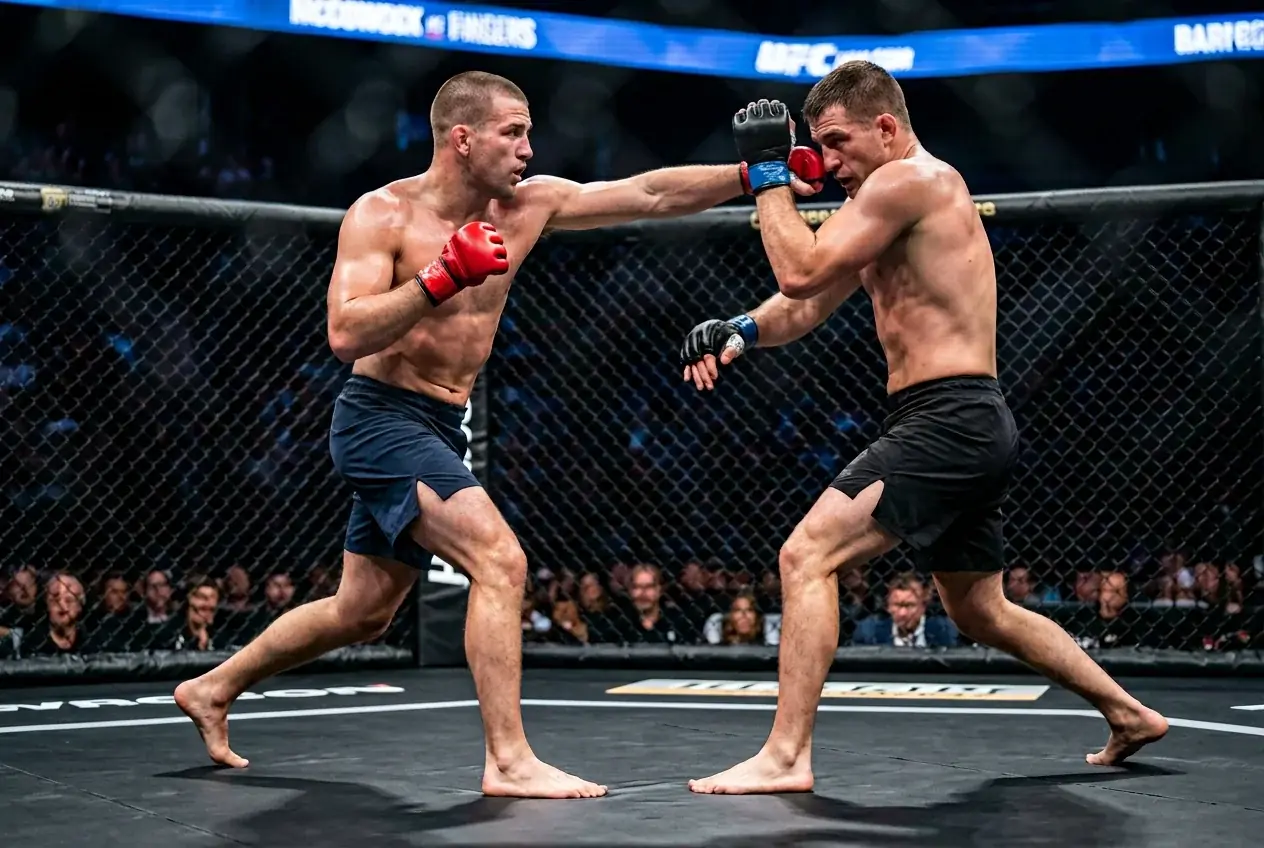
Fight winner
The two-way market — who wins, no further question. On screen it shows as two decimal prices, perhaps 1.45 and 2.85. Most liquid on every fight, tightest overround, fairest price but smallest expected edge. Use when you have a strong directional read and do not need granular method information.
Method of victory
The MMA market and where I do most of my work. Method asks not just who wins but how — KO/TKO, Submission, or Decision. A method bet on the favourite at a longer price is often a better risk than a straight fight-winner bet at a short price.
The single most useful number to hold in your head is the divisional finish profile. Across the full UFC record, around 53% of fights end in a finish — 33.3% by KO/TKO, 19.7% by submission, 47% by decision. The breakdown shifts dramatically by weight class.
| Division | KO/TKO rate | Decision rate | Implication |
|---|---|---|---|
| Heavyweight | ~65% | ~28.6% | KO-favouring; decision lines often poorly priced |
| Light heavy / middle | Mid-high KO | Moderate decisions | Hybrid — pick by stylistic matchup |
| Welter / lightweight | Balanced | ~45-50% | Most volatile method markets |
| Featherweight and below | Lower | Highest | Decision-leaning; KO bets need clear edge |
A heavyweight method bet on KO is not the same animal as a flyweight method bet on KO. Base rates differ, implied prices should differ, and prelims are sometimes priced lazily enough to misprice one of the two. For the full filter, my UFC method of victory betting guide walks through the workflow.
Round betting, total rounds and props
Round betting asks which specific round a fight ends in. Total rounds — typically over/under 1.5 or 2.5 for three-rounders, 2.5 or 3.5 for five-rounders — is the alpha market for anyone who has done fight-pace homework. Average UFC fight length in 2023 was 11 minutes 1 second. Props cover everything not winner, method or rounds — significant strikes, takedowns, who scores first. Less liquid, wider overround, but pricing is least disciplined there. Use sparingly.
Bet builders and live in-play
Bet builder — a feature combining multiple markets on the same fight into one ticket at a single combined price, with the bookmaker handling correlation maths.
Bet builders are the punter’s friend in MMA because UFC bouts are short and decisive. Combining “fighter A wins” with “by KO/TKO” with “in round 1” turns a 1.45 favourite into a 5.00+ ticket on a thesis you can defend. Live markets refresh between strikes and rounds, and they are the one place the average UK punter can occasionally find a genuine pricing lag. Multi-fight accumulators are popular and dangerous — a five-leg accumulator at 1.6 per leg returns 10.5x but needs 12.5% strike-rate per leg to break even. Accumulate methods on fewer fights rather than winners across more.
Reading a UFC Price Without Getting Confused
The first odds-board I ever read showed Tyson Fury at 1/3 against. I asked the friend next to me what that meant, and he said, with absolute confidence, “It means Fury wins one in three fights.” Reader, it does not mean that. The mistake is the one the average British punter makes once a week.
UFC Overround Comparison
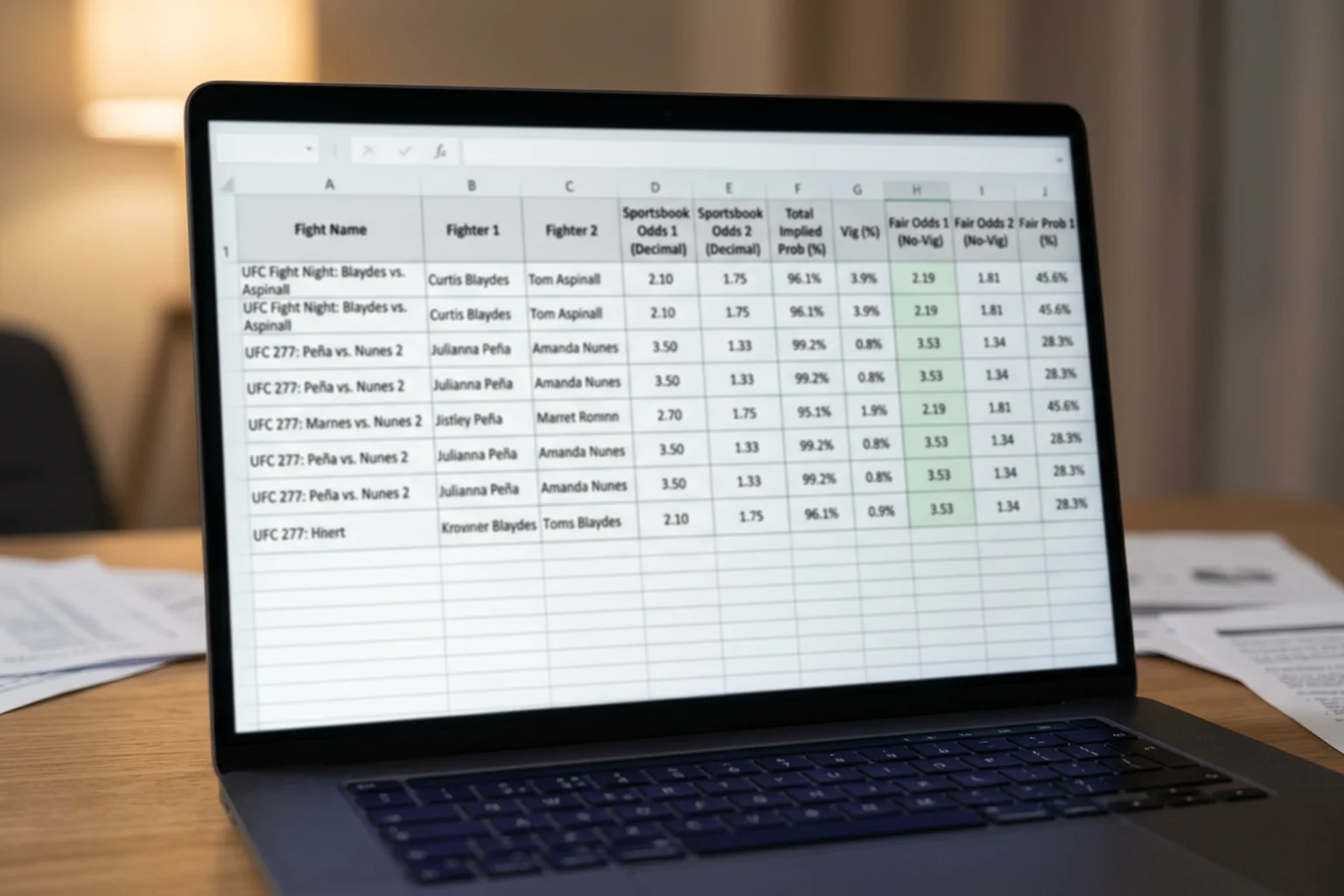
Overround is the bookmaker’s invisible margin – the best UK books run under 4% on main events, the average 5–7%. Enter the same fight’s two-way odds at two bookmakers and see which quietly costs you more, per bet and per year.
How this works: implied probability = 1 / decimal odds. Overround = (1/odds1 + 1/odds2) − 1 – the amount the two implied probabilities exceed 100%, which is the bookmaker’s built-in margin. On a two-way UFC market the best UK-licensed operators run under 4%; the industry average sits at 5–7%. The gap is the silent tax: on a £100 fight ticket, a 3-point margin difference is roughly £3 of expected value you keep or hand over – multiplied across every card you bet in a year, it compounds into real money. This compares the market margin, not a single fighter’s price, so it works even when you don’t yet know which side you’ll back. It assumes you bet the same fights at both, and that your stake and edge are otherwise identical. Line-shopping – checking two or three UKGC books on the same fight before you confirm – is the cheapest edge in betting. Not financial advice. 18+ – National Gambling Helpline 0808 8020 133.
UK sportsbooks display odds in two formats: fractional (4/1, 11/10, 1/3) and decimal (5.00, 2.10, 1.33). Same information, different multiplications. Every modern sportsbook lets you switch in account settings. I default to decimal because the maths is faster.
Decimal to implied probability
Implied probability = 1 / decimal odds.
A fighter at 1.50 implies 1 / 1.50 = 0.6667, or 66.67%.
A fighter at 2.50 implies 1 / 2.50 = 0.40, or 40%.
Add them: 66.67% + 40% = 106.67%. The 6.67% over 100% is the bookmaker’s overround.
That calculation is the most useful piece of mental arithmetic in UK sports betting. Once you can do it in your head, you can compare two sportsbooks on the same fight in ten seconds. Sum the implied probabilities on bookmaker A and bookmaker B; whichever runs lower is offering better value. On the major UFC events, the best UK-licensed operators run overround below 4%; the industry average sits at 5-7%.
| Decimal | Fractional | Implied probability | £10 returns |
|---|---|---|---|
| 1.25 | 1/4 | 80.0% | £12.50 |
| 1.50 | 1/2 | 66.7% | £15.00 |
| 1.80 | 4/5 | 55.6% | £18.00 |
| 2.00 | 1/1 | 50.0% | £20.00 |
| 2.50 | 6/4 | 40.0% | £25.00 |
| 3.00 | 2/1 | 33.3% | £30.00 |
| 5.00 | 4/1 | 20.0% | £50.00 |
| 11.00 | 10/1 | 9.1% | £110.00 |
The £10 returns column includes your stake — a £10 bet at 2.50 returns £25, so £15 profit. Fractional expresses profit only — 6/4 means “win £6 on every £4 staked.” That is why decimal is faster: the number in front of you is the multiplier on your stake. The deeper concept is the gap between implied probability and your assessment of true probability. If the price is 2.00 (implied 50%) and you genuinely believe the fighter has a 56% chance, you have positive expected value. The bookmaker has a model and a desk; you have a screen and a coffee. Edge is real but lives in narrow corners. For the full mathematics of overround and the no-vig price, see my piece on UFC betting odds explained.
Live Betting and the Streaming Question
Saturday night, UFC 305 main event, two minutes into round two, I am sitting at my desk with three screens open. None of them is showing the fight. The pictures are on the broadcast partner; my sportsbook screens show live prices that move every few seconds, but no video. This is the awkward truth of UFC live betting in the UK in 2026 — deep in-play liquidity, no streaming. UFC’s UK broadcast rights are not part of the Paramount arrangement, and live streaming on bookmaker sites cannot be sublicensed past the broadcast partner’s territory rights.
Mark Shapiro, president and COO of TKO Group, framed the broader strategy bluntly: “The pay-per-view model is a thing of the past. What’s on pay-per-view anymore? Boxing? Movies on DirecTV? It’s an outdated, antiquated model.” In the UK, the answer for how to watch UFC live remains the British broadcast holder, not your sportsbook.
What you do get is fast-refreshing in-play markets and, on many operators, real-time strike and takedown tickers. Prices move every few seconds, cash-out is live, bet builders are constructable mid-round on some platforms. Latency varies — top operators refresh within seconds; weaker books lag. Dana White on access: “[This makes] it more affordable and accessible to view the greatest fights on a massive platform. This deal puts UFC amongst the biggest sports in the world.” Accessibility, however, lives on the broadcast platform.
On fight night, run the broadcast on one screen and the sportsbook on another. Live UFC betting from a single screen is technically possible, but in-play betting without watching the fight is gambling, not investing.
The other feature worth understanding is cash-out. Cash-out lets you settle a bet before the market resolves, at a price calculated from the current state of the fight. The price will always be less than your potential return — that is the bookmaker’s payment for taking the risk. My rule: never use cash-out inside the first two minutes of any round. For the in-play workflow, see UFC live betting and streaming in the UK.
The Paramount Deal and What It Means for UK Viewers
August 2025 changed the economics of UFC the way satellite TV changed the Premier League — quietly, completely, and in a way most British fans only noticed when the bills arrived. The headline number was $7.7 billion across seven years, or roughly $1.1 billion per year, for the rights now held by Paramount. The previous ESPN deal had been worth roughly $500 million annually, so the new contract more than doubled the league’s broadcast take. David Ellison, Paramount Skydance’s CEO: “UFC is a unicorn asset that comes up about once a decade.”
For UK viewers, the immediate impact is more limited than the headline suggests. The Paramount deal is primarily a US arrangement. UK broadcast rights still sit with TNT Sports for the duration of the existing contract, so British viewers continue to watch through the established broadcast partner rather than through Paramount+. In 2026, UFC runs 13 numbered events and 30 Fight Nights, but the pay-per-view model has been dismantled in the US — every event is included in the Paramount+ subscription. The UK retains a different model, but the global signal is unambiguous: PPV as a standalone product is on borrowed time.
The TNT Sports deal runs through the current contract cycle. A future migration to a Paramount-equivalent UK product is structurally possible but not announced.
The financial story matters because it shapes everything from card frequency to fighter pay to integrity investment. UFC’s global revenue in 2025 hit $1.502 billion, up 7% year on year. UFC 300 in April 2024 drew 615,000 PPV buys at $79.99, the strongest figure of the late-PPV era. UFC 311 in January 2025 sold 240,000 buys, and UFC 312 the following month drew 176,000. That drop-off made the move to a subscription model commercially urgent.
For UK punters: the league is healthier and more frequent — more fights, more cards, more markets, more in-play action. The growing investment in betting integrity is funded by these broadcast revenues.
So that is the broadcast picture. What happens to your bookmaker’s bonus offers when operators face a new statutory levy on top?
Bonuses After the 2025 Levy and the 2026 Duty Increase
An old contact in a bookmaker marketing team told me in late 2025 that the UK welcome-bonus arms race was over. He was right. Three regulatory and fiscal changes in 18 months have collectively eaten the margin that funded the most generous British sportsbook promotions, and UFC bettors are seeing thinner deals than they had at the start of 2024.
The first shoe was the statutory gambling levy from 1 October 2025. Online operators contribute 1.1% of GGY; ground-based operators 0.4%. A small percentage but a high-profile margin cost. Operators have responded by tightening wagering requirements, shortening bonus expiry windows, and quietly pulling some of the more generous “money back as cash” UFC promotions that competed at the top in 2023 and 2024.
1.1% of UK online gambling GGY now flows to a statutory levy fund for treatment, research and prevention — the first mandatory UK gambling levy, replacing a voluntary scheme that paid about a third of that.
The second and larger shoe is the Remote Gaming Duty increase to 40%, effective 1 April 2026. RGD applies to online casino and slot revenue rather than sports betting directly, but operators run unified portfolios, and a 15-point duty hike on one half of the business inevitably reshapes promotional spend on the other. Sportsbook welcome offers in the run-up already carry the marks of operator caution — minimum-odds clauses that exclude the shortest UFC favourites, free-bet returns coming back as bonus credit rather than withdrawable cash, and stake-back promotions quietly gone from main-event marketing.
Three filters for any UFC bonus in 2026: is the wagering requirement under 8x at moderate odds, or dressed up with embedded minimum-odds clauses? What is the expiry window — 7 days tight, 30 fair, 60+ generous? Does the free bet return your stake or only the winnings? Stake-returned free bets are worth roughly double the alternative.
For existing-customer offers — odds boosts, parlay insurance, loss rebates — treat them as opportunistic value, not reliable income. Headline main-card boosts are typically priced around the operator’s overround. The genuinely valuable boosts are on prelims, where the bookmaker has less confidence in its pricing and inflates the offer to drum up volume.
Deposits, Withdrawals and How Fast You Get Paid
Most punters care about deposits and withdrawals exactly twice — when they first sign up, and the first time they win something they want to keep. Both moments deserve more thought than the average British UFC bettor gives them.
UK sportsbook minimum deposits sit at £5 across major operators. The most useful method in my experience is the digital wallet — Apple Pay, Google Pay, PayPal, Skrill, Neteller. Wallets are fast, refundable, and sit one step away from your main bank account, which gives you a useful behavioural buffer between an impulsive top-up and your actual finances. Debit cards work and are usually instant, but they connect directly to the current account. Credit cards have been banned for UK gambling since April 2020 — any sportsbook that offers credit cards is not UKGC-licensed.
96.3%
UK sportsbook withdrawals processed automatically, within minutes.
3.5%
Completed within 24 hours but not instantly — typically bank-transfer paths.
0.1%
Longer than 48 hours, almost always KYC checks or flagged accounts.
44.2m
Total withdrawals in the most recent published UKGC dataset.
The 96.3% automatic processing rate is the floor any serious operator should match. If a bookmaker takes more than 24 hours on an e-wallet withdrawal, something is wrong — KYC issue on your account or process problem on theirs. Withdraw winnings the same day a fight settles. Letting a £400 profit sit in your sportsbook wallet exposes you to two risks: the psychological — you redeploy it as “free money” on a fight you would never have taken with fresh cash — and the operational, where your account is restricted or frozen during KYC reverification before the money moves out.
Mobile Apps and Why Most UK Punters Live On Them
Walk through any pub in the UK during a UFC main event and count the phones. Roughly four in every five UFC bettors I see are on their mobiles, the desktop sportsbook UI is a vestigial appendage to most operators’ platforms, and the gap between best-in-class and worst-in-class mobile apps in the UK regulated market is now wider than the gap between any other two product features.
The numbers underwrite the picture. 95% of UK online gambling activity happens at home, and within the 18-24 cohort, 76% gamble on mobile phones. UFC’s audience skews younger and more digital than horse racing’s, which means the mobile share for combat-sport bettors is, if anything, higher than the general gambling average. If your sportsbook app crashes during a round, lags on live pricing, or fails to support bet builder on UFC fights, you are using the wrong app.
The single most useful mobile feature for UFC betting is not biometric login, not push notifications, not the slick visual design. It is the speed at which live odds refresh and the latency between you tapping “confirm” and the bet appearing in your slip. A 200-millisecond gap between two operators is the difference between catching a fight-changing takedown at 1.85 and at 1.45.
What I check on a new app: UFC markets load within two seconds on 4G, the bet slip retains stake when I switch between fights, live odds refresh visibly between rounds, push notifications are configurable to fights I care about, biometric login works. Apps that fail any of those tests are desktop products with a mobile wrapper.
Integrity, Suspicious Action and Two 2025-2026 UFC Cases
In November 2025, the price on a UFC welterweight named Isaac Dulgarian moved from -250 to -130 in the hours before his bout against Yadier Del Valle at UFC Vegas 110. That kind of line collapse on an obscure prelim does not happen organically; it happens when concentrated money lands on the other side. The fight was the first publicly visible UFC integrity incident of the new Paramount era.
The mechanism that catches these moves runs through the International Betting Integrity Association (IBIA) and a US-headquartered firm called IC360 that the UFC now contracts directly. IBIA recorded 300 suspicious betting alerts globally in 2025 — a 29% jump on the 232 alerts the year before. Khalid Ali, IBIA’s CEO: “Our 2025 data highlights a familiar integrity risk pattern, with football and tennis continuing to account for most suspicious betting activity. At the same time, the greater scale and reach of our Global Monitoring & Alert Platform means our ability to detect, assess and support investigations across markets and sports has increased.” The platform monitors more than 1.5 million matches across 80-plus sports, tracking more than $300 billion of stakes a year.
Dana White on Dulgarian-Del Valle: “(IC360) reached out and told us there was some unusual action going on with that fight and did we know anything. We didn’t. We called the fighter and his lawyer and said, ‘What’s going on? Are you injured? Do you owe anybody money?'” The UFC referred the matter to the FBI.
The second incident came at UFC 324 in January 2026. A scheduled bout between Johnson and Hernandez was pulled after an alert from a gaming integrity service. White: “We got called from the gaming integrity service and I said, ‘I’m not doing this s— again,’ so we pulled the fight.” Two incidents in fourteen weeks indicate a sport taking integrity seriously and infrastructure operating at much higher resolution than even a year ago.

For UK punters: you are protected — UKGC-licensed bookmakers are members of the integrity monitoring network. If a fight is voided or pulled, your stake is returned. Crypto-rail sportsbooks operate outside the UK regulated perimeter and increasingly route suspicious volume that cannot find a UKGC-licensed home. For the full case workflow, see UFC betting integrity in the UK.
Affordability Checks, Stake Limits and Knowing When to Stop
The moment I take most seriously in my work is the question I make myself answer before a fight night: am I betting because I have a thesis, or because the fight is on. Eighty-five percent of the time the honest answer is “the thesis.” The other fifteen percent I walk away.
The Gambling Survey for Great Britain 2024 found 2.7% of UK adults score 8 or higher on the Problem Gambling Severity Index — the threshold for problem-gambling categorisation. The age profile is sharper: 21.9% of UK 18-24-year-olds have a PGSI score of 1 or more, and 5.3% sit at PGSI 8+. UFC’s audience overlaps heavily with that demographic, which is why this section is not boilerplate.
GambleAware’s 2025 report puts the public-health cost of gambling harm to the NHS at roughly £1.2 billion annually, against tax revenues from the industry of £3.1 billion. Baroness Twycross, Minister for Gambling, at the BGC AGM in February 2025: “I want to work with you to see a safer, more responsible gambling industry. I know that the vast majority of people who gamble do so without experiencing harm, but it is in all our interests that we do better for those customers who could be vulnerable to gambling harm.”
The financial vulnerability check threshold is £150 of net losses in a rolling 30-day window. The cheapest mitigation is a monthly deposit limit set below your personal pain threshold, before you have lost a penny. Every UKGC-licensed sportsbook supports deposit limits, loss limits, session reminders, time-outs and the GAMSTOP cross-operator self-exclusion service.
Deposit limits cap funding per day, week or month. Loss limits pause activity at a set net loss. Time-outs suspend the account from 24 hours to six weeks. GAMSTOP self-exclusion blocks all UK-licensed operators for a minimum of six months. None imposes any cost.
For UFC, the betting cadence is the structural risk. Forty-three fight nights a year, prelims that start three or four hours before main cards, bet-builder temptation on a single fight. Build friction in advance: pick the cards you will bet at the start of the month, bet on the fights not the card, walk away when your thesis is busted. For a fuller treatment, see UK regulation and checks for UFC bettors.
Frequently Asked Questions
The questions below come up most often. Short answers, no padding.
Is it legal to bet on UFC in the UK?
Yes. UFC betting is legal on any sportsbook holding a remote betting licence from the UK Gambling Commission. A general remote betting permission covers UFC, boxing, football and everything else. Betting through an unlicensed offshore site is not legal in practice; the UKGC has referred about 200,000 such operator URLs to search engines recently.
What are the best UFC betting sites in the UK in 2026?
There is no single best UK UFC sportsbook — the right one depends on which characteristics you value. Assess any candidate on overround under 4% on main events, depth of method-of-victory markets across the prelims, bet builder support, live-betting latency, payout speed and UKGC display in the footer. Open accounts at two or three operators that pass those filters and split your action.
What’s the simplest way to read a UFC bookmaker’s price?
Divide 1 by the decimal odds to get implied probability. A fighter at 1.50 implies 66.7%; at 2.50, 40%. Add them — if over 100%, the surplus is the bookmaker’s overround. The best UK operators run overround below 4%; industry average is 5-7%.
What types of UFC bets are available on UK sportsbooks?
Fight winner, method of victory (KO/TKO, submission or decision), round betting, total rounds (over/under), props (significant strikes, takedowns, who scores first), bet builders, and multi-fight accumulators. The most distinctive MMA market is method of victory — heavyweight finishes 65% of fights by KO, featherweight and below skew much more towards decisions.
Can I watch UFC live on a UK betting site?
No. UFC live streaming is not available on UK-licensed sportsbooks in 2026 because the UK broadcast rights sit with TNT Sports and have not been sublicensed to bookmakers. You can place pre-fight and in-play bets on every card, but you will need a separate subscription with the UK broadcast holder to watch.
What is the minimum age and minimum deposit for UFC betting in the UK?
The legal minimum age is 18. Operators verify age and identity through KYC checks at registration. Minimum deposits are typically £5, with a small number of operators accepting £1 on specific payment methods. Credit card deposits have been banned for UK gambling since April 2020 — any sportsbook offering credit cards is not UKGC-licensed.
How do I verify that a UFC bookmaker is UKGC-licensed?
Three checks. The licence number must appear in the bookmaker’s footer. That number must resolve on the UK Gambling Commission’s public register, which is publicly searchable. The operator must show a registered UK address. If any check fails, the operator is not legally licensed to take UK bets. Offshore-only licences — Curacao, Anjouan, Malta-only — do not count as UK regulatory cover.
How This Guide Is Maintained and What I Watch Next
Before you leave the page, a quick note on what comes next — both for this guide and for the UK UFC betting market in 2026.
The UK regulatory environment is moving faster than at any point I can remember — the Remote Gaming Duty hike kicked in this April, the statutory levy is still bedding in, the Dulgarian and UFC 324 cases are open investigations, and the next round of UKGC consultation on cross-account financial-risk indicators is in flight. Every one of those will change something on this page.
What I am watching across the rest of 2026: how operator generosity adjusts once the full-year impact of the 40% RGD lands; whether more UFC bouts get pulled pre-fight on integrity flags; whether UK broadcast rights evolve before the current contract cycle ends; how affordability checks play out for UFC punters who lose £150 on a single PPV weekend.
The structural advice is unromantic. Keep a UKGC licence on every operator you fund. Spread your action across two or three books. Set deposit and loss limits before your first bet. Compare overrounds across operators on the same main event before you click confirm. Withdraw winnings the same day a fight settles. The bookmaker is not your enemy, but it is also not your friend — it is a regulated counterparty with a margin to protect, and your job is to extract value through preparation, not hope.
Created by the ”Where can i bet on ufc” editorial team.