UFC Betting Integrity: Alerts, Bouts and Market Impact
 Available in US
Table of Contents
- What betting integrity actually means inside an MMA market
- IBIA and the 2025 alerts record
- The Dulgarian-Del Valle case and what the line did
- UFC 324 and the bout Dana White pulled
- How UK bookmakers detect suspicious action
- What happens to your bet when a market is voided
- Crypto betting as an integrity risk in 2026
- What the alerts wave means for UK punters at the cage-side level

The Saturday morning after UFC Vegas 110, I had three different colleagues message me about the same thing — Joe Pyfer’s old training partner had been on the wrong end of a fight where the line had moved 15 percentage points inside a week, with no public injury report to explain it. By Monday the news had broken: the UFC had called the FBI, IC360 had flagged the bout, and the integrity story of 2025 had a name. Dulgarian-Del Valle was not the first UFC bout with line-movement questions. It was the most consequential.
UFC betting integrity is the unglamorous part of the sport that determines whether the prices you bet against are honest. The International Betting Integrity Association recorded 300 suspicious betting alerts across all sports globally in 2025 — a 29% increase year on year, up from 232 in 2024. The MMA share of those alerts is small in absolute terms but disproportionately attention-grabbing, because UFC bouts are single-event markets with no opportunity to recover from a manipulated outcome. A football match has 90 minutes and a hundred betting markets; a UFC fight can end in 20 seconds with one moneyline.
This guide covers what betting integrity means in MMA, the IBIA and IC360 detection infrastructure, the Dulgarian-Del Valle case in November 2025, the UFC 324 bout pulled by Dana White in January 2026, how UK bookmakers detect and respond to suspicious action, what happens to a bet when a market is voided, and the rising integrity risk that crypto betting represents. None of these issues are abstract regulatory concerns. They affect the price you are betting against, the protections around your bet, and the credibility of the entire UK MMA market.
Learn how regulatory frameworks keep the sport safe on the homepage.
What betting integrity actually means inside an MMA market
The cleanest definition of betting integrity I have heard came from a trader I worked alongside for two years — “the price is honest if the people making the fight are not trying to make money on the price.” That covers the corruption case. It does not cover the structural integrity question, which is whether the trading desks, the regulators, and the integrity bodies have the tools to detect a problem when one exists. Both halves matter, and the second is harder.
In MMA, integrity threats fall into a small number of recurring categories. Fight fixing — a fighter taking a fall in exchange for payment, or losing deliberately to settle a debt — is the most catastrophic and the rarest. Spot fixing — agreeing to specific in-fight events like a takedown attempt or a stoppage timing — is harder to detect because the headline result of the fight remains unchanged. Insider trading — connected parties betting on information not available to the public, such as a pre-fight injury — sits in a grey area between corruption and ordinary information asymmetry.
The detection problem in MMA is more difficult than in team sports for a structural reason. A football match involves dozens of players, each of whom would need to be part of a fix for it to work reliably. A UFC bout involves two people, one referee, and three judges. The conspiracy surface is small enough that a single corrupted participant can swing the entire outcome, and the post-fight evidence is thin — a fight that ends in a 90-second knockout looks the same whether the knockout was legitimate or arranged.
What MMA does have, working in integrity’s favour, is exceptional price-feed transparency. UFC bouts are bet at scale across dozens of operators globally, with line movement visible in real time to monitoring services and trading desks. A coordinated bet of any meaningful size moves the line in ways that show up in the monitoring data. The pattern of movement — when it happens, on which side, on which markets — leaves an evidential trail that football matches mostly do not generate. The line is the witness.
IBIA and the 2025 alerts record
The International Betting Integrity Association is the body whose name turns up most often when an integrity story breaks. The IBIA aggregates suspicious betting data from member operators across regulated markets globally, runs the Global Monitoring and Alert Platform, and refers concerning cases to sports governing bodies, regulators, and law enforcement. The platform monitors more than 1.5 million matches in 80-plus sports and processes data on more than $300 billion of betting volume annually. The scale is the point.
The 2025 numbers tell the story of an integrity environment getting busier, not calmer. The IBIA recorded 300 suspicious betting alerts globally across 2025, up 29% from the 232 alerts recorded in 2024. The Q1 2025 figure alone was 63 alerts — 11% higher than Q1 2024’s 57 — and the trajectory continued through the year. Football and tennis remain the dominant alert categories in absolute terms, but the MMA share of alerts is rising in step with the sport’s commercial growth.
The detection mechanism works through pattern analysis. Member operators report unusual betting activity — large stakes on unusual markets, coordinated wagering across multiple accounts, betting patterns that diverge sharply from the public-money baseline — to the IBIA platform. The platform aggregates the reports across operators, looks for cross-operator patterns, and flags cases where the evidence supports referring the matter to the relevant authorities. An alert is not a conviction. It is a signal that the betting pattern warrants investigation.
The chief executive of the IBIA, Khalid Ali, was direct about the trajectory in framing the 2025 report. The data, in his framing, shows a familiar integrity risk pattern in which football and tennis continue to account for most suspicious activity, while the platform’s greater scale and reach have materially improved the ability to detect, assess, and support investigations across markets and sports. The second half of that statement is the operational reality. The platform is catching more because it is bigger, not because the underlying integrity problem has worsened proportionally.
For UFC specifically, the integrity infrastructure now sits at a level of sophistication that would have been impossible five years ago. Cross-operator data sharing, real-time line-movement monitoring, and an established referral path to regulators and law enforcement collectively mean that a coordinated betting attempt on a UFC bout is materially more likely to be detected than at any previous point in the sport’s history.
The Dulgarian-Del Valle case and what the line did
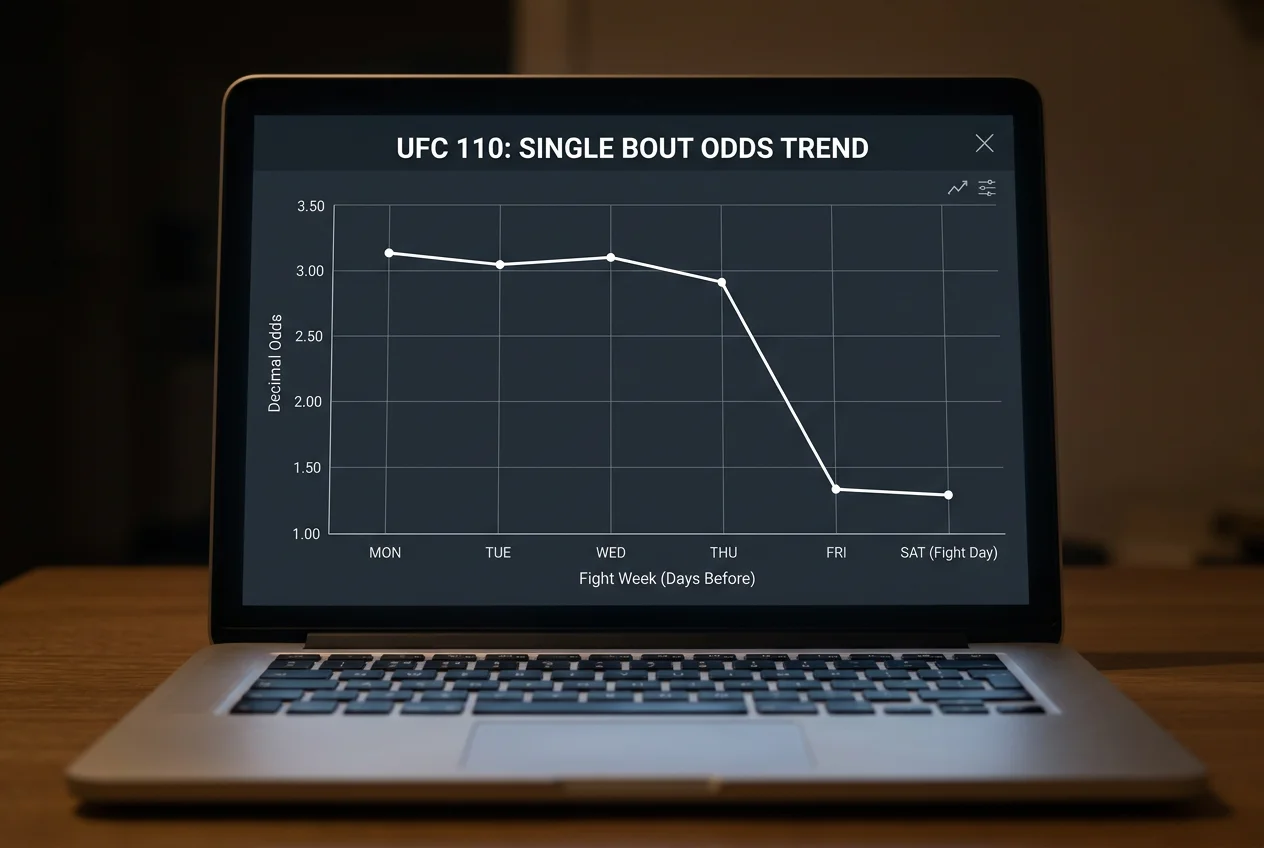
The Dulgarian-Del Valle bout at UFC Vegas 110 in November 2025 is the case study every UFC bettor in the UK should understand in some detail, because it shows exactly how the integrity machinery responds when the line tells a story the fight cannot explain. The line moved from -250 on Dulgarian — implying roughly a 71% probability of victory — to -130 by the day of the fight, implying just 56.5%. That is a 15-percentage-point swing on a single fighter, inside a week, with no public-facing injury report, no missed weight, and no obvious public-money explanation. The pattern was the alert.
The mechanics of what followed are now public. IC360, the integrity service the UFC works with, contacted the promotion to flag the unusual action. The UFC, in turn, escalated the matter to law enforcement. Dana White described the conversation himself in a TMZ Sports interview, recounting that the integrity service had reached out to ask whether the promotion knew of anything that might explain the action. The UFC called the fighter and his lawyer to ask whether he was injured or whether he owed anybody money. White’s framing in the interview was direct.
The promotion engaged the FBI on the matter and continued cooperating with IC360 through the investigation. The bout itself proceeded — the integrity flag did not result in cancellation in this case — and Dulgarian lost. The post-fight environment around the bout was a different matter; multiple UK and US sportsbooks voided their Dulgarian markets, and the case became the public reference point for what coordinated betting activity looks like when the integrity system catches it.
What the Dulgarian case actually demonstrates is the speed and the connective tissue of the modern integrity response. From the line movement initial detection through to the FBI referral, the timeline ran in days rather than weeks. The information flowed from the trading desks to IC360, from IC360 to the UFC, from the UFC to law enforcement, and from law enforcement back into operator-level decisions on market settlement. None of that infrastructure existed in this form a decade ago.
For UK punters, the case carries two practical lessons. First, the markets you bet against are being monitored with a level of sophistication that materially raises the bar for any manipulation attempt. Second, voided markets are a real consequence of an integrity alert, and a bet that looks won on the night may not settle in your account if the surrounding market is pulled. The fuller treatment of the case and its mechanics sits in the dedicated cluster article on how the Dulgarian-Del Valle line collapse actually played out; for this guide, the case anchors the broader integrity story.
UFC 324 and the bout Dana White pulled
Two months after Dulgarian-Del Valle, the UFC made a different decision under similar circumstances. At UFC 324 in January 2026, Dana White pulled the Johnson-Hernandez bout from the card after the integrity service flagged betting-line irregularities ahead of the fight. The bout did not happen. The markets were voided. No FBI involvement was announced. The promotion’s framing was that the cancellation was a precautionary response to an alert pattern they were not prepared to ignore for a second time.
White’s own description of the decision, in a media availability after the card, was characteristically blunt. The gaming integrity service had called the UFC about unusual action; the promotion’s view, taking the Dulgarian experience as recent precedent, was that the matter did not need investigating through the bout itself. They pulled the fight. The framing — paraphrased — was that the promotion had been through this kind of situation before and was not going to allow it to play out in public again.
The structural difference between the two cases matters. Dulgarian-Del Valle was an alert that arrived in time for monitoring but not in time for cancellation, and the bout proceeded under the integrity cloud. UFC 324 was an alert that arrived early enough for the promotion to act before the bout took place. The integrity infrastructure had matured in two months from “detect and refer” to “detect, refer, and act,” at least for situations the promotion judged severe enough to warrant cancellation.
The financial consequence for bettors of the UFC 324 cancellation was straightforward: markets settled as void, stakes returned, no winnings on the bout itself. Adjacent markets that depended on the bout — accumulators including the bout as one leg, prop markets on aspects of the Johnson-Hernandez fight — settled according to the operator’s specific rules, which generally treat a voided bout in an accumulator as a removed leg with the price recalculated across the remaining legs.
The wider implication, and the one I track closely, is that the UFC’s willingness to cancel a bout on integrity grounds raises the operational cost of any manipulation attempt. A fighter approached with a corruption proposition now has to consider that the promotion will pull the bout entirely rather than let it run, denying the corrupted outcome to whoever set the scheme up. That deterrent works because it is now visible. White made the cancellation public for a reason.
How UK bookmakers detect suspicious action
The UK trading desks I have worked with treat integrity monitoring as a continuous compliance function rather than an event-driven response. Their detection systems run during open markets on every UFC bout, looking for the same pattern signatures the IBIA platform aggregates at the global level — coordinated stakes, atypical position sizing, account-level patterns inconsistent with the customer’s history. The local monitoring sits one step ahead of the global aggregation.
The signals that trigger a desk-level review fall into three rough categories. First, stake-size anomalies — a sudden flow of meaningfully large bets on a fighter at a price that contradicts the broader market consensus. Second, account-pattern anomalies — multiple accounts placing similar bets on the same market within a short window, particularly when those accounts have no obvious relationship to one another. Third, timing anomalies — heavy money landing on a specific market just before public information becomes available that would justify the move. The third pattern is the strongest single integrity indicator, because it implies the bettor knew something the market did not.
The operator response, once an alert pattern is identified, follows a defined protocol. The first step is internal — the trading desk pulls the market or significantly widens the price to discourage further action. The second step is reporting — the operator submits an integrity alert through its membership in the IBIA or its national equivalent. The third step is preservation — the operator holds the affected bets pending the outcome of the investigation rather than settling them. Punters whose accounts are caught up in the reporting may not be aware of it until settlement is held.
Khalid Ali, the IBIA chief executive, has framed the platform’s role in a way that gets at the operational reality. Paraphrasing his Mission 2030 announcement, the IBIA is evolving to ensure that whatever new trends emerge, the body remains positioned to safeguard sports, consumers, and regulated betting markets. The framing emphasises adaptability, and that emphasis matches what trading desks see in practice — the manipulation patterns evolve faster than the regulatory response, and the integrity infrastructure has to update continuously to keep pace.
The customer-side implication is that the trading desk’s integrity monitoring sits between you and the worst forms of market corruption. The system is not perfect. It is, however, materially better than the alternative, and it is the principal reason that regulated UK markets remain meaningfully more honest than the unregulated offshore alternative.
What happens to your bet when a market is voided
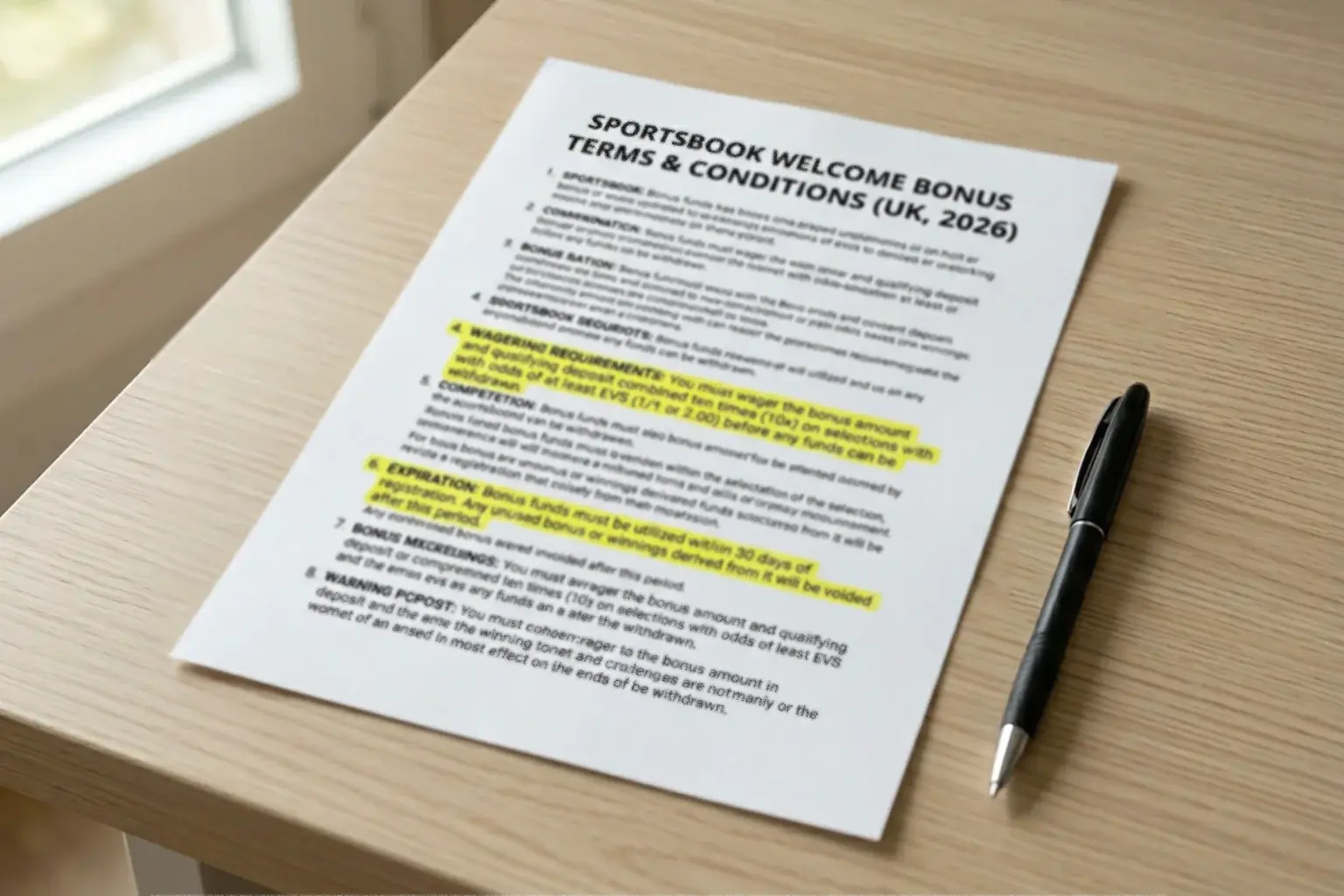
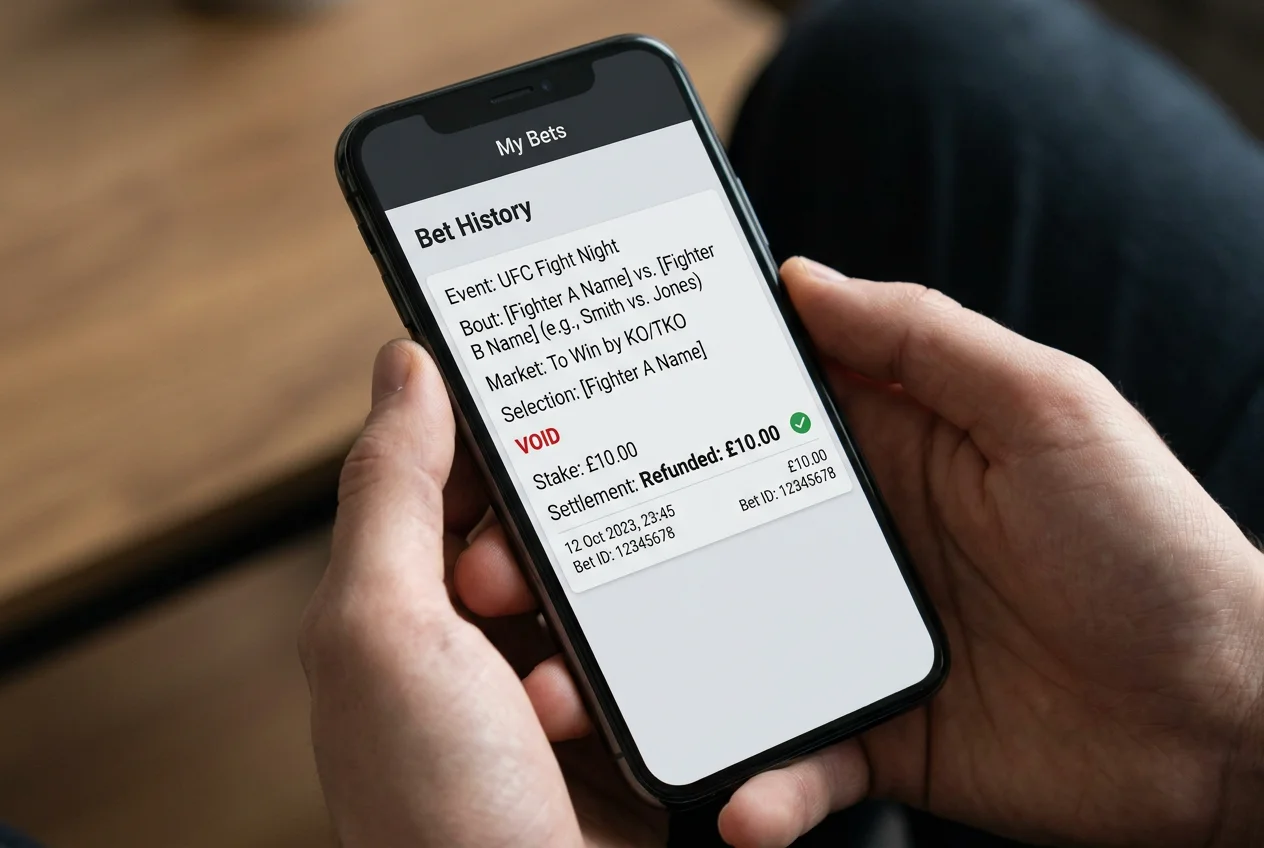
The voided-market scenario is the one most UK punters have heard about but rarely thought through in practical terms. A market is voided when the operator decides the bet cannot be honoured under the original terms — either because the underlying event did not take place, or because the integrity of the result is sufficiently compromised that settlement is not appropriate. In either case, the customer’s stake is returned and the bet is effectively unwound.
The mechanics vary by operator but the principle is consistent. For a single-market bet on a voided bout, the stake returns and the customer is no worse off than before placing the bet. For an accumulator that includes the voided market as one leg, the operator removes the voided leg and recalculates the accumulator price across the remaining legs. The recalculation works in the customer’s favour in the sense that the bet still runs; it works against the customer in the sense that the original price embedded the voided leg’s odds, and the recalculated price will be lower.
Method-of-victory markets, prop markets, and round-specific markets on a voided bout all settle the same way as the moneyline — void, stake returned. Acca insurance products vary; some operators treat a voided leg as a “fall” for insurance purposes, others treat it as a non-event that does not trigger insurance. The terms differ enough that the only sensible course is to read your operator’s settlement rules before assuming what will happen.
The harder case is the partially settled accumulator. If the voided bout occurs after some legs have already settled — for example, a Friday Fight Night card where some bouts have completed before the cancellation news breaks — the operator typically settles the completed legs at the original prices, voids the affected leg, and recalculates the remaining live legs accordingly. The mechanics are reasonable but rarely intuitive on a first reading of the bet slip.
The integrity-specific consideration is that an operator may void a market for integrity reasons even after the bout has been completed and a result declared. The Dulgarian post-fight voiding pattern is the recent precedent — bouts that proceed to a result can still see markets retrospectively unwound if the post-fight investigation supports it. Punters who held winning tickets on those bouts saw the stakes returned rather than the winnings paid. The legal basis for this is the operator’s standard terms, which all major UK books include language permitting voiding on integrity grounds.
Crypto betting as an integrity risk in 2026
The crypto-betting question is the integrity issue I am most worried about across the next two years, and the UK regulator is openly worried about it too. The risk profile differs from regulated cash-based betting in ways that erode the entire integrity infrastructure the previous sections describe — and the erosion is happening faster than the regulatory response can keep up.
Crypto-based betting platforms operate predominantly outside the UKGC’s regulated perimeter. They do not participate in the IBIA’s cross-operator data sharing. They do not run KYC at the level UK-licensed operators do. They do not respond to integrity-service alerts in the way that regulated books do. The combination produces a structural blind spot for anyone trying to manipulate a UFC bout through betting: the activity may not be visible to the bodies whose job is to detect it.
Andrew Rhodes, the UKGC chief executive, has been direct about the regulator’s reading of the situation. Paraphrasing his IAGR 2025 keynote, what he had previously thought was a five-year-away problem now looks like an 18-month to two-year challenge. The acceleration matters because the integrity infrastructure has been built around the assumption that suspect betting activity will be visible to monitoring services through the regulated operators who carry it. If a meaningful share of UFC betting volume migrates to crypto rails that bypass that visibility, the existing detection apparatus loses purchase.
The fighter-side risk is the one I find most concerning. A corrupted fighter approached with a betting proposition has historically had limited options for placing or arranging the offsetting bets without leaving an evidential trail. Crypto rails materially expand those options. The integrity question is less about whether a manipulation attempt could be detected after the fact and more about whether it can be priced into the trading desks’ anti-manipulation models before the bout. The data flow that historically made that possible is at risk of fragmenting.
For UK punters specifically, the cleanest practical response is to stay on the regulated rails — UK-licensed sportsbooks, cash-based deposits, the protections of the UKGC framework. The price advantage offshore crypto sites sometimes offer is real but small, and it sits inside an integrity environment that is materially weaker than the regulated alternative. The trade is bad in normal times. As the crypto-betting share grows, the trade gets worse.
What the alerts wave means for UK punters at the cage-side level
The practical consequences of the 2025 integrity wave for the average UK UFC punter come down to four shifts in the betting environment, and adapting to them costs nothing if you know they are happening. The first is that voided markets are now a normal-tail outcome rather than an exotic edge case. The second is that account-level monitoring has stepped up. The third is that the trading desks are pricing integrity risk into specific markets more openly. The fourth is that the regulatory backstop has more teeth than it did even a year ago.
Track how suspicious pre-fight line moves are flagged by examining the UFC Vegas 110 Dulgarian line-collapse investigation.
Voided markets are the change most punters will notice first. The Dulgarian post-fight voiding and the UFC 324 pre-fight cancellation are both within the past six months of bet-slip experience for active UK punters. The probability that any given UFC bout in 2026 sees its markets pulled is small, but it is no longer zero, and the right behavioural response is to consider voiding risk when sizing a bet rather than after it materialises. Bets you cannot afford to see returned as void should not be placed at the size you placed them.
Account-level monitoring is the change punters notice least and benefit from most. The trading desks running UK markets are increasingly using account-pattern data to distinguish ordinary public bettors from coordinated rings, with the result that ordinary customers face fewer false-positive interventions. The shift is invisible from the customer side but real on the operator side. The compliance dashboards are more sophisticated, the integrity alerts are more granular, and the response speed has improved measurably across the 2024-2026 period.
The integrity premium in pricing is more visible. Markets on bouts that carry any integrity signal — fighters with recent flag history, bouts on cards with smaller broadcast footprints, less established sanctioning bodies — are now priced wider than the equivalent low-risk markets. The trading desks treat the integrity dimension as a pricing input, not an externality. Punters who back markets on integrity-sensitive bouts pay the wider margin as a result.
The wider backdrop is that the UKGC’s enforcement appetite has hardened. The regulator’s caseload of criminal cases tripled year on year through 2025, and the integrity dimension of that increase has been explicit. The framework around UK UFC betting is more enforced than it has ever been, and the integrity environment that produced the 2025 alerts wave is the same environment producing the response. For UK punters betting through licensed operators, the framework is largely working in your favour. The principal honest answer to “what should I do differently” is “almost nothing, because the apparatus around you is doing the work.”
What is a betting alert and how is it raised for a UFC bout?
A betting alert is a flag raised by a monitoring service — most commonly the International Betting Integrity Association’s Global Monitoring and Alert Platform — when the betting activity on a market shows patterns inconsistent with the expected public-money distribution. Triggers include sudden line movement without public-information justification, coordinated stake patterns across multiple accounts, and timing anomalies where heavy money lands just before news that would justify the price move. Alerts are signals for investigation, not findings of wrongdoing.
Do voided UFC bets affect my acca insurance?
It depends on the operator’s specific acca insurance terms. Some operators treat a voided leg as a removed leg with the accumulator price recalculated across the remaining legs, in which case acca insurance is not triggered. Other operators treat a voided leg as a fallen leg for insurance purposes, which does trigger the insurance if the bet otherwise meets the conditions. The differences across operators are large enough that reading the specific terms before relying on acca insurance is essential, not optional.
Has the UFC ever cancelled a fight because of suspicious betting?
Yes. At UFC 324 in January 2026, Dana White pulled the Johnson-Hernandez bout from the card after an integrity service flagged betting-line irregularities ahead of the fight. The bout did not take place and the markets were voided. Earlier, the Dulgarian-Del Valle bout at UFC Vegas 110 in November 2025 proceeded under integrity scrutiny but saw markets voided after the fact by multiple operators. The UFC’s willingness to act on integrity alerts has clearly stepped up across the 2025-2026 period.
Created by the ”Where can i bet on ufc” editorial team.