UFC Method of Victory Betting: KO, Submission & Decision
 Available in US
Table of Contents
- What method of victory actually means on a UK card
- The four outcomes a UK book gives you to choose from
- The UFC finish rate, properly counted
- Finish rates by weight class and what they mean for your bet
- The KO/TKO bet and when the price actually pays
- The submission bet and why it is the connoisseur’s pick
- The decision bet and the traps it hides
- Round betting and over/under rounds, in brief
- Combining method and round for a single wager
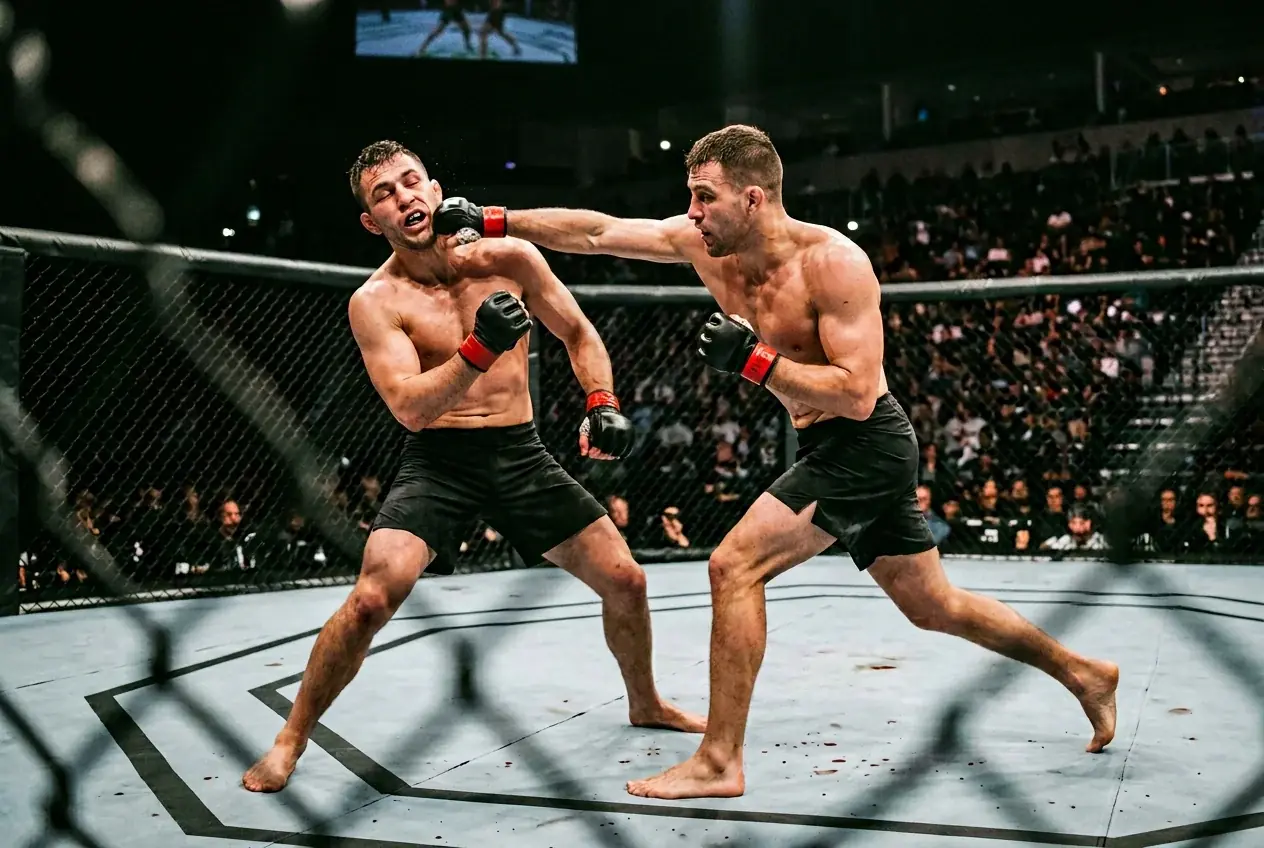
The best UFC bet I ever placed was on a submission. Not because I had a crystal ball, but because the price on the board was 7.50 and the fighter I backed had landed five subs in his last seven appearances. The moneyline price was 1.85. Same fighter, same fight, two completely different conversations with my wallet. He won by guillotine in round two and I bought a round.
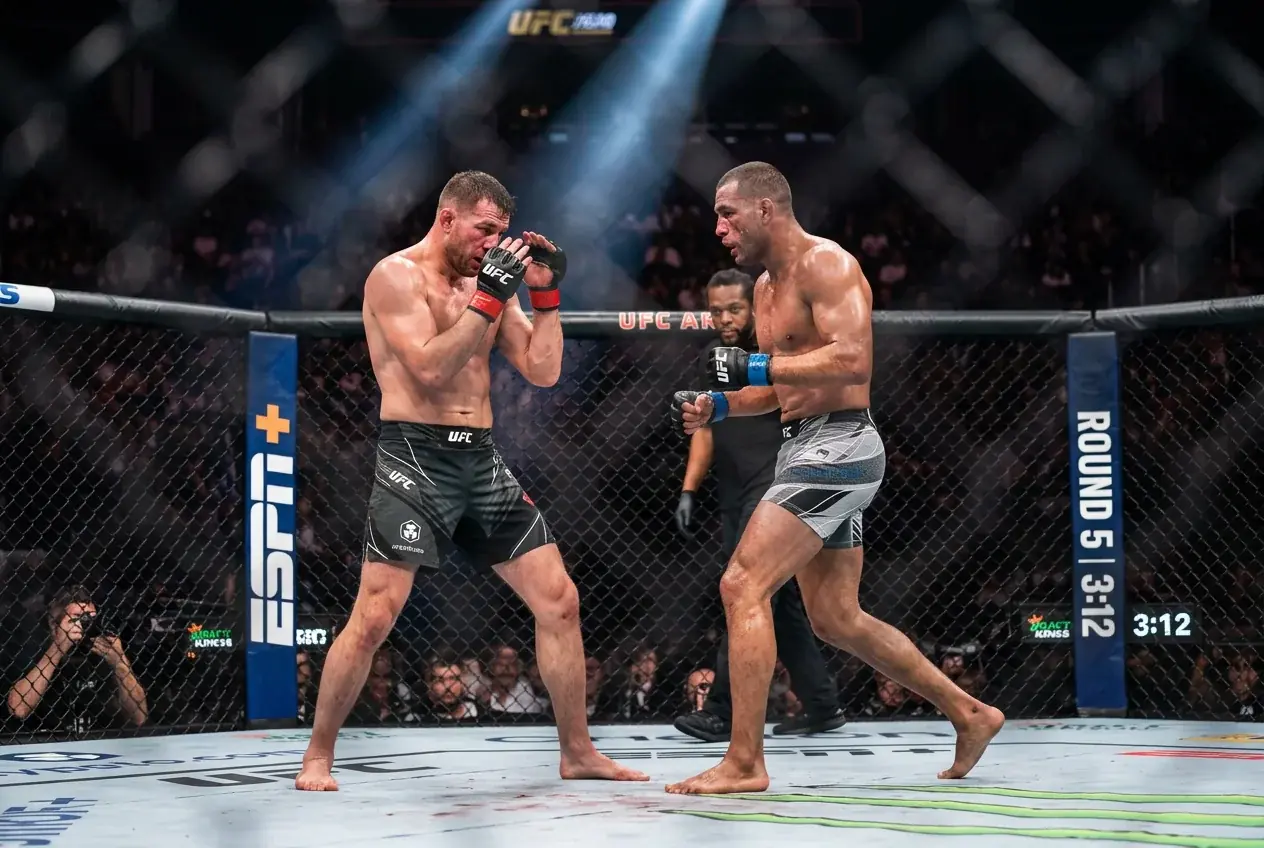
That is the whole appeal of method of victory in MMA. The moneyline asks one question — who wins. Method asks three — who, how, and roughly when. Every additional question the bookmaker has to price is another place where the line can be wrong, and where a punter with a feel for finish rates can find the kind of edge that does not exist in straight binary markets. The average UFC bout in 2023 ran 11 minutes and 1 second, and 92% of fights ended either by finish or by the judges’ decision. That gives you an enormous statistical canvas to work with.
This guide walks through how UK sportsbooks structure method markets, the actual finish rates across the divisions, and the situational logic that should drive your selection between KO, submission, and decision. I will be using percentages liberally. Across all UFC bouts, 33.3% end in KO or TKO, 19.7% by submission, and roughly 47% by decision — and those numbers shift sharply once you control for weight class. Heavyweight, for example, sees about 65% of bouts end by knockout. The numbers are the point. The method-of-victory market is one of the few places in MMA betting where statistics give you a real handle on the price.
Find optimal ways to play fight outcomes on our main website.
What method of victory actually means on a UK card
I once watched a friend lose a “winning” bet because he did not read the small print. He had backed a fighter to win by decision at 3.20 — the bout went the distance, his man got his hand raised, and the slip came back as a loser. The settlement reason was technical decision, not unanimous or majority. The bookmaker’s method market did not include that outcome explicitly, and his rules pushed it under draw/no contest.
A method of victory bet asks the sportsbook to settle not only on who wins but how. On a UK card, the standard market structures the outcome into three or four buckets — knockout/TKO, submission, decision, and on some books a draw or no contest as a separate fourth selection. You are pricing not just a winner but a route to victory, and the bookmaker is pricing the joint probability of that route alongside the moneyline they already offer.
The reason this market exists, and the reason UK punters keep coming back to it, is that it lets you express a view the moneyline cannot. If you think a heavy underdog has a real shot at a finish but very little path to a decision win, the method bet on KO turns a long-shot moneyline into a more articulated, often shorter-priced position. The cost is precision. The benefit is leverage.
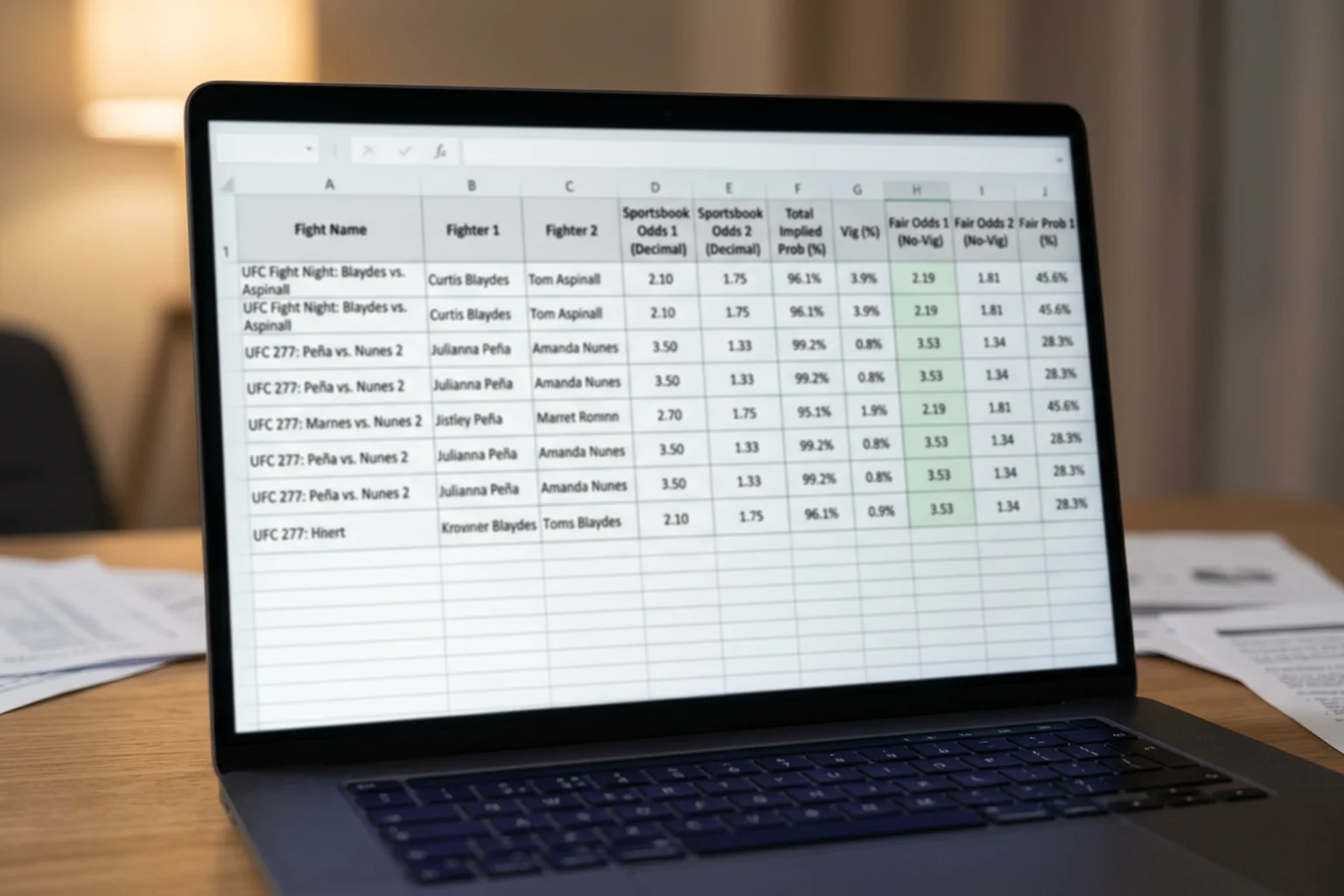
Where punters consistently get it wrong is treating method as a moneyline with a bonus. It is not. Each method bucket has its own probability distribution, its own statistical baseline, and its own pricing margin from the book. A four-way method market routinely carries an overround of nine or ten percent, against perhaps four or five percent on the moneyline. The market is taxed more heavily because the bookmaker is pricing more uncertainty. That has to be in your head before you place a single bet.
The four outcomes a UK book gives you to choose from
The UK method market looks deceptively simple on the slip. Fighter A by KO, by submission, by decision. Fighter B the same. Six possible outcomes on a three-way method market, eight if the book adds draw/no contest. The catch is that each of those buckets covers a wider range of fight endings than most casual punters realise.
KO/TKO is the broadest bucket. It covers a clean knockout where the loser is unconscious or non-responsive, a referee stoppage where the loser is still moving but eating shots they cannot defend, a corner stoppage between rounds, and a doctor’s stoppage from accumulated damage. All four settle the same way on a UK book. The distinction between a KO and a TKO matters to the post-fight headline writers, not to your bet slip.
Submission covers any tap-out, verbal submission, or technical submission where the referee intervenes because the loser is in immediate danger — a rear-naked choke where the fighter goes unconscious before tapping settles as a submission win, not a KO, even though the recipient is technically knocked out. Wikipedia entries argue about this constantly. UK sportsbooks generally follow the official UFC scorecard reading.
Decision is everything that reaches the final bell — unanimous, majority, split. On most UK books, technical decisions caused by accidental fouls also settle here, provided the fight has gone past the round threshold required to score. Some books treat technical decisions separately under draw/no contest, which is exactly the trap my friend fell into. Read the market rules before you stake anything.
Draw/no contest, where it appears as a fourth bucket, is the catch-all for genuine draws, overturned results, and bouts ruled no contest after the fact. The price on this outcome is typically very long — 30.00 or longer on a competitive bout — because the historical base rate is small. About 2% of UFC bouts end in something other than a clean finish or decision. Backing this market is essentially a lottery ticket with worse odds than a lottery ticket, and I have never seen a sharp punter take it as anything other than a hedge.
The UFC finish rate, properly counted
The single most useful number in UFC method betting is also the one most casual punters never bother to look up. 53% of UFC bouts end in a finish rather than going to the judges. That is the headline rate against which every method bet should be benchmarked, and most bookmakers price as though it were a coin flip.
Break it down further. Across all UFC fights, KO/TKO accounts for 33.3% of outcomes, submission accounts for 19.7%, and decision accounts for roughly 47%. Add a small percentage for draws and no contests and you cover the entire distribution. Those three numbers are the prior. Anything you do with method betting is an adjustment from that baseline based on the specific matchup, weight class, and styles in front of you.
The interesting part is the gap between perception and arithmetic. Casual punters consistently overprice KO. They watch the highlight reels, see the spinning back fists, and assume knockouts are the dominant ending. They are not — they are merely the most photogenic. Decisions outnumber knockouts by roughly fourteen percentage points across the promotion. That mismatch between public perception and statistical reality is where the bookmaker’s margin lives, and where a disciplined method bettor finds value.
What the average length tells you matters too. The mean UFC bout in 2023 ran 11 minutes and 1 second across all weight classes. A 15-minute three-round fight that finishes by minute 11 is a different price proposition from a fight that goes the distance — and the distribution of finish times is not flat. Most stoppages happen in rounds one and two; the longer a fight goes, the less likely it is to finish at all. By round three, with a healthy striker still on his feet, decision becomes the dominant outcome.
The takeaway: do not bet on method without a number in your head. If a 3.50 KO price corresponds to roughly a 28.6% implied probability before margin, and the general baseline for KO is 33.3%, the price might look long but is actually close to the population mean. A small edge appears only when the matchup justifies a deviation from baseline. Without that mental anchor, you are betting on aesthetics.
Finish rates by weight class and what they mean for your bet
The first time I saw the divisional finish-rate data laid out properly, I stopped pricing method bets the same way. The variance between weight classes is enormous, and it gets papered over in most online previews where every fight is described as “explosive” regardless of who is in the cage. The numbers correct for that.
Heavyweight is the headline. On a sample of 885 bouts, roughly 65% of UFC heavyweight fights end by knockout, and only 28.6% reach the judges — the lowest decision rate of any division. Pricing a heavyweight KO bet at a baseline of 33% rather than 65% is a beginner error that costs money on every card with a heavyweight main event. The combination of small-glove power, larger absolute mass behind every strike, and lower cardiovascular capacity at that weight makes finishes the default outcome rather than the exception.
The picture changes as you descend through the divisions. Light heavyweight and middleweight retain elevated KO rates but lose the heavyweight extremity. Welterweight and lightweight see a more even distribution between knockouts, submissions, and decisions. By featherweight and bantamweight, decisions become the modal outcome — fighter cardio is excellent, finishing power is reduced in absolute terms, and the talent pool is deep enough that lopsided stoppages are rarer. Strawweight and flyweight push the trend further: decisions dominate, submissions appear at a meaningful rate, and clean knockouts are the exception rather than the rule.
What this means for the bookmaker, and for you, is that the same nominal KO price means very different things at different weights. A 2.50 KO price on a heavyweight is a market saying the bout will likely end inside the distance — perfectly defensible against a 65% baseline. The same 2.50 price on a strawweight title fight is the bookmaker stretching credibility. Without divisional context, you cannot tell which is which from the price alone.
The flip side applies to decision pricing. A 1.70 decision price on a flyweight bout makes statistical sense given the historical rate; the same 1.70 on a heavyweight is the bookmaker telling you they believe a specific fight pattern justifies a deviation from baseline. Whether they are right depends on the matchup. Whether they are pricing it correctly depends on whether the public is buying or fading.
I will not labour the full table here — the heavyweight KO rate breakdown for UFC bettors covers the divisional logic in detail with the 65% number anchored to the underlying sample. The takeaway for this article is structural rather than numerical: before you place a method bet, identify the weight class baseline first, then ask what about this matchup justifies a deviation. If you cannot answer the second question, you are betting the population mean against a price that has already absorbed it.
The KO/TKO bet and when the price actually pays
The KO bet is the headline market and the one most likely to be mispriced against a casual public. I have made more money on heavyweight KO bets at modest prices than on any other single market category, not because I am clever but because the public consistently fades the favourite at heavyweight and the data says they shouldn’t.
The defensible case for a KO bet rests on three legs. First, the weight class baseline. Heavyweight, light heavyweight, and middleweight historically produce higher KO rates than the lighter divisions; if you are pricing a flyweight KO, you are arguing against the data before you start. Second, the specific fighter’s finish history. Look at how many wins came inside the distance, on what kind of strikes, and against what level of opposition. A fighter with twelve career KOs against journeymen tells you less than a fighter with five KOs against ranked opponents. Third, the opponent’s chin and stoppage history. If the man across the cage has been finished by strikes three times in his last six fights, your KO bet has a structural floor under it.
The pricing trap is the marquee favourite at short odds. A 1.40 moneyline favourite at heavyweight will often see a 1.85 KO price, and the maths frequently looks attractive — you are getting the most likely outcome plus a small premium for specifying method. The problem is that the bookmaker has seen the same data you have and priced accordingly. The implied probability after stripping margin will sit very close to the actual KO rate for that fighter against that opponent. Edge in this market lives in the underdog KO bet, not the favourite.
The underdog KO is where I do most of my work. A heavy underdog who can punch — a one-shot finisher with a thin record but explosive power — frequently gets priced at 6.00 or longer to win by KO when the moneyline implies they win 25% of the time. If 65% of their wins come by knockout, the implied path-to-victory rate is far higher than the bookmaker’s pricing suggests. Not always. Sometimes the price is correct because the matchup makes a finish unlikely. But the discrepancy appears often enough across heavyweight cards that the bet is worth checking on every event.
One practical rule: do not place a KO bet on a fight where the favourite’s last three wins all went to the judges. The fighter is showing you their pattern. The market is paying you to ignore it. Ignore it and you are paying margin to learn a lesson the data already gave you for free.
The submission bet and why it is the connoisseur’s pick
The submission bet is my favourite market in MMA, partly for sentimental reasons and partly because it remains the most badly priced category on most UK books. Submissions account for 19.7% of all UFC outcomes — roughly one in five fights — yet the public consistently treats them as an exotic outcome and the books oblige with prices that occasionally drift.
The submission market rewards specialist knowledge in a way the moneyline does not. To price a submission bet correctly, you need to know which fighter is the grappler, what their preferred finishing techniques are, whether their opponent has been submitted before and how, and whether the matchup creates the position from which the finish becomes possible. None of that information shows up on the casual fan’s radar. All of it is freely available to anyone who watches the tape.
Where the submission bet shines is on a fighter with a high submission rate against an opponent who has shown grappling vulnerabilities. The price often sits at 5.00 or longer because the bookmaker is pricing across the full method distribution, but the joint probability of the matchup producing a submission can be materially higher than the price implies. Submission specialists facing strikers with takedown defence gaps are the cleanest example. When the grappler also has a wrestling base capable of getting the fight to the mat, the price the book offers becomes structurally attractive.
The trap is the reverse scenario — backing a submission specialist who cannot get the fight to the floor in the first place. A black belt with no takedown game and average wrestling is a black belt watching the fight from his back foot. The submission threat exists in theory; in practice the fight stays standing and the bet dies on the cage fence. Always price the path to the position before you price the finish from it.
Lightweight, welterweight, and women’s flyweight produce the highest submission rates in modern UFC samples, while heavyweight produces the lowest by some distance — heavyweights tend to either knock each other out or grind to decision. If you are placing a submission bet at heavyweight, the matchup needs to be exceptional. At lightweight, the baseline supports the bet before you have argued the specifics.
The decision bet and the traps it hides
Decision bets look like the safe option. They are not. The decision market is the most heavily taxed of the three primary method categories on most UK books, and the public’s instinct to back the favourite “to win however” gets converted into a “by decision” bet at a worse price than the moneyline almost every time.
The mathematical case for a decision bet is straightforward — pick the fighter you think wins, then ask whether the matchup is likely to go the distance. If both fighters are durable, both are technically sound, and the styles favour control over finishing, decision is the most probable specific outcome. The price will typically sit between the moneyline and the KO/submission alternatives, and on a five-round main event the decision rate climbs above the population baseline.
The first trap is divisional. Heavyweight decision bets are statistical contrarians — only 28.6% of heavyweight bouts reach the judges. Pricing a 2.00 heavyweight decision price as a steal because “both these guys never finish” misreads the data. The men in front of you may have decisioned their way through their last five bouts, but the population at their weight class still finishes the majority of fights. The historical base rate is fighting you on the heavyweight ticket no matter what.
The second trap is the five-round dynamic. A championship or main-event distance fight changes the finish probability in non-obvious ways. Two extra rounds give a determined finisher more time to land, raising KO probability for a striker on the front foot. But the extended distance also amplifies fatigue, allowing a high-volume fighter to outlast a finisher who has emptied their tank in rounds one and two. Whether decision becomes more or less likely in a five-round bout depends on the matchup specifics — assuming the longer fight automatically means a longer odds on decision is wrong as often as it is right.
The third trap is judging. A fight that “should” be a decision sometimes is not, because the judges score a tactical bout for the opponent you backed against. This is the residual uncertainty no amount of statistical work can fully erase. The UK Gambling Commission ran 9,700 compliance assessments in the 2024-2025 reporting year against 4,200 the previous year — that scrutiny relates to market integrity rather than fight outcomes directly, but it reinforces a broader point: judges’ decisions remain one of the few areas where the result rests on subjective scoring rather than measurable outcomes. A decision bet is a bet on the judges as much as on the fighter.
I use decision selectively. Lightweight title fights with two well-matched veterans, women’s bantamweight bouts between technical strikers, featherweight matchups where neither fighter has a finishing reputation — these are the spots where a decision price is more defensible than the moneyline. Outside those structural windows, the moneyline at a worse price is usually the better bet.
Round betting and over/under rounds, in brief
The round market is method betting’s natural sibling. If method asks how a fight ends, round betting asks when. Most UK books offer two related markets: an over/under total rounds line set somewhere between 1.5 and 2.5 rounds depending on the matchup, and a specific round of finish market that lets you back the bout to end inside round one, round two, and so on.
The over/under market is the cleaner of the two for casual punters. The book sets a line, you bet above or below it. A favourite expected to finish early will push the line towards 1.5; two cardio specialists projected to grind will pull it towards 2.5 or higher. The implied finish-time distribution sits inside the line, and stripping the margin tells you what the market actually thinks about pace.
The specific round market is harder and richer. A fighter who consistently finishes in round two — the second-round closer, often a high-output pressure fighter whose damage compounds across the opening five minutes — can be priced at attractive odds on that specific round. The trap is overconfidence in pattern: three consecutive round-two finishes does not guarantee the next one. Use round-specific markets sparingly and only where the matchup creates a structural reason for the timing.
What both markets share with method betting is sensitivity to the weight-class baseline. Heavyweight bouts that finish overwhelmingly do so early — round one and two carry most of the distribution. Lighter weight class bouts that go to the cards tend to use all the rounds available, so over markets at 2.5 in flyweight or strawweight need a specific finishing reason to make sense.
The president of TKO Group, Mark Shapiro, has made the point publicly — paraphrasing — that the pay-per-view model belongs to a previous era. That commercial shift is changing the cadence of the calendar, but the round-distribution data on individual fights remains the bedrock for these markets. A more thorough treatment of total rounds and over/under structure sits in the dedicated cluster article on round betting; for the purposes of method bets, what matters is that round selection multiplies the bookmaker’s margin again. Tread carefully.
Combining method and round for a single wager
The most expensive bet a casual punter can talk themselves into is the method-and-round combination — “Fighter A by KO in round 2.” It feels precise, it pays well when it lands, and it dies a quiet death roughly nine times out of ten. The reason is that you are stacking two probability filters on top of each other, and the bookmaker is charging you margin on both.
Match your method of victory predictions with the correct over/under round total markets.
Mathematically, the combined market multiplies the method probability by the round probability. If a fighter has a 30% chance to win by KO and the KO, when it happens, lands in round two 35% of the time, the joint probability sits at around 10.5%. The fair price is roughly 9.50. A UK book will typically offer 11.00 or longer on that selection, which seems generous until you remember the joint market carries an overround often above 12% — your value is being eaten by the structure of the bet, not the price tag.
Where the combined bet earns its keep is when the matchup creates a clear timing pattern. A pressure striker known for finishing in the championship rounds, facing an opponent whose chin has historically held until the late stages, gives a legitimate path to a round-four or round-five KO that the population data alone would not predict. The bookmaker prices off the base rate; a punter with a feel for the specific fight pattern can find prices the algorithm has not adjusted for.
The same logic applies in reverse for early-finish picks. A fighter who blitzes from the opening bell against an opponent with a porous opening round has a legitimate first-round KO case that the market may underprice if the moneyline is short. The cleanest version of this bet is on heavy favourites at heavyweight who explode early — the joint probability of a round-one KO can exceed 30% in specific matchups, and the price often sits north of 3.00.
My rule with combined markets is that I will only place one when I have a specific story for both the method and the round, drawn from the matchup itself rather than from base rates. If I cannot articulate why this particular fight ends this particular way in this particular round, I default to the simpler market. The book wants you in the combined market. That alone should make you suspicious.
Which UFC weight class has the highest knockout rate?
Heavyweight, by a clear margin. On a sample of 885 UFC heavyweight bouts, roughly 65% end by KO or TKO, and only 28.6% reach the judges — the lowest decision rate in the promotion. The combination of small-glove power, larger absolute mass behind every strike, and lower cardiovascular endurance at that weight makes finishes the default rather than the exception. Light heavyweight and middleweight retain elevated KO rates but sit below the heavyweight extreme.
How is a draw or no contest settled on a method-of-victory bet?
It depends on the bookmaker and the specific market structure. Some UK books offer draw/no contest as a fourth selection within the method market, which settles directly if either outcome occurs. Other books treat the method bet as a three-way market and refund stakes on a draw or no contest result. Technical decisions sometimes get folded into the decision bucket and sometimes into draw/no contest. Always check the market rules before placing the bet — settlement varies more than punters expect.
Is decision the safest method-of-victory pick for favourites?
Not necessarily. Decision is the modal outcome across the full UFC sample at 47%, but the rate falls dramatically at heavyweight, light heavyweight, and middleweight where finishes dominate. A favourite at flyweight or featherweight backed to decision usually sits close to the base rate; the same bet at heavyweight is fighting a 28.6% baseline. The decision bet is safer than KO or submission only when the weight class, the matchup, and the round duration all support a fight going the distance.
Written by the editors at Where can i bet on ufc.