UFC Over/Under Rounds: Reading the Fight Totals
 Available in US
The first time I cashed an over 2.5 rounds bet on a UFC main event was an education. The fight was billed as a guaranteed knockout – both fighters were finishers, the build-up was electric, the crowd expected violence in round one. They tactical-feinted through 15 minutes and the judges scored a split decision. I had backed over 2.5 at decimal 2.10 against a market that priced the fight as if a finish was a certainty. The lesson: round totals reward bettors who read the bout’s actual rhythm rather than the marketing.
The average UFC bout lasts 11 minutes and 1 second, and 92 percent end with either a finish or a decision. Round totals are the cleanest way to bet on bout duration without committing to a specific outcome, and the prices on these markets often misprice what the fight will actually do. Knowing how the totals are set, and where they tend to drift, is the foundation of profitable round-by-round trading.
Adjust your round duration models on our main website.
How the Rounds Total Gets Set
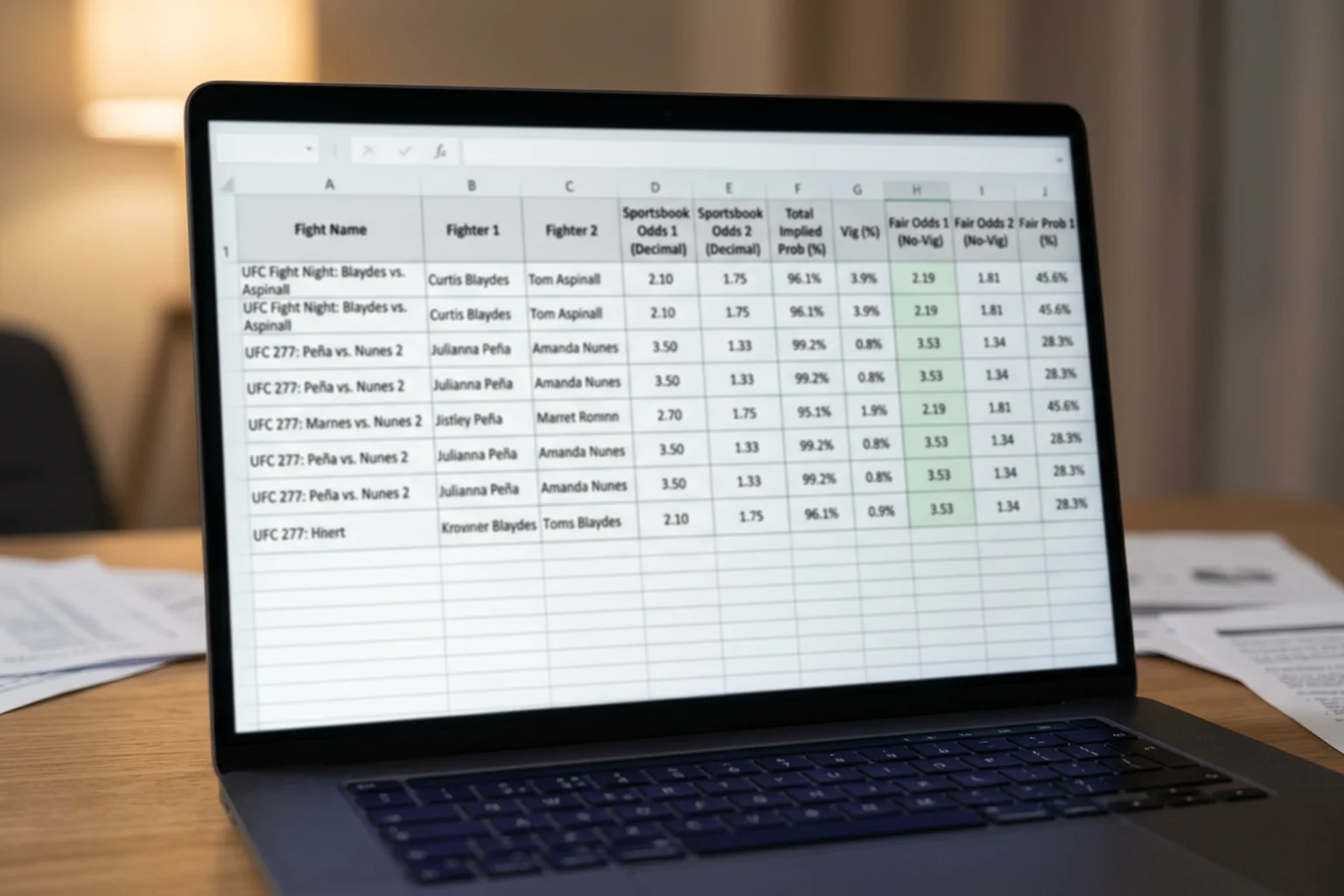
Trading desks build the over/under round line by working backward from the fighters’ historical fight duration. Average fight time, finish rate, finish round distribution, and strikes-per-minute all feed into a model that spits out a number – usually 1.5 or 2.5 rounds for three-round bouts and 2.5, 3.5, or 4.5 for five-round main events.
The line that emerges is not the median fight length. It is the round threshold where the desk expects the market to clear roughly evenly between the over and the under. On a bout that desk’s model predicts will end at 8 minutes 30 seconds, the over/under 2.5 line is set such that the over price and under price both sit around decimal 1.85 to 1.90 – enough action on both sides to make the book a clean margin regardless of outcome.
Where the line breaks from a clean midpoint is when the desk anticipates lopsided action. A heavyweight bout with two known finishers will draw heavy under 1.5 money from public bettors. The desk shortens the under price and lengthens the over to balance the book. The over bet at decimal 2.20 on a heavyweight slugfest is often where the value sits – not because it always wins, but because the price has been inflated to attract balance.
Three-Round Versus Five-Round Totals
A three-round UFC bout runs 15 minutes maximum. A five-round main event or title bout runs 25 minutes. The lines on these are completely different markets with different underlying mathematics.
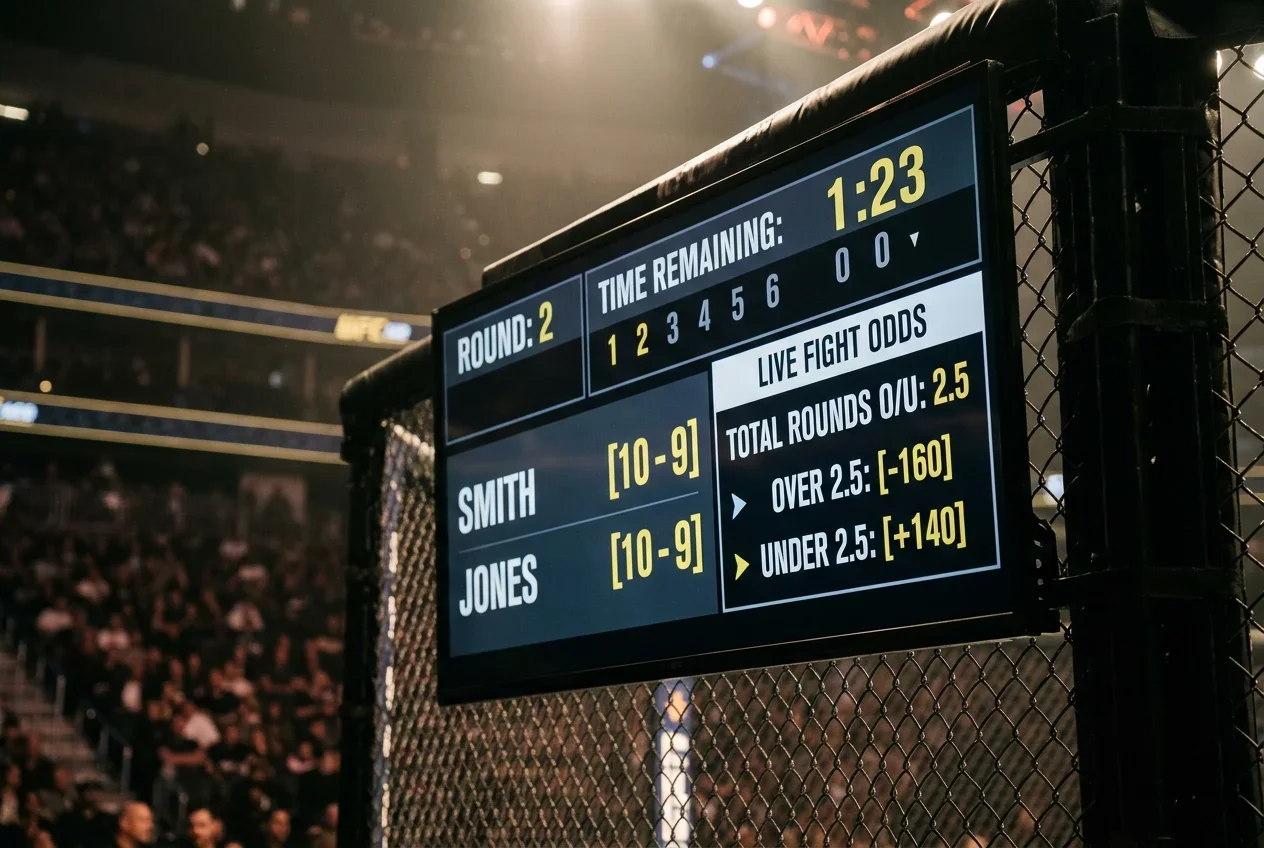
On a three-round bout, the most common totals are over/under 1.5 rounds and over/under 2.5 rounds. The 1.5 line splits early finishes from the rest of the bout – implied probability of a fight ending inside the first round and a half typically runs at 30 to 40 percent depending on the division. The 2.5 line splits decisions and late-round finishes from earlier endings – implied probability of reaching 12:30 of fight time runs at 45 to 65 percent across divisions.
On a five-round main event, totals stretch out to 4.5 rounds – which means the bout reaches the final round before ending. Five-round bouts have a peculiar finish distribution: fewer round-1 finishes than three-rounders (because both fighters pace for a longer bout), more late finishes (because the gas tank disparity compounds), and a higher overall decision rate (because two championship-level fighters tend to be more cautious). The full mechanics of five-round main event betting sit in the five-round fight betting walkthrough.
Average Fight Duration and What It Hides
The 11:01 UFC-wide average is misleading taken alone. It bundles three-round prelim bouts with five-round main events, includes early stoppages alongside decisions, and treats all divisions as equal. The division-by-division spread is dramatic.
Heavyweight bouts average around 6 to 7 minutes. Flyweight bouts run closer to 13 to 14 minutes. Women’s strawweight pushes 12 minutes. The same over 2.5 rounds bet means radically different things depending on which weight class is on the slip. A 2.5 line on a heavyweight bout is a real coin flip – sometimes shorter than 50 percent implied probability. A 2.5 line on a flyweight bout is essentially saying “this fight will reach the final five seconds” with implied probability above 65 percent.
Trading desks know this and price accordingly, but the secondary market – props, combinations, builders – sometimes lags. If you see a flyweight bout where the over 2.5 line is decimal 1.80 instead of the more typical 1.50, the desk has either signalled it expects an early finish or has not adjusted the line as fight week progressed. Either way, the discrepancy is worth investigating before placing a stake.
Pairing Round Totals With Method-of-Victory
The cleanest UFC bet builder I run combines an under 2.5 rounds leg with a fighter-by-KO leg on the same favourite. The correlation is high – if the favourite finishes the underdog, it almost certainly happens before the third round – but UK book pricing on the combined market tends to undercount the correlation, leaving 5 to 10 percent of value over the implied product of the two singles.
The opposite pairing – over 2.5 with a moneyline favourite – works on bouts you expect to be tactical and judgement-bound. A grappler against a striker with strong takedown defence often produces over 2.5 outcomes that end on the cards. The combined market on this pair pays roughly decimal 2.40 to 3.20 when both legs are pre-priced as moderate likelihoods, and the implied probability often sits well above the actual hit rate.
What does not work: over with a sub-by leg. Submission finishes can happen at any point and are rarely correlated with the bout going long. The bet builder price on this pair often looks inflated, but the underlying probability is genuinely low.
One subtler pair worth running on five-round bouts: over 3.5 rounds combined with the favourite-by-decision market. Both legs require the bout to go long, both lean on the same underlying assumption about pacing, and the bet builder pricing tends to capture that correlation cleanly. The combined price often sits at decimal 3.20 to 4.00 on title bouts where the styles suggest a tactical fight, which is closer to fair than the singles product would indicate.
Pair these round estimations with the high-value KO, submission or decision markets.
Doctor Stoppages, No-Contests, and the Settlement Pitfall
Round totals settle on the official end-of-fight time recorded by the commission. A doctor stoppage between rounds counts as a TKO at the end of the prior round – so a fight stopped at the end of round 2 settles as 10 minutes of fight time, which means under 2.5 pays out at most UK books. The exception is a stoppage during the round itself, where the stoppage time is the settlement marker.
No-contests are different. If a fight is declared a no-contest because of an accidental foul, most UK books void all round-totals bets and return the stake. A small number of books settle based on whether the no-contest happened before or after the over/under threshold, which can produce surprising outcomes – a fight stopped at 3:00 of round 2 might pay out the over 1.5 even as a no-contest, because the over hit before the stoppage. Read the settlement rules of your specific book before placing the bet.
Does the round timer have to fully expire to count for an over?
No. The over 2.5 rounds bet settles whenever the official fight time passes 12:30 – which is exactly halfway through the third round. A stoppage at 12:31 of round 3 settles the over as a winner. A stoppage at 12:29 settles it as a loser. The full round does not need to be completed.
How are over/under settled in a no-contest?
Most UK sportsbooks void all over/under round bets in a no-contest and refund the stake regardless of how far the bout had progressed. A small minority settle based on whether the threshold had already been crossed when the no-contest was declared. Always check the bookmaker’s published rules before placing the bet, since the policy varies by operator.
Published by the Where can i bet on ufc team.