UK Bookmaker Account Restrictions for UFC Punters
 Available in US
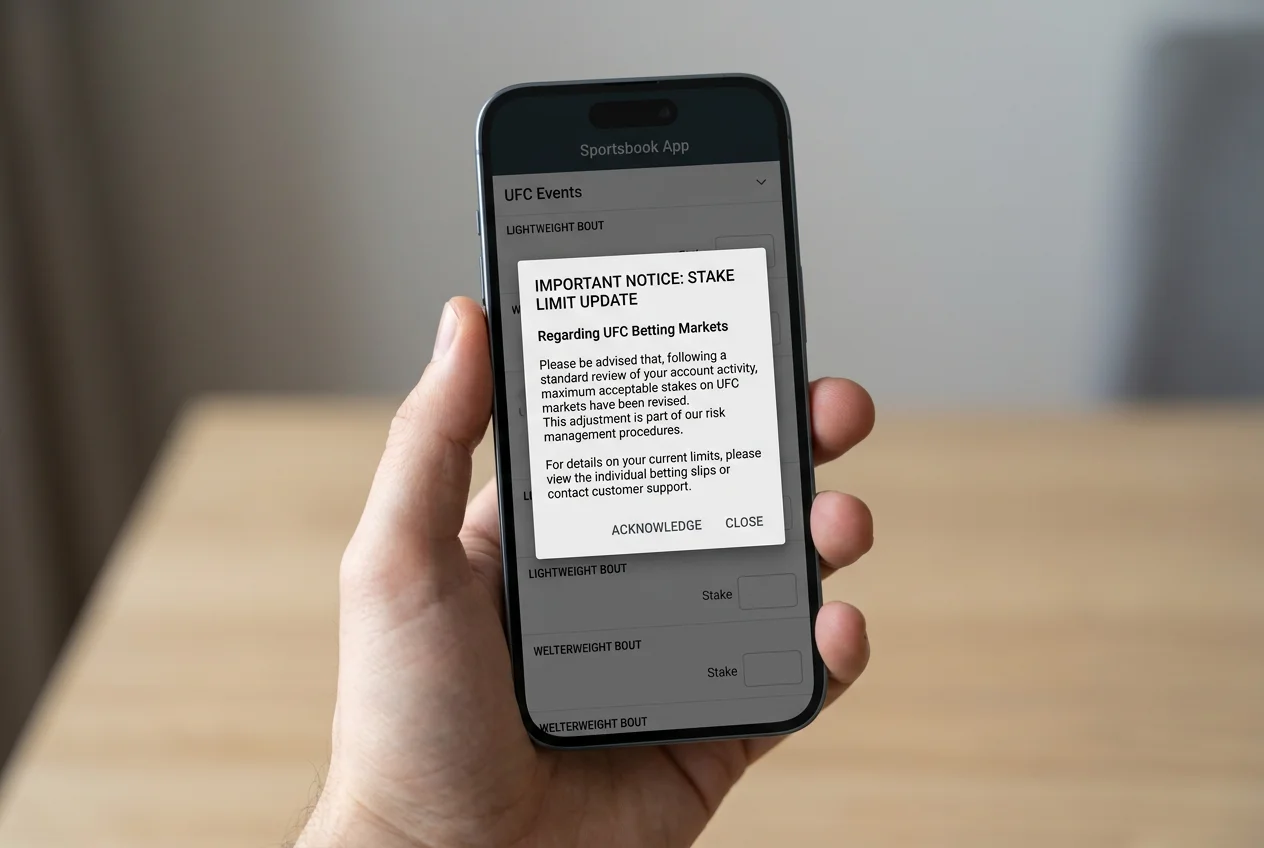
The first time my UFC stake got cut at a UK sportsbook, I was 18 months into developing a method-of-victory model that was actually working. I had been backing favourite-by-decision bets across two divisions for several months, hitting at a rate the implied probabilities did not justify, and one Sunday I logged in to discover that my £50 stake on a UFC main event prop had been capped at £8 maximum. No email, no warning, no explanation. The account was still open, the moneyline markets were still available at normal stakes, but the prop markets I had been profiting on were now effectively closed. The wider regulatory context that frames this practice sits in the UK regulation and checks guide; this piece is the specific anatomy of the restriction itself.
Account restrictions in UK sports betting are real, common, and largely outside regulatory protection. The Gambling Commission’s most recent data shows that 4.31 percent of accounts were restricted for commercial reasons over a 12-month period, and many of the restricted accounts belonged to winning customers. The practice is legal, the practice is widespread, and the practice is something every UFC bettor with positive expected value will eventually encounter.
Compare licensed UK sportsbooks on our main website.
The UKGC Data on Restrictions
Andrew Rhodes, the UKGC Chief Executive, disclosed the 4.31 percent figure at the IAGR 2025 conference in October 2025. The number covers commercial restrictions – restrictions applied for business reasons rather than for compliance reasons like AML or affordability. Many of the restricted accounts were winning customers whose betting profile no longer matched the operator’s commercial objectives.
The same year, the UKGC took 9,700 compliance actions against UK operators, more than double the 4,200 the previous year. Criminal cases through the regulator rose 300 percent year on year. The regulatory pressure on operators has intensified, but the regulator has been careful to distinguish between compliance-driven restrictions – which are required – and commercial restrictions – which are not regulated as tightly.
For UFC bettors specifically, the commercial restriction rate is probably higher than the overall industry average. UFC is a niche market where a small number of skilled bettors can capture meaningful expected value through specialist knowledge, and the operators identify these bettors faster than they identify equivalent profiles on broader markets like football. UFC bettors with closing line value above zero have a noticeably higher restriction rate than the industry baseline.
Signals That Trigger a Stake Cut
Five signals that bookmakers’ commercial models flag. First, consistent winning across a sustained sample – typically more than 100 settled bets with a positive return. The operator’s model identifies the pattern and applies a stake limit before the winning continues. Second, bets placed at prices that consistently beat the closing line – even if the individual bets lose, the closing line value pattern signals analytical edge that the operator wants to limit exposure to.
Third, niche-market specialisation. UFC prop bets, lower-tier MMA, and exotic same-game builders are the markets where retail bettors most often develop edge, and operators monitor account activity on these markets more closely than on the main moneylines. A punter whose entire activity is on UFC method-of-victory props at favourable odds is a sharper bet for the operator than a generalist who bets across many sports.
Fourth, bonus exploitation. Operators identify accounts that systematically extract value from welcome bonuses, free bet promotions, and reload offers. These accounts get restricted faster than analytical bettors, partly because the model can detect bonus exploitation more easily and partly because the operator views bonus arbitrage as a different category of risk.
Fifth, withdrawal-to-deposit ratio. Punters who withdraw substantially more than they deposit over a sustained period are profitable customers, and profitable customers get restricted by commercial models that prioritise net contribution to the operator’s bottom line.
What Restriction Looks Like Day to Day
The first form of restriction is the stake limit. The operator caps the maximum stake on certain markets – sometimes a specific bet type, sometimes the entire UFC product. The cap might be set at £8 or £15 on markets where you previously could stake £100 or more. The market is still available, but the stake size is no longer commercial.
The second form is the bonus exclusion. The operator removes you from promotional offers. Welcome bonuses, free bets, odds boosts, and acca insurance promotions stop appearing in your account. The base product is still available, but the promotional layer that subsidises many recreational bettors’ losses is no longer accessible.
The third form is the price restriction. The operator quotes you a slightly different price than the public quote – usually a few cents shorter on the side you would back. The market is still available, the stake limit is normal, but the price is structurally worse than the price other customers see. This form is harder to detect than the stake limit because it requires comparing prices across multiple accounts.
The fourth form is the outright closure. The operator closes your account with a generic notice citing the terms and conditions. The remaining balance is refundable but you cannot place further bets. Outright closure is less common than stake limits but does happen, particularly for accounts that the operator’s model rates as high commercial risk.
Appealing a Restriction
Commercial restrictions are not subject to regulatory appeal in the way affordability or AML restrictions are. The Gambling Commission has been clear that operator commercial decisions are within the operator’s discretion. The UK Alternative Dispute Resolution services that handle gambling disputes typically decline to intervene in commercial restriction cases.
That said, some restrictions are reversible through direct conversation with the operator. A bettor who escalates politely, demonstrates understanding of the operator’s commercial concerns, and offers to adjust their betting pattern can sometimes negotiate a reduced restriction or a return to normal stakes after a cooling-off period. The success rate is modest but the conversation costs nothing.
The more common practical response is to open accounts at multiple UK operators and spread the betting across them. Operators that have restricted your account at one brand do not share that information with other operators by default, so the restriction is operator-specific rather than industry-wide. A skilled UFC bettor with edge typically maintains accounts at five to ten UK operators and rotates the betting activity to delay restriction at any single book.
Exchanges as an Unrestricted Route
Betting exchanges operate on a different commercial model than traditional sportsbooks. The exchange does not take positions against the bettor – they match bettors against each other and charge a commission on winnings. There is no commercial reason for an exchange to restrict a winning customer because the exchange’s revenue does not depend on the customer’s bets losing.
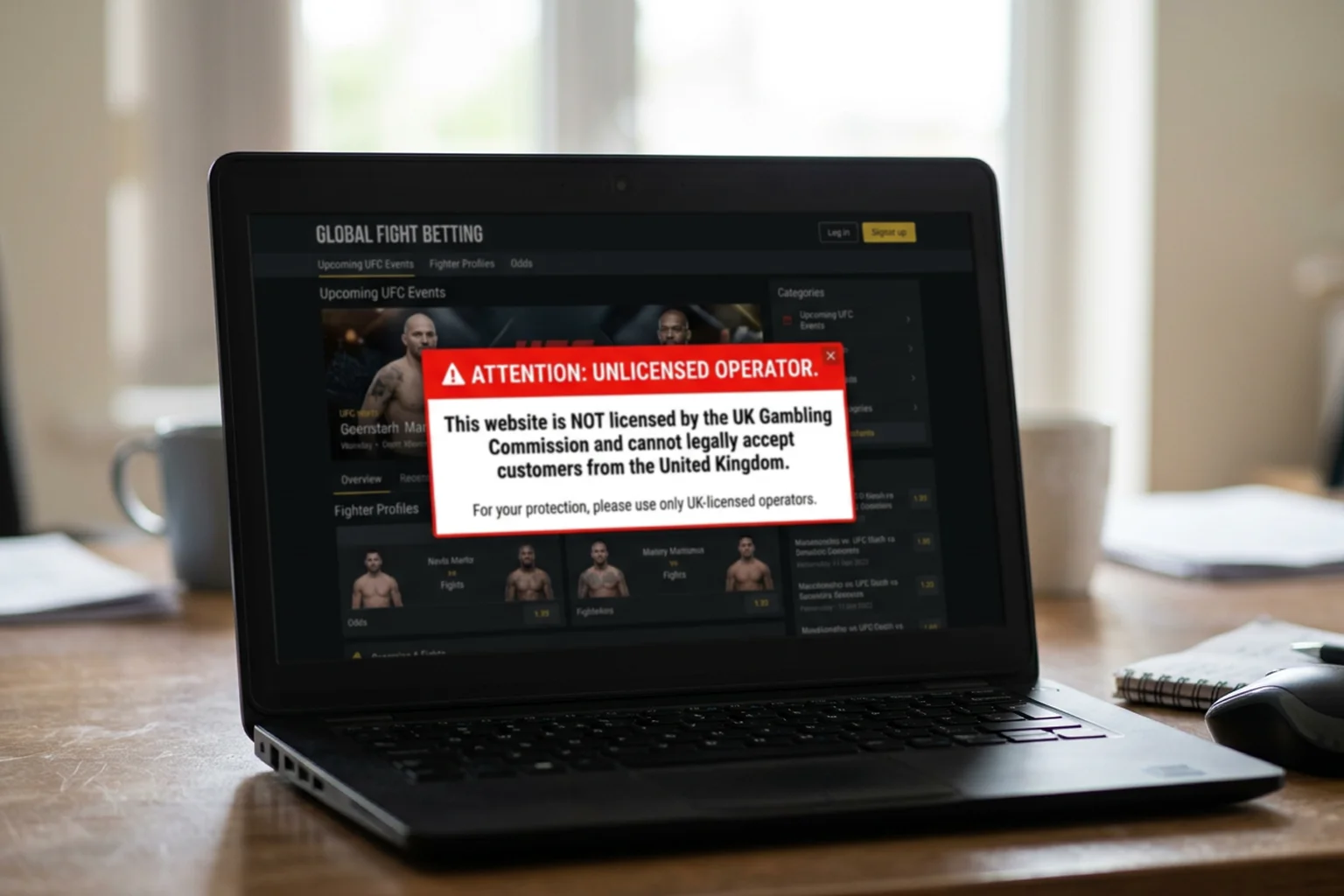
Ensure you are protected against arbitrary limits by learning how to verify a bookmaker’s UKGC license.
The trade-off is that exchange prices are different from sportsbook prices. The best exchange prices typically beat the best sportsbook prices on liquid markets like UFC main event moneylines, but the depth on prop markets and bet builder constructions is much shallower on exchanges. A UFC main event moneyline might have £50,000 of liquidity on the exchange, while a method-of-victory prop on the same bout might have only a few hundred pounds matched.
For UFC bettors who have been restricted at multiple sportsbooks, exchanges are the obvious next step for the moneyline action. The prop-bet specialisation that probably caused the restriction in the first place is harder to migrate to the exchange because the prop liquidity is thinner. The practical strategy is using exchanges for the core moneyline bets and accepting that the prop-bet edge that triggered the original restrictions may need to be moderated.
Can a UK bookmaker close my UFC account without giving a reason?
Yes. UK operators retain the right to close customer accounts under the terms and conditions that customers accept at registration. Operators typically cite a generic terms violation rather than providing a specific reason, and the regulatory framework allows this practice for commercial decisions. The remaining balance must be refunded, but the operator is not required to provide further explanation. Compliance-driven closures – AML, affordability, fraud – are more regulated and typically involve more transparency.
Do exchanges restrict UFC bettors the way sportsbooks do?
No. Betting exchanges operate on a commission model – they earn revenue from a percentage of winnings rather than from the bettor’s losses, so there is no commercial reason for the exchange to limit a winning customer. Exchange accounts of skilled UFC bettors typically remain unrestricted indefinitely. The trade-off is shallower prop-bet liquidity than the sportsbook market, so exchanges work best for moneyline and rounds-totals activity rather than for specialist prop strategies.
Published by the Where can i bet on ufc team.