Unlicensed UFC Betting Sites: Risks and Disadvantages
 Available in US
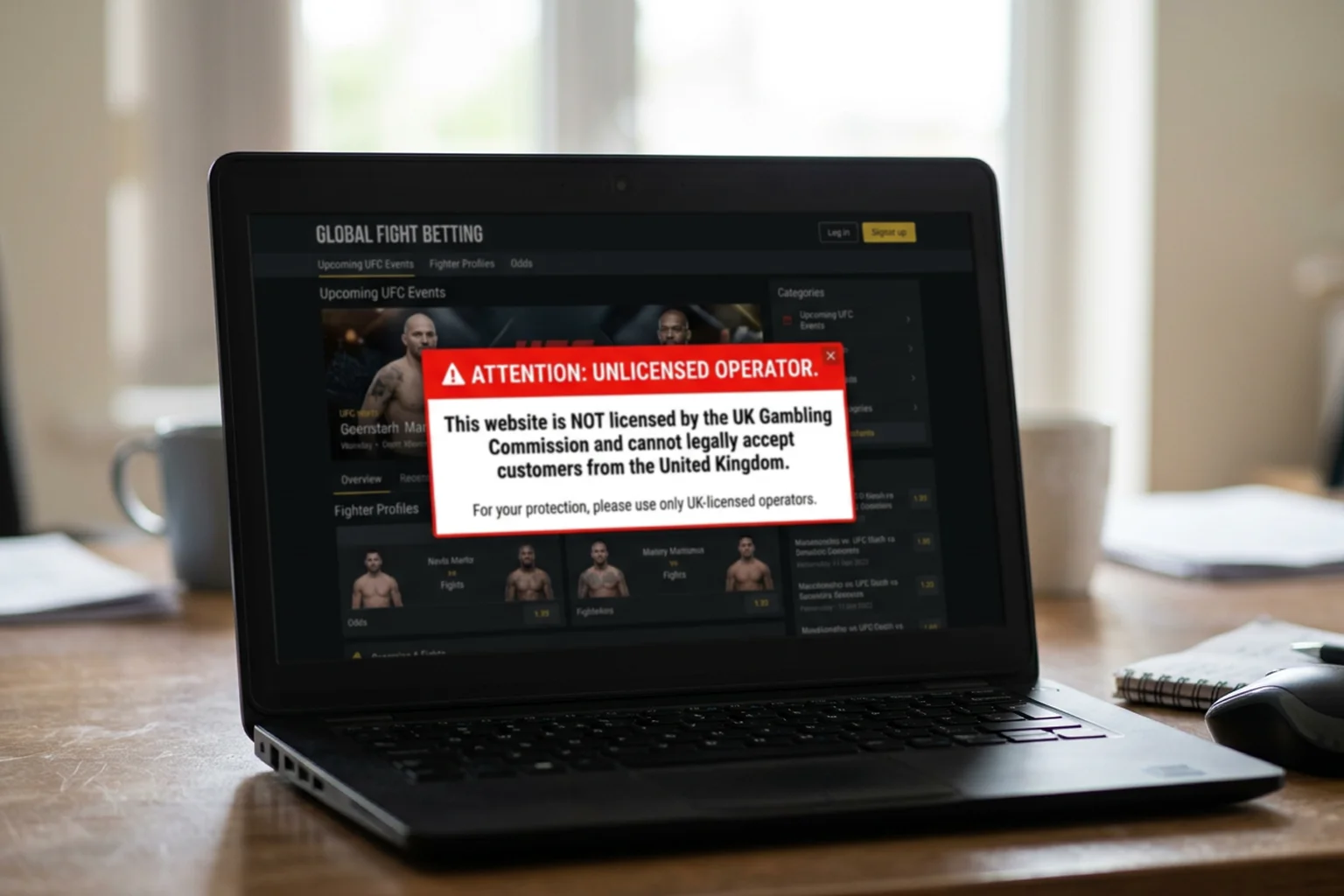
A UFC fan I know in the south of England signed up to a slick-looking sportsbook in 2024, deposited £150, won £400 on a UFC welterweight bout, and never saw any of the money again. The site claimed his “verification documents” were unsatisfactory, then stopped responding to support requests, then disappeared from the web entirely a few weeks later. He had no recourse because the operator was not UKGC-licensed and the dispute resolution path that protects UK punters did not apply. Eight years of watching this market, the same story repeats with depressing frequency. The Gambling Commission removed approximately 200,000 URLs from search results in a single financial year because the regulatory side of UK gambling is fighting an active war with the offshore industry.
Andrew Rhodes, the UKGC Chief Executive, framed the regulatory challenge bluntly in his IAGR 2025 keynote: “What I thought was a five-year-away problem, perhaps a year or two ago, I think is now an 18-month to two-year challenge.” His point was about cryptocurrency, but the broader regulatory pressure on unlicensed sites covers many of the same patterns.
Stick only to legal and authorized bookies listed on the homepage.
The Scale of the Unlicensed Market
The Gambling Commission monitors traffic on more than 1,000 unlicensed gambling platforms that target UK customers. The 200,000 URLs removed from search engine results in the most recent financial year reflect the scale of the visibility problem – these sites generate fresh URLs faster than the regulator can take them down, and the takedown process is a continuous game of compliance whack-a-mole.
Most unlicensed UFC betting sites are operated from jurisdictions with weak gambling regulation: Curacao, Costa Rica, the Isle of Man under non-UK frameworks, and a smaller number from Asia-Pacific bases. The operators may hold licences in their home jurisdiction, but those licences do not authorise them to take bets from UK customers. The “international licence” claim that some sites display is regulatory theatre with no UK consumer protection value.
The unlicensed market overlaps significantly with the cryptocurrency sportsbook segment. Many offshore UFC sites accept cryptocurrency precisely because the regulated payment networks have closed off the channel for unlicensed operators. If a UFC betting site is advertising cryptocurrency deposits to UK customers, the site is almost certainly operating outside the UK regulatory framework.
How Unlicensed Sites Target UK MMA Fans
The marketing channels for unlicensed UFC sportsbooks have become sophisticated. Search engine advertising – paid placement on UFC-related keyword searches – is one route, although the regulated search engines have tightened their gambling ad policies over the past two years. Social media advertising, particularly on platforms with weaker gambling-ad enforcement, is another route.
Affiliate marketing is the third and arguably the most effective channel. Unlicensed sites pay affiliates aggressive commission rates to promote them to UK MMA fans, and the affiliate sites often appear in search results alongside legitimate review sites. A reader who lands on an affiliate review of “the best UFC betting sites” may find unlicensed operators presented alongside UKGC-licensed ones with no clear indication of the licensing difference.
The marketing language is calibrated to UK MMA culture. References to British fighters, UK card events, and UFC London promotions appear alongside generous-looking bonus offers that exceed what UKGC-licensed operators can sustainably provide. Inflated bonuses are themselves a warning sign – the unlicensed economics support promotional spending that the licensed industry cannot match because the unlicensed operators have no intention of paying out major winnings. The cryptocurrency overlap is detailed further in the crypto UFC betting risks guide.
Payment and Withdrawal Traps
Deposits to unlicensed UFC sites are easy. The site accepts the funds and credits the betting account. Withdrawals are where the operator’s true business model becomes visible.
Three common withdrawal traps. First, the verification block – the operator demands documentation, rejects whatever the punter sends, demands more, and eventually refuses to release funds on the grounds of “incomplete verification”. The verification process at unlicensed sites is sometimes deliberately constructed to be impossible to satisfy. Second, the wagering requirement trap – the operator’s bonus terms include wagering requirements applied not just to the bonus but to the entire balance including the original deposit, making withdrawal effectively impossible without staking through many multiples of the original deposit. Third, the account suspension trap – the operator suspends the account for an alleged terms violation and refuses to refund the balance, with no regulatory body to appeal to.
UK punters who lose money to unlicensed sites have limited recourse. The dispute resolution path that applies to UKGC-licensed operators does not apply to unlicensed ones. A few cases have been resolved through bank-side chargebacks on the original card deposit, but the success rate depends on timing and on whether the deposit was funded by a card method that supports dispute reversal.
No Disputes, No Recourse
The dispute resolution process for UKGC-licensed operators runs through the operator first, then through an Alternative Dispute Resolution service approved by the Commission, then through the Commission itself if the issue escalates. Unlicensed operators are not part of this system. A punter who has a dispute with an unlicensed site has no neutral third party to appeal to.
The Financial Ombudsman Service does not cover gambling transactions. The Citizens Advice Bureau can provide guidance but has no enforcement authority over offshore operators. Trading Standards in the UK has occasionally taken action against domestic affiliates promoting unlicensed sites, but the unlicensed sites themselves are outside Trading Standards jurisdiction.
The practical reality for a UK punter with money trapped in an unlicensed UFC site is that the money is most likely lost. The lesson is preventive – verify the licence before depositing rather than trying to recover funds after a dispute.
How to Leave an Unlicensed Account
If you discover that the site you have been using is unlicensed, the first priority is withdrawing any remaining balance. Request the withdrawal through normal channels. If the operator processes it, you have escaped with the funds intact. If the operator stalls or rejects, you have learned that the relationship is structurally one-sided.
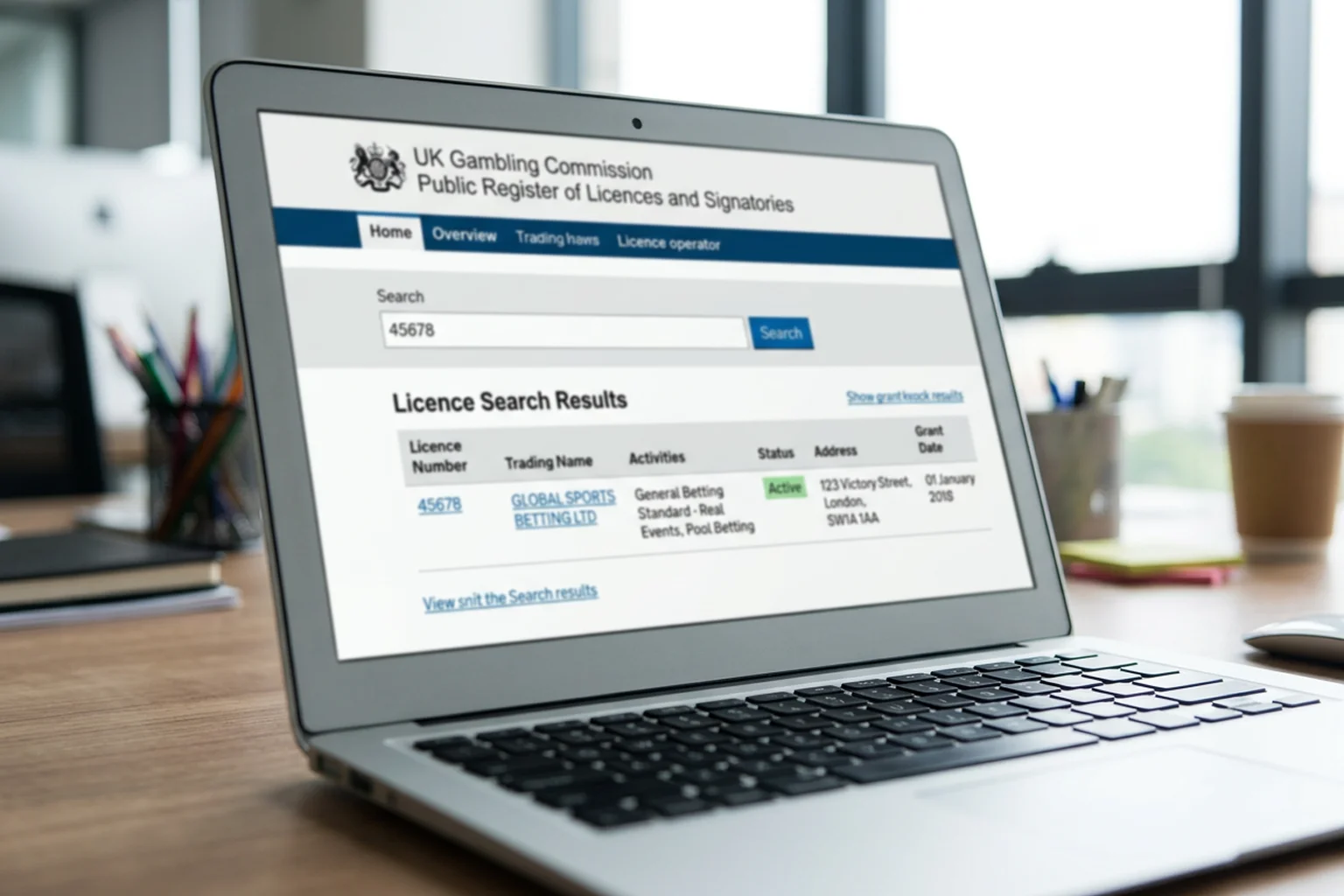
Always verify that you are playing on safe portals by learning to verify your bookmaker’s UKGC credentials.
The second step is contacting your bank if the deposit was funded by a debit card or credit card. UK banks are generally willing to consider chargeback claims for unauthorised gambling transactions, particularly when the operator is unlicensed. The chargeback success rate is higher for recent transactions than for older ones, and the supporting evidence – screenshots of the operator refusing withdrawal, communications threads – strengthens the claim.
The third step is reporting the operator to the Gambling Commission. The report does not recover your funds but contributes to the pool of evidence the Commission uses to remove unlicensed sites from search results and to pressure payment networks to block transactions. The regulator has been increasingly active in taking down these sites – 9,700 compliance checks in 2024-2025 against 4,200 the previous year is part of the same enforcement push.
Finally, switch to a UKGC-licensed operator for any future UFC betting. The licence verification process takes less than two minutes and is the cheapest insurance available against this entire category of risk.
Will I be prosecuted for using an offshore UFC betting site in the UK?
Individual UK punters are not prosecuted for using offshore gambling sites. The legal restrictions apply to the operators rather than the customers – it is illegal for an unlicensed operator to offer gambling services to UK customers, but using such a service is not itself a criminal offence for the individual. The risk to punters is financial rather than legal: lost funds with no regulatory protection.
Are crypto-only UFC sportsbooks always unlicensed?
In effect, yes. UKGC-licensed sportsbooks do not accept cryptocurrency for UFC betting or any other product, so a site that offers crypto-only deposits is operating outside the UK regulatory framework. Some crypto sites claim international licences from low-regulation jurisdictions, but those licences do not authorise UK customer activity and provide no UK consumer protection.
Prepared by the Where can i bet on ufc editorial staff.