British Fighters at the UFC: Home Bouts & Pricing
 Available in US
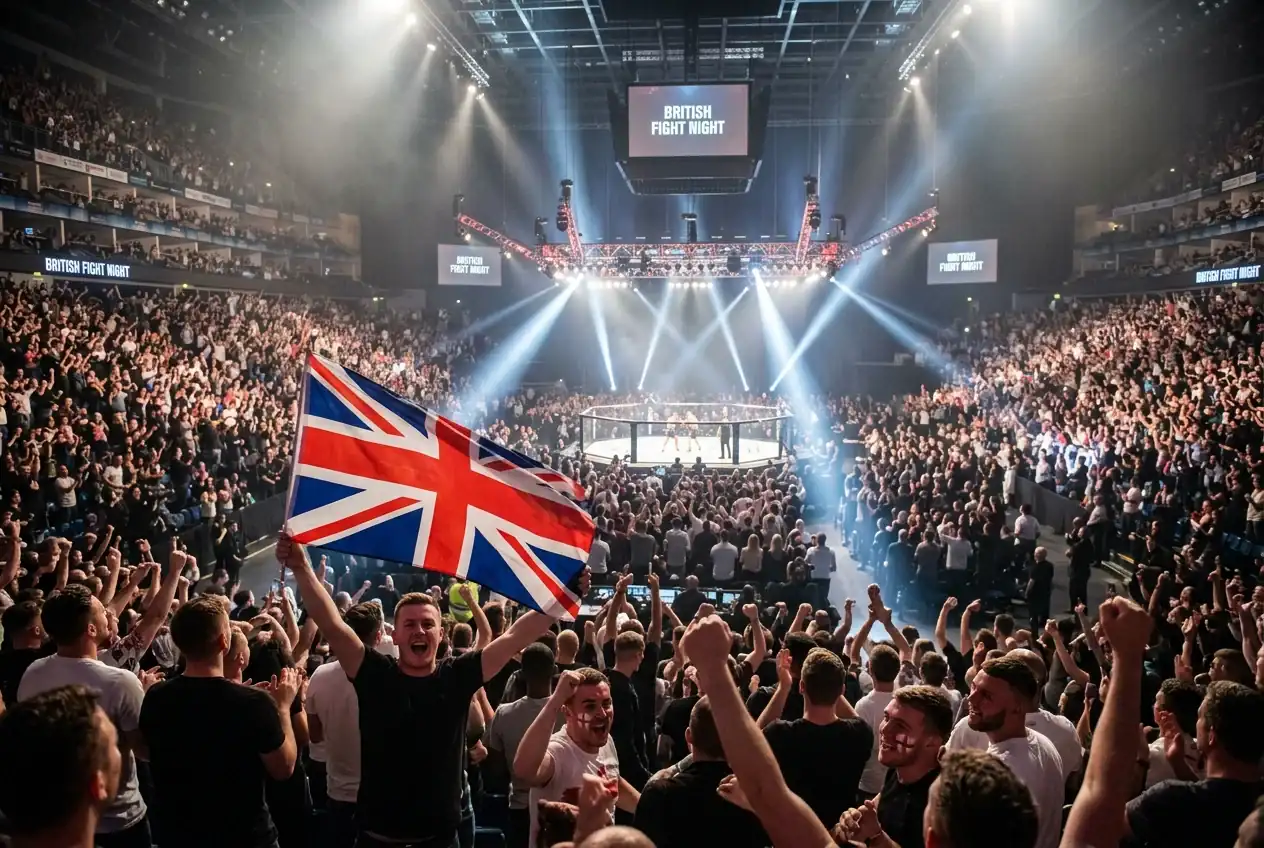
The O2 Arena on a UFC London Saturday is the loudest building in British MMA, and watching it from the cheap seats taught me something about UK UFC betting that no model has ever captured cleanly. The home crowd does not change who wins the fight, but it changes how UK punters bet on the fight, and the betting markets respond to that wave of UK money in ways that produce both opportunity and trap. Eight years of trading UK card events confirms a simple pattern: UK fighters are systematically backed harder at home than the underlying probabilities justify, and the punters who can resist that gravity find value the rest of the market misses.
The UK has grown into one of the top five markets globally for UFC interest, with the rise driven by Michael Bisping’s middleweight title in 2016 and Leon Edwards’s welterweight reign in 2022 and 2023. The UFC has held 774 events in 169 cities across 32 countries, and the UK is now a regular host nation with two or three cards per year – usually a London show and a regional event in Manchester or Newcastle.
Read about local home favourites on the homepage.
The UK MMA Popularity Curve
UFC popularity in the UK has been a steady upward curve for the better part of a decade. Bisping’s title in 2016 was the inflection point – the first British UFC champion gave a casual UK audience a reason to follow the sport beyond the occasional pay-per-view spectacle. The subsequent rise of fighters like Conor McGregor in Ireland and Tom Aspinall, Paddy Pimblett, Leon Edwards, and Molly McCann in England consolidated the audience.
Sports betting in the UK is a £2.6 billion gross gambling yield market over a single 12-month reporting window, and UFC has captured an increasing share of the combat sports segment within that pie. The MMA share is small compared with football and racing but is growing faster than either, particularly among the 25 to 44 age bracket that forms the core of UK UFC viewership.
The audience profile matters because it shapes how UK sportsbooks price home cards. UK punters disproportionately bet on UK fighters, which means trading desks see imbalanced betting flow on every UK card. The price adjusts to that imbalance – UK fighters get shorter prices than the underlying probabilities would suggest, and the foreign opponents are priced longer than fair.
UFC UK Event History
The UFC’s first UK event was UFC 38 in London in July 2002, the first ever UFC event held outside North America. The London market has been a regular host since, with multiple shows per year throughout the post-2016 expansion phase. Manchester has hosted a small number of cards including a memorable UFC 204 with Bisping’s title defence against Dan Henderson in 2016. Newcastle and Liverpool have appeared on the calendar in recent years for smaller Fight Night cards.
The pattern of UK events tends to follow British fighter availability. When Aspinall is healthy and ready to fight, a London or Manchester card with him in the main event is a fixture in the calendar. When Edwards is preparing to defend the welterweight title, that bout is often slotted into a London show. The matchmaker uses the host-nation appeal to drive ticket sales and broadcast viewership.
For bettors, the schedule matters because each UK card is a betting event where the markets behave differently from a Las Vegas or Apex card. The volume from UK bettors is larger, the price movement on UK fighters is more pronounced, and the prop-market action is unusually focused on a small number of marquee bouts. The detailed history of UK UFC events and the betting volume patterns around them sits in the UK UFC event history walkthrough.
Do UK Fighters Get a Judges’ Edge at Home
The home-cage advantage in MMA judging is a genuinely contested topic. Studies of close decisions across multiple combat sports suggest a small but real bias toward home fighters in split decisions, although the effect size is smaller than in many team sports.
For UFC specifically, the data is mixed. UK fighters on UK cards do appear to win more split decisions than they lose, but the sample size is small enough that the statistical confidence is limited. The mechanism is probably indirect – judges respond subliminally to crowd reaction, and a home crowd reacting positively to certain moments of action may shape the round-by-round scoring in close cases.
The betting implication is modest. The UK home edge probably adds 1 to 3 percentage points to a UK fighter’s win probability in close bouts, which translates to a few cents of decimal price. Trading desks have priced this edge in for several years now, so the explicit “back the home fighter” strategy does not consistently produce positive expected value. The opportunity sits in identifying bouts where the home crowd dynamics will be unusual – for example, a UK fighter who has fallen out of favour with the UK audience and is not getting the typical home support.
Markets That Skew Around UK Cards
Three market patterns appear on UK cards consistently. First, the moneyline on the UK favourite tends to be shorter than it would be on a neutral card. The market has priced in the UK money even before the line is published, and sharper bettors have already moved the line further in that direction before the public catches up.
Second, the over-rounds market on UK main events tends to be slightly long. UK punters favour finishes – the British UFC audience came of age watching Aspinall and other big-finishing British fighters – and the resulting “back the under” pressure pushes the over price longer. A UK card over 2.5 rounds priced at decimal 2.10 might be priced at 1.90 on a neutral card with the same fighters.
Third, the prop markets – total strikes landed, takedowns scored, fighter to be knocked down – are unusually deep on UK cards because operators expect higher prop-betting volume from UK punters. The deeper prop menu creates opportunities for bettors who want exposure to specific in-fight outcomes, but the margins on prop markets are wider than on the main moneyline, so the increased depth does not necessarily mean better prices.
Measure how much the hometown crowd alters fight performance by exploring historical trends on UK soil.
Bankroll Tips for Home Card Fans
The single most useful discipline for UK punters on UK cards is separating fandom from betting. The British fighters you have followed for years are the same fighters from a probability perspective regardless of which city the bout takes place in. The home crowd does not finish opponents; the fighter still has to. Betting on UK fighters because they are British is sentiment, not analysis, and the markets that have priced in the sentiment have already taken your money before the bell.
The practical approach is to apply your standard probability framework to the bout, then ask whether the price represents value given that estimate. If it does, the bet is sound regardless of the fighter’s nationality. If the price is shorter than fair because of UK money, the bet is negative expected value and a pass is the right answer even when it feels disloyal.
Do UK fighters historically win more split decisions at home?
There is a small but contested home-cage edge in split decisions across MMA, including for UK fighters on UK cards. The effect size is modest – perhaps 1 to 3 percentage points of additional win probability in close bouts – and the statistical confidence is limited by the small sample of available data. Trading desks have priced this edge in for several years, so simply backing the home fighter does not consistently produce positive expected value.
Why do bet365 and Sky Bet quote different prices on UK card favourites?
Different trading desks have different models for the home-crowd effect and different views on how to price the UK-money flow into their markets. The result is small price differences across UK operators on the same UK card favourite – sometimes one or two cents in decimal terms, occasionally more. Compare the prices on your shortlist before placing the bet and take the best available, since the prices do diverge enough to matter on larger stakes.
Created by the ”Where can i bet on ufc” editorial team.