Responsible Gambling Tools for UFC Punters in the UK
 Available in US
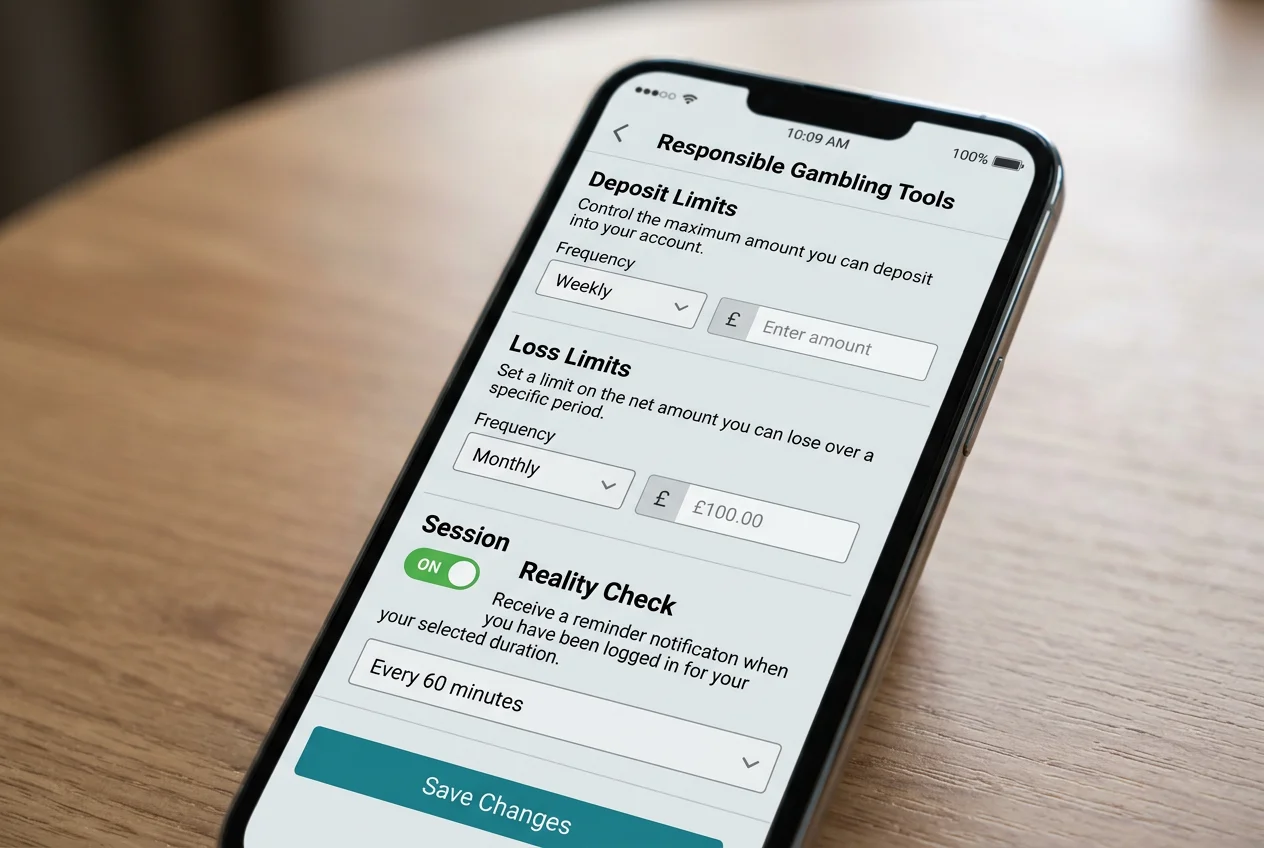
A UK punter I know set himself a £30 weekly deposit limit on the morning of a UFC numbered event two years ago, hit the cap by Saturday afternoon, and watched the rest of the card without being able to add a single bet. He told me afterwards that the cap had saved him from at least two emotional in-play bets he would have lost. The responsible gambling tools that UKGC-licensed operators are required to provide are unglamorous, well-hidden, and underused – but the punters who configure them on quiet weekdays tend to thank themselves later when fight nights run hot.
Baroness Twycross, the Minister for Gambling, captured the regulatory intent in her speech to the Betting and Gaming Council AGM in February 2025: “I want to work with you to see a safer, more responsible gambling industry. I know that the vast majority of people who gamble do so without experiencing harm, but it is in all our interests that we do better for those customers who could be vulnerable to gambling harm.” The responsible gambling tools are the operator-level implementation of that intent, and every UKGC-licensed UFC sportsbook is required to provide them.
Play within your means using the guides on the homepage.
Who the Tools Are For
The tools are not just for problem gamblers. Roughly 2.7 percent of UK adults score as problem gamblers on the PGSI 8+ scale, with the rate among 18-to-24 year-olds rising to 5.3 percent. But the tools work as well for the substantially larger group who do not have a problem but want to keep their UFC betting inside boundaries.
The 18-to-24 age bracket is the highest-risk demographic in UK gambling. 21.9 percent of UK adults in that age range score PGSI 1 or higher, and 5.3 percent score 8 or higher. UFC has a particularly young viewership profile in the UK, which means a meaningful share of UK UFC bettors fall into the elevated-risk demographic. The responsible gambling tools matter most for this group, but their effectiveness depends on the punter configuring them rather than the operator imposing them.
For anyone betting on UFC who has ever placed a bet they regretted in the morning, the tools are worth a quiet hour of configuration on a non-fight-night evening. The tools work pre-emptively – they prevent decisions during high-emotion moments by capping the bettor’s exposure before those moments arrive.
Deposit, Loss, and Stake Limits
Three types of pre-emptive limit are universally available across UKGC-licensed sportsbooks. The deposit limit caps how much you can deposit in a defined window – daily, weekly, or monthly. The loss limit caps your net losses over the same window. The stake limit caps the size of any individual bet.
The deposit limit is the most commonly used. Setting a £100 weekly deposit limit prevents the operator from accepting additional deposits beyond that amount, regardless of how many bets you have placed. The limit applies from the moment it is set and runs for the configured window. Reducing the limit takes effect immediately. Increasing the limit has a cooling-off period – typically 24 hours – before the higher cap is available, which prevents in-the-moment increases during a losing streak.
The loss limit is more nuanced. It caps your net losses, which means winnings during the window do not reduce your remaining allowance. A £200 weekly loss limit means you can lose up to £200 net during the week before the operator blocks further wagers. If you win £50 mid-week, you still have £200 of loss budget remaining – the winnings do not refill the limit.
The stake limit is less commonly used because it constrains individual decisions rather than overall exposure. A £20 per-bet stake limit prevents any single bet exceeding that amount, which can be useful for punters who tend to make impulsive larger stakes during in-play sequences.
Reality Checks and Session Reminders
Reality checks are operator-triggered notifications that pop up after a defined period of session activity. The standard configuration is a notification every 30 minutes or every hour, showing your current session activity – time online, total stakes placed, net win or loss.
For UFC bettors, reality checks are particularly useful during long fight cards. A typical UFC numbered event runs 4 to 6 hours from prelim start to main event finish. A reality check that pings every hour produces five or six interruptions across the event, each of which is an opportunity to reassess whether the current betting trajectory is healthy.
The check is not a hard stop – you can dismiss the notification and continue betting. The value is in the moment of conscious reflection that the check forces. Punters who configure shorter intervals (30 minutes rather than 60) get more frequent reflection points, which can be valuable during the championship rounds when emotional intensity is highest.
Session reminders are similar but trigger based on continuous session length rather than activity. A session reminder might fire after 2 hours of continuous online presence regardless of how many bets have been placed. The trigger is the time, not the activity.
Time-Outs and Self-Exclusion
Time-outs are short-term account blocks – typically 24 hours, 7 days, or 30 days – during which the operator blocks all betting activity. The account is not closed, the balance remains accessible for withdrawal, but no new bets can be placed during the time-out window. Time-outs are useful for punters who want a structured cooling-off period after a difficult night.
Self-exclusion is the harder form of the same tool. Self-exclusion blocks new bets for a defined period – usually 6 months minimum, sometimes 12 months or longer – and the period cannot be cancelled early. The account is essentially frozen for the duration. Withdrawals of existing balance are typically permitted at the start of the self-exclusion, but no new betting activity is allowed.
GamStop is the cross-operator self-exclusion scheme. Signing up for GamStop self-excludes you from every UKGC-licensed online gambling operator simultaneously. The exclusion lasts for a minimum of 6 months and applies industry-wide. For punters who want to be completely shut off from UK gambling, GamStop is the comprehensive tool. The wider regulatory context of self-exclusion and how it fits into the UK consumer protection framework sits in the UK regulation and checks guide.
Self-exclusion is irreversible during the configured period. The punter cannot change their mind 48 hours in and request the exclusion be lifted. That permanence is the feature, not the bug – the tool only works if it cannot be unwound during a difficult moment.
Support Routes Outside the Bookmaker
The bookmaker tools cover account-level controls but not the broader support that some bettors need. Several third-party organisations provide free, confidential support for UK punters concerned about their gambling.
GamCare runs the National Gambling Helpline and offers free phone, online chat, and email support. The service is available 24 hours a day and is staffed by trained advisers rather than automated systems. The helpline number is widely published on UK sportsbook responsible gambling pages.
Set safe deposit limits and manage accounts by complying with standard UKGC-mandated protocols.
BeGambleAware runs the public information service for UK gambling harm. Their website provides self-assessment tools, advice resources, and signposting to clinical services where appropriate. The service is funded through the statutory gambling levy that has been in force since October 2025.
The NHS provides clinical gambling addiction treatment through specialist clinics in England and equivalent services in Scotland, Wales, and Northern Ireland. The NHS National Gambling Treatment Service is the formal pathway for punters whose gambling has reached the level of clinical concern. The treatment is free at the point of access and confidential under standard NHS rules. The estimated cost of gambling harm to NHS services is around £1.2 billion annually, set against £3.1 billion in tax revenue from the gambling industry, which gives a sense of the scale of the support infrastructure.
Does GamStop cover every UKGC-licensed UFC bookmaker?
Yes. GamStop is the industry-wide self-exclusion scheme that every UKGC-licensed online gambling operator must participate in. Signing up to GamStop excludes you from every regulated UK sportsbook simultaneously, including all UK UFC betting operators. The exclusion does not cover unlicensed offshore sites, which is one of several reasons to stay within the UKGC-regulated industry rather than using unlicensed operators.
Can I keep my UFC winnings if I self-exclude before withdrawal?
Yes, in most cases. Self-exclusion blocks new betting activity but does not forfeit existing balances. The operator is required to allow withdrawal of the existing balance at the start of the self-exclusion period, including any winnings that had been credited to the account before the exclusion took effect. Some operators require identity verification before processing the withdrawal, which is standard practice rather than a self-exclusion-specific delay.
Created by the ”Where can i bet on ufc” editorial team.