
Betting on UFC Submission Specialists: Market Clues
 Available in US
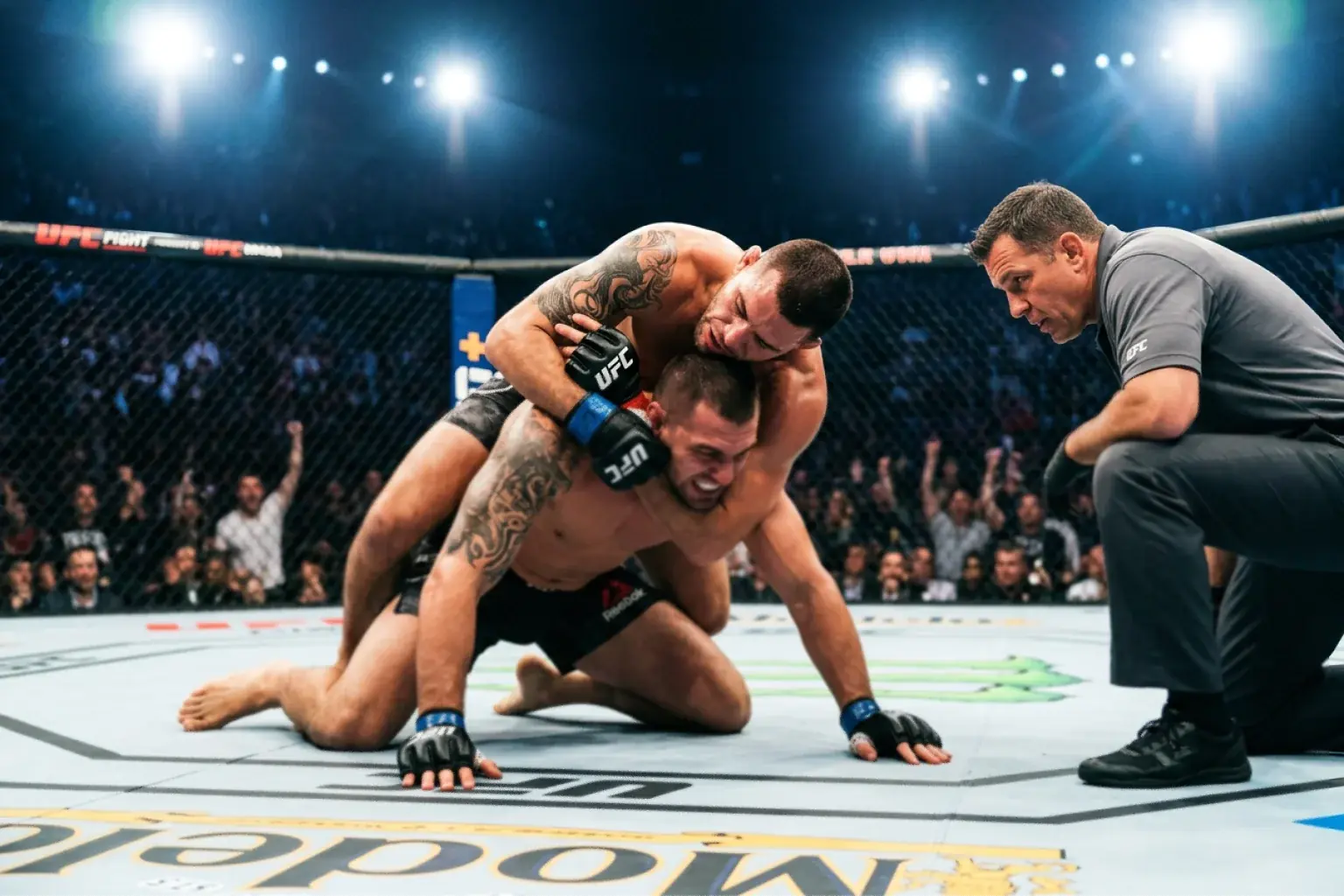
The most profitable single bet I ever placed on a UFC card was a sub-by-fighter market at decimal 7.50 on a Brazilian grappler I had watched go through opponents in regional shows for two years. The fight ended in a rear-naked choke 90 seconds into the second round. The UK book paid out, the fighter went on to a UFC contract, and the lesson stayed with me: when the sub-by market underprices a specialist, the return on a small stake is asymmetric in a way that no other UFC bet quite matches. The broader picture of method-of-victory markets across the UFC sits in the method-of-victory guide. This piece is about the narrow corner where submission edge lives.
Submissions account for roughly 19.7 percent of all UFC finishes – about one in five fights. The base rate is low compared with knockouts, but the prices on sub-by-fighter markets stretch much wider than the moneyline alone, which means a correct read pays multiples. The discipline is identifying when the trading desk has misjudged a grappler against a defensively suspect opponent.
Master ground-game fight metrics on the homepage.
How Often UFC Bouts End in Submission
Across the UFC, the long-run finish breakdown sits at 33.3 percent KO/TKO, 19.7 percent submission, and 47 percent decision. The submission share has been remarkably stable across the last decade despite generational shifts in grappling style and ruleset tweaks. What has changed is the type of submission – guillotines and rear-naked chokes dominate the modern era, with leg locks rising sharply as a category over the past five years.
Submission rate varies dramatically by division. Lightweight and welterweight cluster around the UFC average. Bantamweight and featherweight skew slightly higher because grappling exchanges last longer and scrambles produce more transition opportunities. Heavyweight sits in the single digits – submissions are physically harder when your opponent weighs 240 pounds and can wall up on the canvas.
For a sub-by-fighter bet to make sense, you need the specific match-up to deviate from the divisional baseline. A pure grappler against a striker with weak takedown defence is the canonical setup. A grappler against another grappler usually produces a decision because both fighters survive each other’s offence.
Identifying a True UFC Grappler
The fighters who actually finish bouts by submission share a small set of traits. They lead with the grappling exchange, they hunt specific submissions repeatedly, and they have a track record of finishing rather than just controlling. The third trait is the one casual punters miss.
Take a fighter with 60 percent takedown accuracy and three submission wins in 12 UFC bouts. That is a strong wrestler with finishing instincts. Now take a fighter with 70 percent takedown accuracy and one submission in 15 UFC bouts. That is a positional control wrestler who rides position to a decision. The first carries a meaningfully higher submission probability per minute of grappling time. The second produces decisions even when the betting market expects a finish.
The metrics worth tracking are submission attempts per 15 minutes, takedown accuracy, top control percentage, and the historical breakdown of how the fighter has finished previous opponents. A specialist with multiple finishes in the same submission – three guillotines or four rear-naked chokes – has a repeatable path that the trading desk often underprices on a new opponent.
What does not work is reading the fighter’s BJJ pedigree from years ago. A black belt under a famous instructor signals base skill but not UFC finishing rate. Cage submission is a different game from gi grappling, and the transition is uneven across athletes.
How the Sub-by-Fighter Bet Settles
The sub-by-fighter market pays out when the named fighter wins by submission. Any other outcome loses – a KO win, a decision win, even a submission loss for the named fighter, all settle as losers. The bet is narrow, which is why the price is wide.
UK books quote sub-by-fighter at decimal 4.00 to 12.00 in most cases. The price reflects three independent probabilities multiplied together: the fighter wins, the fight ends in submission, and the submission goes the named fighter’s way rather than the opponent’s. For a 1.60 moneyline favourite in a division with 20 percent submission rate, the fair sub-by price sits around decimal 4.00 to 5.00 depending on the styles. For an underdog with submission upside, prices can stretch to 10.00 or longer.
One nuance UK bettors often miss: most books settle sub-by-fighter at the time the official decision is announced. A tap-out that gets disputed on replay, or a stoppage that the corner challenges, can take minutes to resolve. The bet does not lock in until the official method is recorded by the commission, so cash-out options sometimes appear suspended at the post-finish moment when settlement is technically still pending.
Bet builders that combine sub-by with round bets are popular and usually overpriced for the bettor. A “fighter wins by submission in round 2” bet at decimal 12.00 looks generous, but the implied probability of around 8 percent often overstates the realistic finishing distribution.
Divisions Where Submissions Cluster
Bantamweight is the modern UFC submission division. The pace is high enough to produce scrambles, the fighters are technical enough to capitalise, and the historical rate of submission wins runs in the mid-20s as a percentage of finishes. Featherweight sits close behind, with welterweight and lightweight clustering around the UFC average.
Women’s flyweight and bantamweight produce submission wins at rates above the men’s average, partly because grappling exchanges at lower body weight produce more transition opportunities and partly because the talent pool is deeper in grappling than in pure striking. Women’s strawweight is more decision-heavy and submissions are rarer.
Heavyweight is the dead zone. Single-digit submission rates across the division mean sub-by-fighter bets at heavyweight need a specific story – a high-level wrestler with submission setups against an opponent with no ground game – to be worth the stake. Generic heavyweight sub-by bets are negative expected value almost regardless of price.
Bankroll Discipline on Long Prices
The arithmetic of sub-by betting is unforgiving. At decimal 7.00, you need to hit the bet once every seven attempts to break even before margin. After devigging, the breakeven rate climbs to about one in seven and a half. Sustaining that strike rate across a year of UFC events requires either exceptional fighter-by-fighter analysis or accepting that most sub-by bets will lose.
Compare submission props with the payout ratios offered in standard method of victory markets.
I cap sub-by stakes at one quarter of my standard moneyline unit. That means if my moneyline stake is £40, the sub-by stake is £10. The variance on longshot finishing bets is large enough that full-stake plays produce wild bankroll swings even when the underlying edge is real.
The second discipline is logging closing line value. If your sub-by bet went on at 7.00 and closed at 6.50, you bought into the bet at better odds than the final market – evidence of edge regardless of whether the bet won. If it went on at 7.00 and closed at 8.50, the market moved against you and your read was probably wrong. Track closing prices across 50 to 100 sub-by bets and the data will tell you whether your specialist-identification process is working.
The third discipline is patience. Sub-by markets reward bettors who only play three or four fights a month, not punters who post a stake on every grappler they see on a card. The strike rate at 12 to 15 percent across long-price bets means six losing months are normal even with positive expected value. If you cannot stomach watching your bankroll drift down through a quiet stretch, the strategy will break you long before the variance plays out.
Which UFC division produces the most submissions per fight?
Bantamweight has the highest rate in recent years, with a submission share well above the UFC average of 19.7 percent. Featherweight sits close behind. Heavyweight is the lowest, dropping into single-digit percentages because grappling is physically harder at 240 pounds and most heavyweight fighters lean on striking.
Is a sub-by-round 1 bet ever good value at heavyweight?
Almost never. Heavyweight submission rates are in the single digits across the division, and the first-round sub probability for even the most accomplished heavyweight grappler rarely exceeds 5 percent. The market price on a heavyweight sub-by-round-1 bet often looks tempting at decimal 15.00 or longer, but the implied probability and the actual probability rarely align in the bettor’s favour.
Prepared by the Where can i bet on ufc editorial staff.