UFC Fight-Night Betting Checklist for UK Punters: From Weigh-Ins to the Walkout
 Available in US
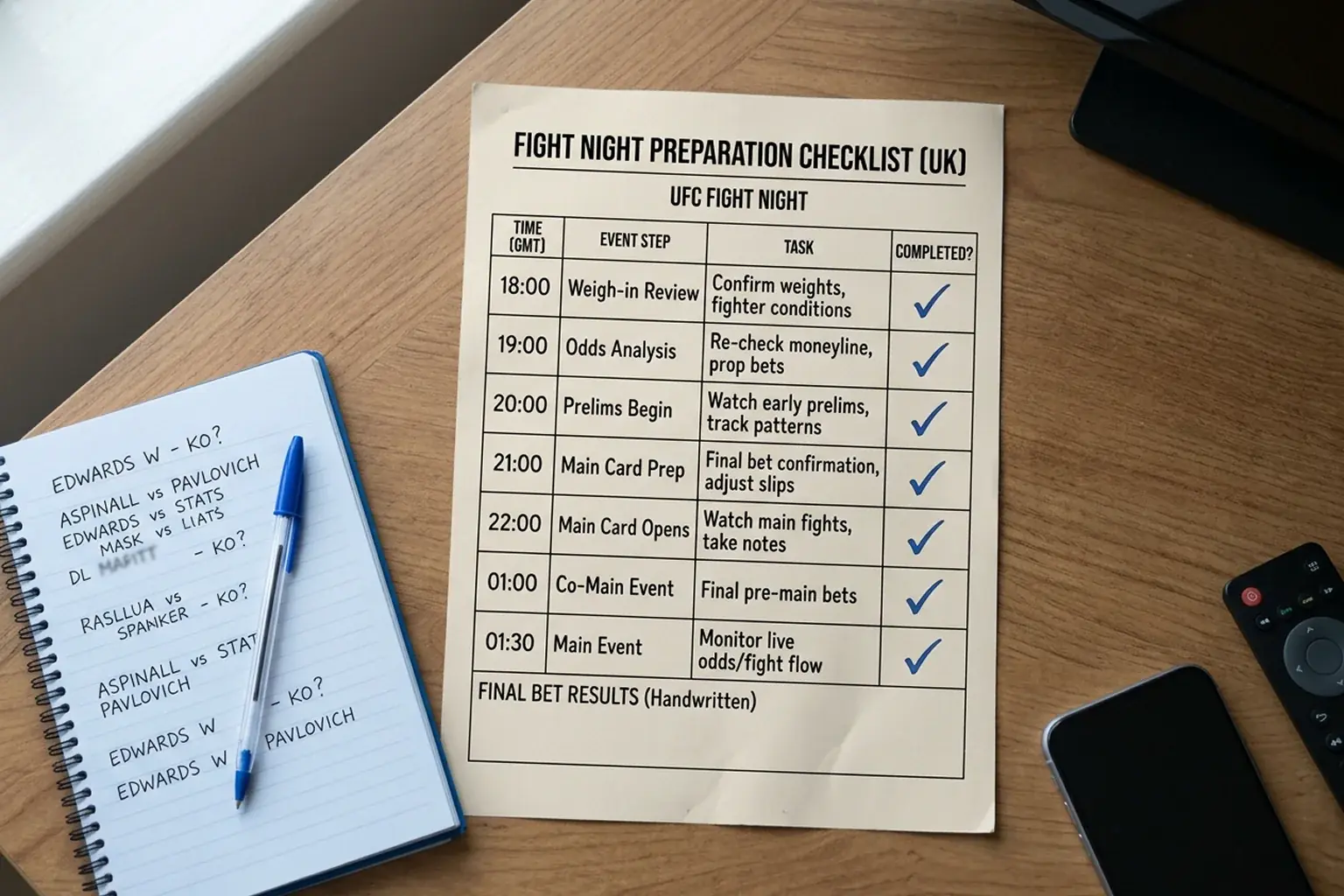
The best UFC betting weekend I have had in eight years was a card where I had everything dialled in by Thursday – weigh-in projections done, line shopping completed, bankroll allocated, props identified. I placed three bets across the prelim card and two on the main card and went 4-from-5. The worst weekend I have had was a card where I scrambled on Saturday morning, chased prices into the prelims, and went 1-from-7. The difference between the two weekends was almost entirely process. The fights I bet on were comparable in quality; the preparation around them was not. The fight-night checklist that follows is the routine I have settled into.
UFC betting in the UK is part of a £2.6 billion gross gambling yield segment that has matured into a competitive market with overround as low as 4 percent on major events at the sharpest UK operators. The margins are tighter than they used to be, which means the process around bet placement matters more than it did five years ago. Sloppy preparation gets punished now in ways it did not get punished in the soft-margin era.
48 Hours Out: Weigh-In Watch
Friday morning UK time is the start of the operational week for most UFC main events. The official weigh-ins happen in the morning local time at the event city, which is typically Friday afternoon UK time for North American cards. The weigh-in is the single most consequential pre-fight information moment, because failing to make weight changes the bout structure, the betting markets, and sometimes the bout’s viability.
I watch the weigh-in live or read the result within the hour. The key data points are: did both fighters make weight, did either fighter struggle visibly on the scale, and are there any rumours about how the cut went. A fighter who looks gaunt and drained on the scale has either cut too much weight or rehydrated poorly, and either condition affects their performance the next day.
The lines move within minutes of the weigh-in result. A fighter who misses weight typically drifts a few cents on the moneyline as the market absorbs the news. The opposite – a fighter who looked strong and well-conditioned – sometimes sees a small price shortening as sharps adjust. Punters who watch the weigh-in live get a 5 to 10 minute window before the public catches up.
24 Hours Out: Line Confirmation
Saturday morning UK time is line-shopping time. The 24-hour window before main-card start is when the markets are most stable and the best line-shopping decisions get made. I have a watchlist of UK operators I check for each bout – typically four or five books – and I record the best available price for the markets I plan to bet.
The price gaps across UK operators on the same UFC market typically run 2 to 5 cents in decimal terms. On a £50 stake at a 3-cent gap, the difference is £1.50 – small per bet but compounding across a hundred bets a year into meaningful money. The discipline of always taking the best available price is one of the cheapest improvements a UK UFC bettor can make.
The other 24-hour task is checking for late news. Fighter illness, training-camp issues, last-minute weight rehydration concerns – these stories typically break in the 18 to 24 hours before the bout starts and can shift prices materially. UK MMA media outlets are good sources, as are fighter-camp social media accounts, although the signal-to-noise ratio on social media is poor enough that I treat it as a flag for further investigation rather than as evidence.
The Prelims Window
The prelim card is where most UK bettors over-bet. The fighters are less established, the analytical edge is harder to develop, and the betting volume is light enough that the markets are less efficient. The combination produces a temptation to place bets just because the action is happening, and the bets that result rarely cluster as positive expected value.
My rule for prelim betting is “play only the bouts where I have a genuine read”. On a typical UFC card with five or six prelim bouts, I usually have a read on two or three. The rest I watch without betting. The discipline costs nothing in the short run and saves bankroll in the long run.
The prelim window is also when integrity concerns are most worth watching. The Dulgarian-Del Valle case from November 2025 was a prelim bout, and the unusual line movement was visible before the fight started for punters who were watching the market closely. A prelim bout where the favourite’s price collapses from -250 to -130 in the final 24 hours is a market that is signalling something, and the prudent response is usually to stay out rather than to try to read the move.
Main Card Live Discipline
The main card is where the betting volume concentrates and where most punters’ weekly bankroll gets allocated. The live betting decisions during the main card are emotionally charged and need procedural discipline to manage cleanly.
Three rules I follow on the main card. First, no in-play bet without a pre-fight thesis. If I did not have a view on the bout going into round one, I do not develop a view in round two – the information available mid-fight is too noisy and the prices are moving too fast for clean decisions. Second, cash-out only when the value of the cash-out exceeds the value of the remaining bet exposure. Most cash-outs are emotional rather than rational, and the operator margin on cash-out compounds across bets in a way that erodes long-run returns. The full cash-out mechanics walkthrough sits in the cash-out mechanics guide.
Third, stake size discipline. The main event is the most-anticipated bout of the card but it is not necessarily the highest-value bet. Allocating bankroll by analytical edge rather than by event prominence is the harder discipline and the one that separates skilled UK UFC bettors from recreational ones.
Post-Fight Review and Record Keeping
The hour after the main event is the most useful learning window of the week. The bouts are still fresh, the betting decisions are still memorable, and the post-fight analysis is most clearly informative.
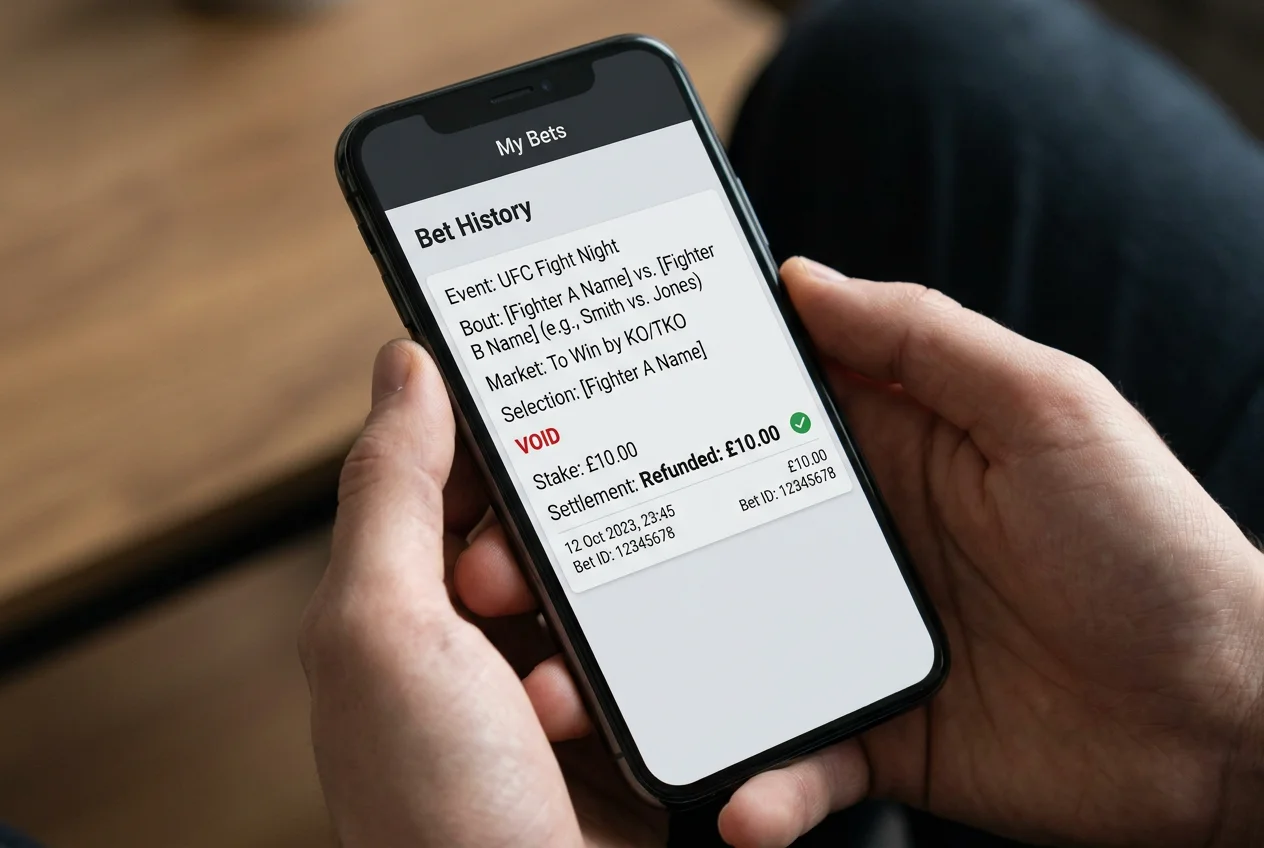
I record every bet – the market, the price, the stake, the closing price, the outcome. The closing line value across a hundred-plus bet sample is the most reliable indicator of whether the underlying process is working. Bettors who do not track closing line value have no way of distinguishing skill from variance, which means their improvement trajectory is slower than it needs to be.
The record also captures the qualitative lessons. Bets that won despite poor process should be flagged as variance wins, not validation of bad judgement. Bets that lost despite good process should be flagged as expected variance and held against the long-run trend, not used to abandon a working approach.
The biggest mistake I see UK UFC bettors make in their post-fight review is treating the outcome as the verdict on the bet. A bet that loses can still have been the right bet at the price. A bet that wins can still have been a poor bet that got lucky. The record-keeping discipline forces the analytical separation between these two cases, which is the foundation of long-run improvement.
Should I bet before or after the UFC weigh-ins?
It depends on your information advantage. Betting before the weigh-ins gives you longer prices on opening lines but exposes you to weight-cut risk – a missed weight or visible distress on the scale can void or materially shift the bet. Betting after the weigh-ins gives you the confirmed bout structure but at prices that have absorbed the weigh-in information. For most UK punters, splitting the action – some pre-weigh-in on stable fighters and some post-weigh-in on weight-cut-prone fighters – is the cleanest approach.
How long after the bell can a UFC market be cashed out?
Cash-out availability typically returns within seconds of a round-end transition being processed by the operator’s trading desk. The desk suspends cash-out in the final 20 to 30 seconds of each round and during fight-defining moments like knockdowns, then resumes after the action stabilises. The post-fight settlement of bets typically processes within 10 to 15 minutes of the official result on a UK card with high betting volume, slightly faster on lighter-volume cards.
Prepared by the Where can i bet on ufc editorial staff.