Betting the UFC Heavyweight Division: 65% KO Rate
 Available in US
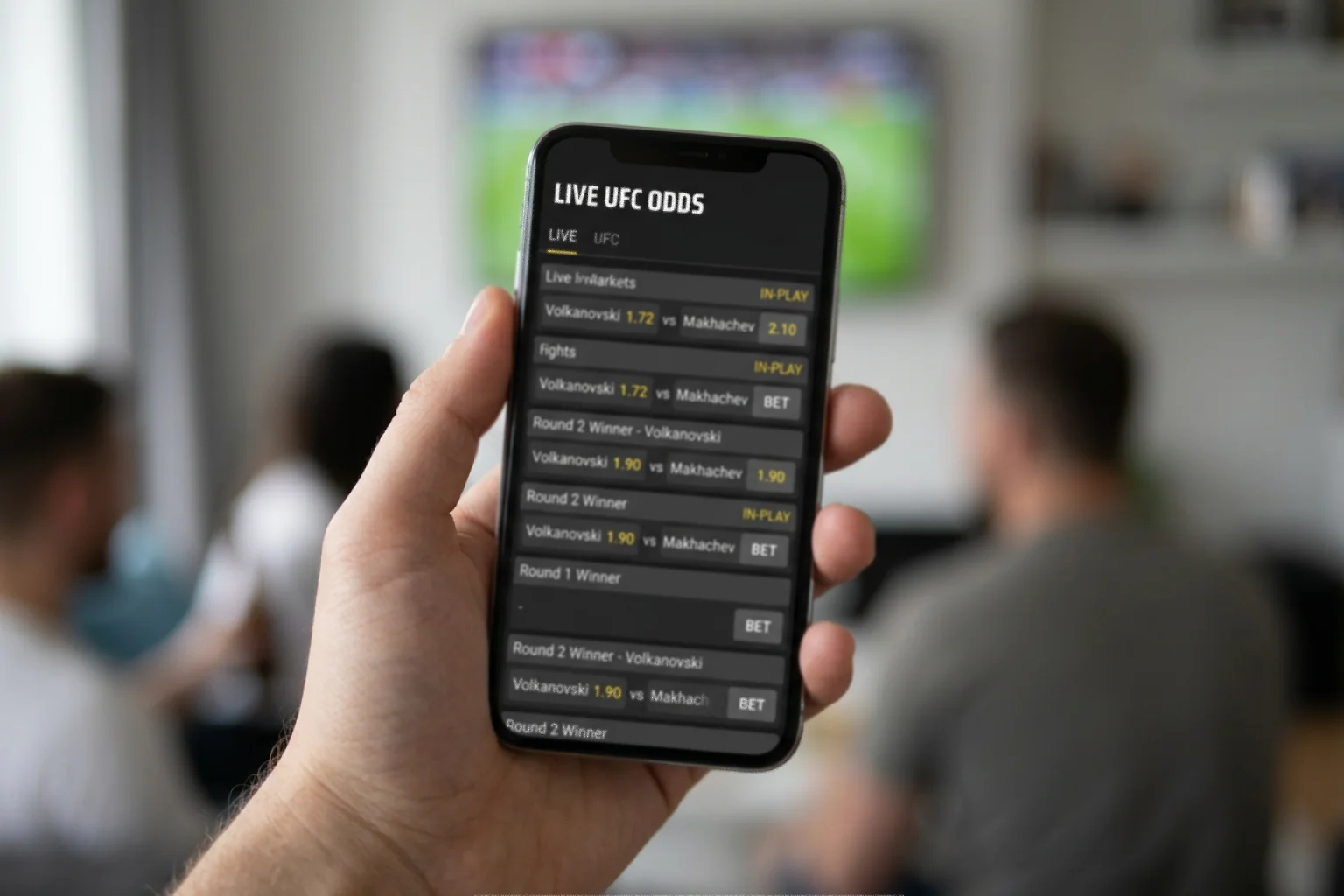
The fastest UFC heavyweight bout I ever booked a position on lasted 26 seconds. I had backed the favourite by KO in the first round at decimal 2.20, watched the underdog clip him on the way in, and lost the stake in less time than it takes to make a cup of tea. That is heavyweight UFC betting in a sentence – the prices are wider, the markets move quicker, and the finish rates are unlike anything else in the sport. The wider context of method-of-victory pricing across divisions sits in the method-of-victory guide; this piece zooms in on the weight class where the knockout rate rewrites the maths.
Heavyweight is a betting market unto itself. The base rate for finishes is so high that the over/under 1.5 rounds line trades as a coin flip on most cards, and the KO bet on the favourite often returns more than a straight moneyline play would on a sharper division. The challenge is knowing when the KO rate is already priced in and when the trading desk has misjudged a particular match-up.
Find KO statistics across different weight classes on our main website.
The Numbers That Define the Division
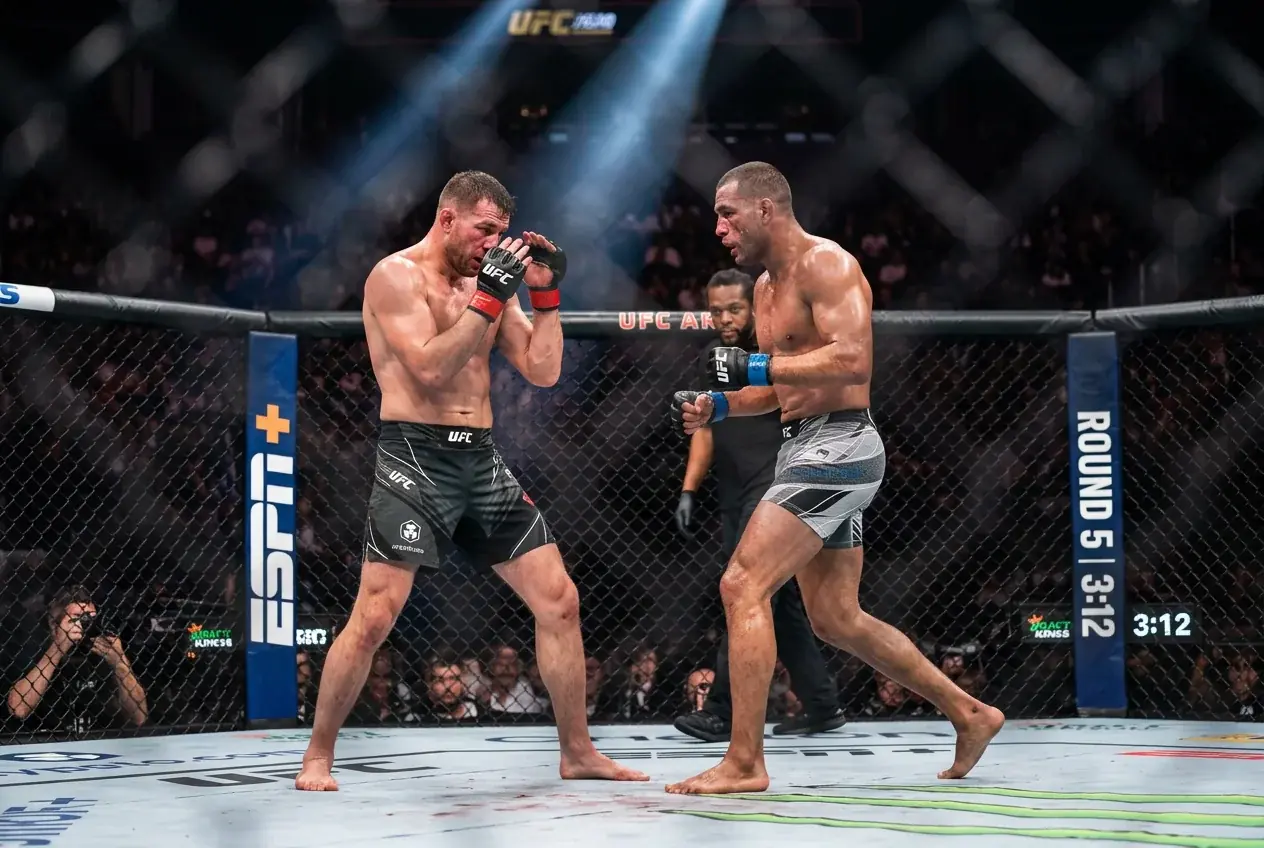
Across a sample of 885 UFC heavyweight bouts tracked through 2026, roughly 65 percent ended by knockout or technical knockout. Only about 28.6 percent reached the judges – the lowest decision rate of any UFC division. The remaining share went to submissions, which sit in the high single digits.
Compare that to the UFC-wide finish rate. Across all divisions, about 33.3 percent of bouts end by KO or TKO, 19.7 percent by submission, and 47 percent by decision. The average UFC bout lasts 11 minutes and 1 second, and 92 percent end with either a finish or a judges’ verdict. At heavyweight, the average is dramatically shorter – finishes typically arrive inside the first two rounds. Whoever lands first usually wins.
The implication for betting is direct. If you back a heavyweight favourite on the moneyline at, say, decimal 1.60, you are paying for an outcome that has a 65 percent chance of being a knockout in either direction. The favourite’s KO bet at the same fight might be decimal 2.30. Multiply 65 percent by the favourite’s share of the finish probability – typically around 60 to 65 percent of the KO pool – and you get an implied probability for the favourite-by-KO around 39 to 42 percent. That converts to a fair decimal of about 2.40 to 2.55. The 2.30 quote is shorter than fair, but not by much. The same arithmetic at lightweight or featherweight gives wildly different conclusions.
Why Heavyweights Finish Faster
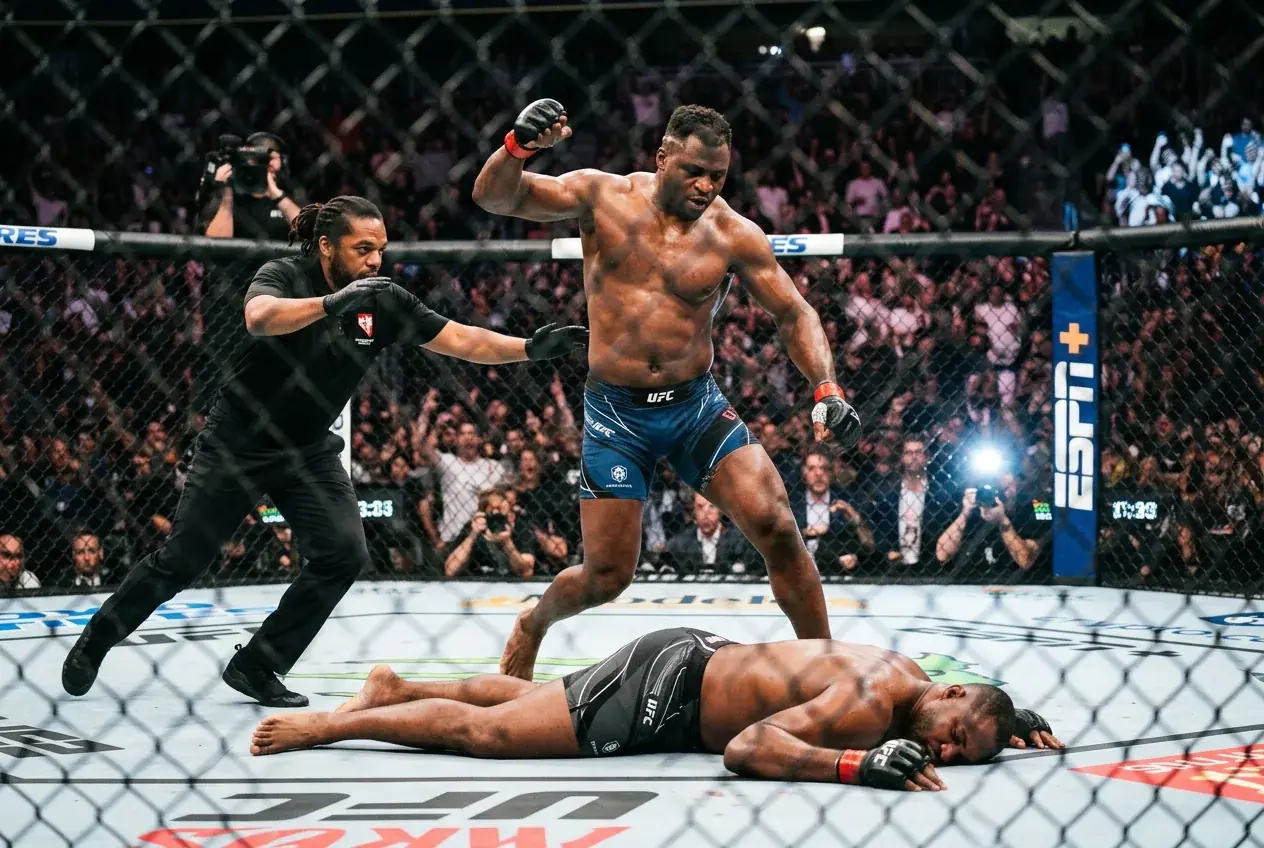
A four-ounce glove on a 230-pound athlete generates a different kind of force than the same glove on a 155-pound fighter. The physics is not subtle. Heavyweight punches transfer enough energy through the skull to disrupt brain function on contact, and even a glancing shot can put a fighter on the canvas. Lightweights take similar shots and walk through them. Heavyweights do not.
The second factor is conditioning. UFC heavyweights are not built like marathon runners. Carrying 240 pounds of muscle through a three-round fight at altitude burns through gas tanks fast, and the late-round finishing rate increases sharply because tired heavyweights stop defending properly. If a bout reaches the third round, the underdog’s chance of catching the favourite with a fatigued counter rises significantly.
The third factor is technical. Heavyweight grappling is harder to execute than at lighter weights because everything is heavier – takedowns drain energy faster, submissions require more leverage, and most heavyweight fighters lean on striking as the path of least resistance. The submission rate sits below 10 percent for that reason, which means the KO bet captures most of the finish action.
Pricing the Favourite-by-KO Bet
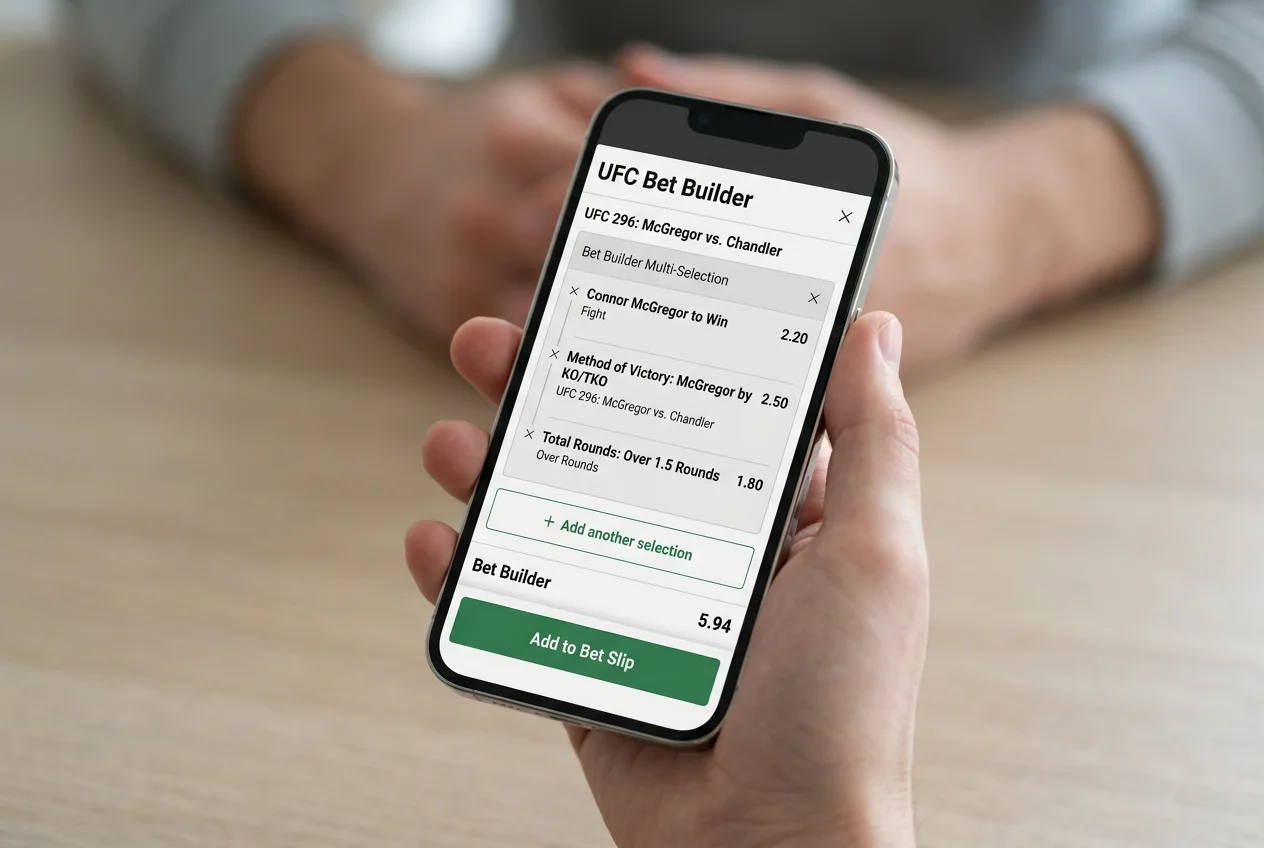
The simplest heavyweight bet is method-of-victory on the favourite. Take the moneyline price, work out the implied probability, multiply by the divisional KO rate, and compare to the quoted KO price.
Example. Favourite at decimal 1.70 on the moneyline implies 58.8 percent raw, or about 56 percent after devigging a typical 5 percent overround. Heavyweight KO rate is 65 percent overall, but the favourite tends to own a slightly higher share of the finishes – call it 70 percent of all finishes go the favourite’s way at the elite end of the division. So favourite-by-KO probability is 56 percent times 65 percent times 70 percent – but that double-counts, so the cleaner calculation is favourite probability multiplied by the chance the fight ends in KO at all, divided across who finishes whom.
The cleaner shortcut: take the favourite’s no-vig moneyline probability (56 percent), multiply by 0.7 to estimate the share of finishes that go their way times the KO rate (0.65 multiplied by 0.7 = 0.455 – call it 45.5 percent of the moneyline win-share). So favourite-by-KO probability is roughly 56 multiplied by 0.7, or 39.2 percent. Fair decimal is 2.55. If the book quotes the favourite-by-KO at 2.40 or shorter, the bet is worse than fair. At 2.70 or longer, you have positive expected value.
Early Round KO Markets
The under 1.5 rounds market is the bet I most often see UK punters miss. At lightweight, under 1.5 rounds is a longshot – fights regularly go the distance, and the implied probability is somewhere around 30 percent. At heavyweight, the same line trades closer to 50 percent. The over 1.5 rounds bet, often available around decimal 1.90 to 2.00, is the contrarian play when you expect a slow tactical heavyweight bout.
The favourite-by-KO-in-round-1 line is the high-variance play. Top heavyweights with one-shot finishing power – the kind who routinely end fights inside three minutes – carry round-1 KO probabilities in the 25 to 35 percent range. The market price tends to overshoot, settling around decimal 3.50 to 4.00, which implies 25 to 28 percent. For an elite finisher against a defensively suspect underdog, the bet is often live. For a more cagey match-up, it is dead money – the round-1 KO requires the kind of immediate pressure neither fighter wants to absorb against an opponent who can return fire.
When the Favourite-by-KO Line Stops Paying
The bet falls apart when the favourite is too short. A heavyweight champion at decimal 1.25 on the moneyline carries an 80 percent no-vig win probability. Favourite-by-KO implied probability is 80 times 0.7, or 56 percent – fair decimal 1.79. If the book quotes 2.00 you have edge. If they quote 1.65 you have negative expected value despite the high finish rate, because the market has already absorbed the divisional KO premium into the favourite’s moneyline.
Weigh these dynamic finish rates when betting on five-round championship main events.
The other situation to fade: heavyweight bouts between two grapplers. When both fighters have wrestling pedigrees and decision-heavy records, the KO rate for that specific match-up can drop below 50 percent even though the divisional baseline is 65. Trading desks sometimes lag in adjusting for these styles, but most UK books catch up by fight week. Always check whether the under 1.5 rounds line is unusually long – if it is, the desk is signalling a slower fight than the division norm.
Should I always back the favourite by KO at heavyweight?
Not automatically. The bet is profitable when the favourite-by-KO quote pays better than 70 percent of the moneyline implied probability translated to a finish-share. Above 1.65 decimal on the moneyline, the favourite-by-KO bet often beats the straight win. Below 1.40, the KO bet usually does not – the divisional finish premium has been priced into the moneyline already.
What is the round-1 KO probability for a top-five heavyweight?
It varies by fighter style and matchup, but elite heavyweight finishers carry round-1 KO probabilities in the 25 to 35 percent range against typical UFC opposition. The market tends to price these around decimal 3.50 to 4.00, which implies 25 to 28 percent – leaving narrow positive value on the highest finishers against defensively limited opponents.
Created by the ”Where can i bet on ufc” editorial team.