
Crypto Betting on UFC: Regulatory Concerns & Risks
 Available in US
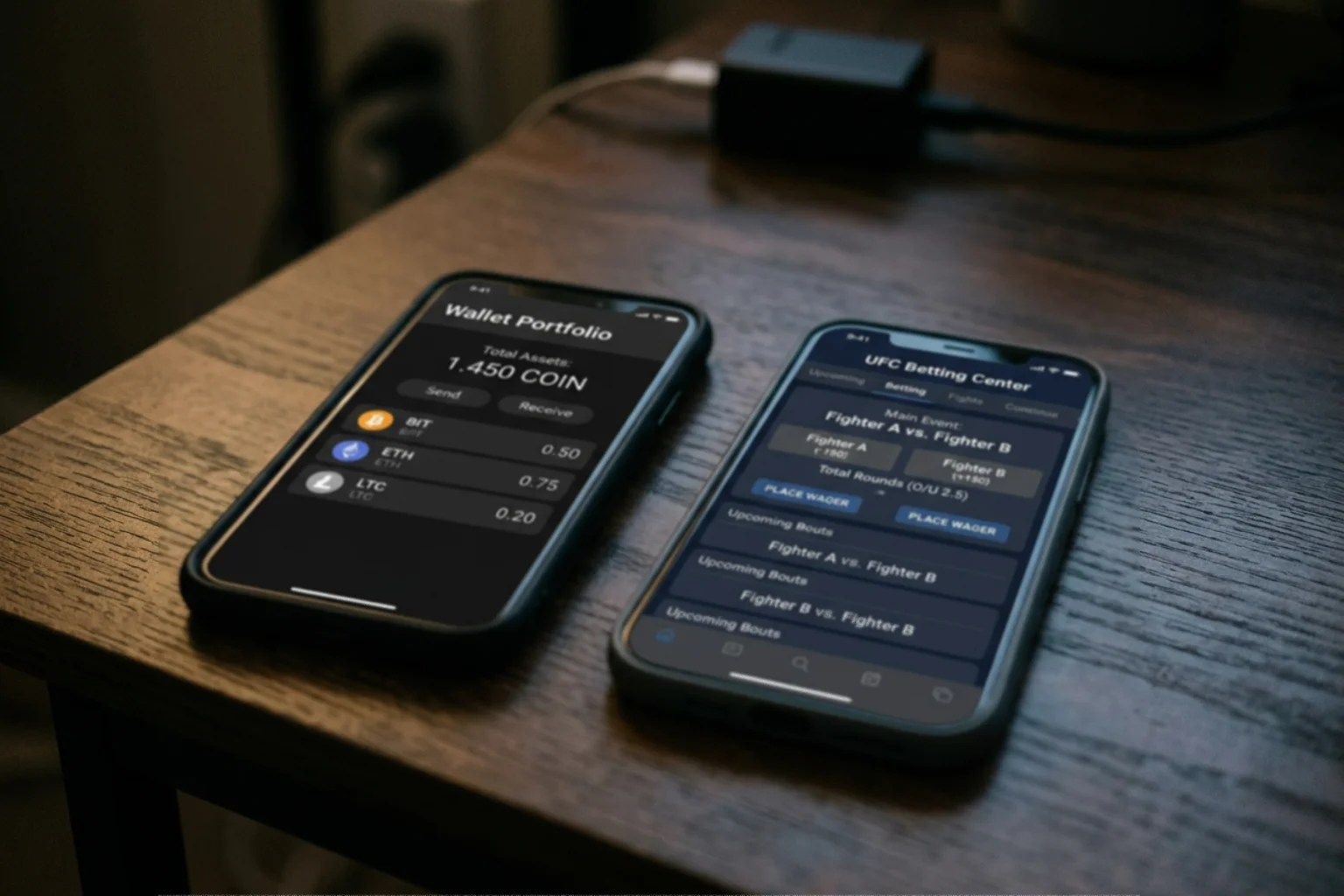
Andrew Rhodes spoke at the IAGR conference in November 2025 about cryptocurrency in gambling and his framing has stuck with me ever since. The UKGC Chief Executive said, “What I thought was a five-year-away problem, perhaps a year or two ago, I think is now an 18-month to two-year challenge.” The acceleration is real, the regulatory response is still catching up, and UFC bettors who lean into crypto-funded sportsbooks are placing themselves on a different side of the regulatory landscape than they realise. The wider context of unlicensed UFC sportsbooks and how they target UK customers sits in the unlicensed sites guide; this piece focuses on the cryptocurrency dimension specifically.
Crypto-funded UFC betting is structurally different from credit-card-banned, e-wallet-friendly UK regulated betting. The mechanics, the consumer protection regime, the tax position, and the risk profile are all unlike the standard UK experience. Punters who treat crypto as just another payment method for the same product are missing the substantive shift in the product itself.
Bet safely by checking out our reviews on the homepage.
Crypto and UK Licensing Status
No UKGC-licensed sportsbook accepts cryptocurrency for UFC betting. The Gambling Commission has not formally banned cryptocurrency in regulated gambling, but the licensing conditions around source-of-funds verification and anti-money-laundering compliance are difficult to satisfy when the funding method is cryptocurrency. UK operators have collectively chosen not to support crypto deposits as a result.
The regulatory effect is that any sportsbook offering cryptocurrency UFC deposits to UK customers is operating outside the UKGC framework. The site may claim a licence from a different jurisdiction – Curacao, Costa Rica, the Isle of Man under non-UK frameworks – but those licences do not authorise UK customer activity and provide no UK consumer protection.
The branding on crypto-friendly UFC sites often emphasises “decentralisation”, “no KYC”, “instant payouts”, and similar marketing language designed to appeal to crypto-native users. These are the features the unlicensed sector has chosen to differentiate on because UKGC-licensed competitors cannot offer them – and the reasons UK regulators do not want them offered to UK customers are structural rather than arbitrary.
Why Regulators Flag Crypto MMA Markets
Three reasons. First, source-of-funds opacity. The point of regulated gambling is that the regulator can trace where the money came from and where it goes. Cryptocurrency, by design, makes that tracing harder. A UFC bettor depositing through a stablecoin from a wallet they own may have clean funds, but the operator cannot verify that with the same confidence they can verify a debit card transaction.
Second, the integrity overlap. The Dulgarian-Del Valle case and the UFC 324 cancellation both involved suspect betting activity that the integrity monitoring services flagged. Crypto-funded sportsbooks are structurally less likely to share betting data with the same monitoring services that regulated UK books participate in. The integrity infrastructure that protects UFC betting markets does not extend in the same way to the crypto-sportsbook segment.
Third, problem gambling exposure. The frictionless deposits, the no-KYC accounts, and the absence of UK affordability checks mean that punters at risk of gambling harm can lose substantial sums on crypto-funded UFC betting without the warning signs that UK regulation is designed to surface. The £150 net-loss affordability threshold that applies to UKGC-licensed operators has no equivalent at crypto sportsbooks.
Volatility as a Hidden Stake Risk
UFC bettors who fund their stakes with cryptocurrency take on a price-volatility exposure that does not exist at sterling-funded UKGC-licensed operators. The volatility runs in two directions and both are problematic.
If the cryptocurrency you deposited appreciates between deposit and withdrawal, your sterling-equivalent winnings are higher than the betting performance would suggest. If it depreciates, your winnings are lower. A successful UFC betting weekend can be wiped out by a crypto price decline that has nothing to do with your betting decisions. The total return on a 30-day period of UFC betting at a crypto sportsbook is the betting return multiplied by the crypto price change – a compounded exposure that punters often forget about until the second variable moves against them.
The volatility also affects mid-fight cash out decisions. If the cash out offer is denominated in cryptocurrency, the sterling-equivalent value of accepting the offer depends on the current crypto price. A bettor who accepts a cash out at a moment of crypto price weakness may be locking in losses denominated in sterling that they would not have locked in if denominated in crypto. The decision is materially different when the unit of account is itself moving.
AML Traceability and the Travel Rule
Anti-money-laundering regulations applicable to cryptocurrency exchanges have tightened across multiple jurisdictions since 2023. The Financial Action Task Force “Travel Rule” requires cryptocurrency service providers to share customer identifying information for transactions above certain thresholds, similar to the requirements that apply to traditional banks.
For UK UFC bettors using crypto sportsbooks, the practical effect is that the deposits from a regulated UK crypto exchange to an offshore crypto sportsbook may be flagged at the exchange level. The exchange may refuse the transaction, freeze the account, or report the activity to UK authorities. The bettor may not learn about the issue until they attempt to withdraw winnings back to the exchange and the on-ramp is closed.
The taxation position is also worth noting. UK tax law treats gambling winnings as untaxed for UK residents on regulated UK gambling. Cryptocurrency disposals are taxed as capital gains. A UK bettor who deposits cryptocurrency, wins UFC bets, withdraws cryptocurrency at a higher sterling-equivalent value, and converts back to sterling has potentially triggered a capital gains event on the appreciation of the crypto position. The gambling-tax exemption does not cleanly cover the structure, and the tax position is more complicated than the equivalent UK regulated betting flow.
Safer Alternatives for UK Punters
For UK UFC bettors who value features that crypto sportsbooks emphasise – speed, privacy, instant deposits – the regulated alternatives have caught up substantially. Apple Pay and Google Pay offer instant deposits at UKGC-licensed operators. E-wallets like Skrill and Neteller provide near-instant withdrawals. Open banking is an emerging route for instant bank-to-sportsbook transfers without card-network intermediaries.
Understand why playing with unregulated currencies exposes you to the risks behind unlicensed offshore betting sites.
The privacy concerns are partially addressable. UKGC-licensed operators are required to perform KYC, but the documentation is held securely and not shared between operators by default. Punters concerned about the visibility of their gambling activity can use prepaid e-wallet accounts that act as a buffer between the bank and the sportsbook, although the buffer does not eliminate the KYC requirement at the sportsbook itself.
The honest answer is that any betting venue that promises full anonymity for stakes meaningful enough to matter is operating outside the regulatory framework that protects bettors. The trade-off between anonymity and consumer protection is structural, and the cost of choosing anonymity is the loss of the regulatory machinery that prevents disputes from becoming unsolvable problems.
Are any UKGC-licensed bookmakers taking UFC bets in Bitcoin?
No. The UKGC has not formally banned cryptocurrency in regulated gambling, but the licensing conditions around source-of-funds verification and AML compliance are difficult to satisfy with crypto. UK operators have collectively chosen not to support cryptocurrency deposits for UFC betting or any other product. Any sportsbook accepting Bitcoin deposits from UK customers is operating outside the UKGC framework.
Can I be taxed on UFC crypto winnings in the UK?
The position is more complicated than for regulated UK gambling. UK tax law treats UK gambling winnings as untaxed for residents, but cryptocurrency disposals are taxed as capital gains. A bettor who deposits crypto, wins UFC bets, and withdraws crypto at a higher sterling-equivalent value has potentially triggered a capital gains event on the appreciation of the crypto position. HMRC guidance treats crypto disposals as taxable events separately from the gambling-tax exemption, and the interaction between the two regimes is best resolved with a tax professional.
Published by the Where can i bet on ufc team.