
Voided UFC Bouts and Bet Settlement on UK Sportsbooks
 Available in US
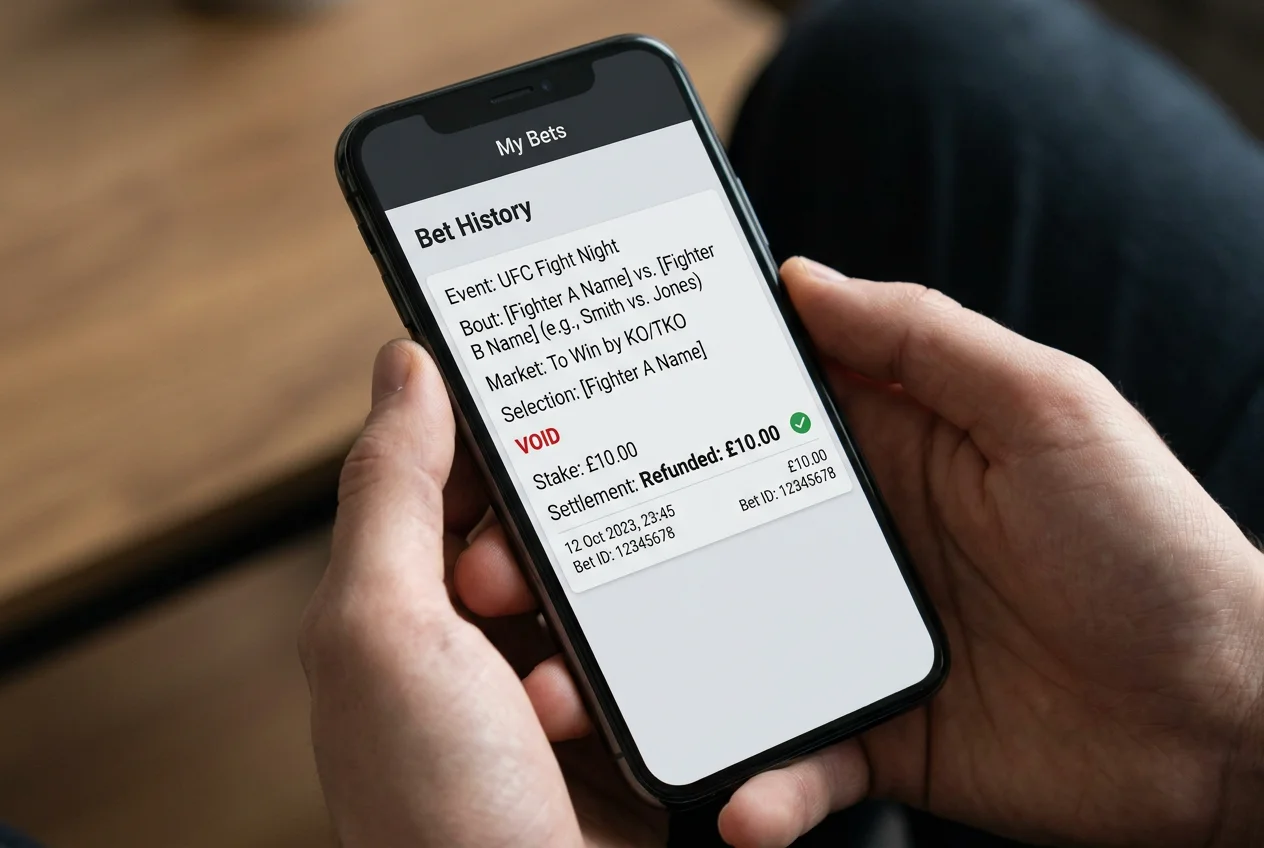
I once had a six-leg UFC acca where two of the legs voided across the same fight week – one bout cancelled at the weigh-in for a missed weight that the underdog refused to accept, the other voided when a fighter pulled out the day of the card with a stomach bug. The acca survived as a four-leg multiple and actually paid out, but the experience taught me that the settlement rules around voided UFC bouts are more variable than UK punters generally assume. Different operators handle the same scenario differently, and the difference can move a winning bet into the loss column or vice versa.
UFC bouts void at a higher rate than most other major sports because of the inherent volatility of fight scheduling. Weight cuts go wrong, injuries appear in the final 48 hours, integrity flags pull bouts at the last minute. The UFC 324 cancellation in January 2026 was the most public recent example, but the bouts that void quietly across the calendar are more numerous than the headline cases.
Know how cancellation rules protect your stake on our main website.
Reasons a UFC Bout Is Voided
Five categories cover most UFC bout voids. First, a fighter fails to make weight and the opponent refuses the bout – the matchup is cancelled and all bets are voided. Second, a fighter withdraws because of illness or injury in the final days and no replacement is found. Third, a fighter withdraws and a late replacement is found, with the substitute potentially changing the matchup enough that bets may or may not stand depending on the operator. Fourth, the bout is declared a no-contest because of an accidental foul early in the fight or a positive drug test after the fact. Fifth, an integrity flag pulls the bout pre-emptively, as happened at UFC 324.
The cancellation reason matters because settlement rules sometimes differ between cancellations and no-contests. Cancellations void all bets unconditionally. No-contests typically void all bets but a small number of operators settle particular markets – for example, over/under rounds – based on what had already happened in the bout before the no-contest was declared.
The frequency of each cause varies. Missed weight is the most common trigger across the UFC calendar, accounting for several voided bouts per year. Late injury withdrawals run a close second. No-contests are rarer, perhaps two or three per year across the UFC calendar. Integrity-driven cancellations are now becoming visible – the UFC 324 case was the first clear public example, but the underlying machinery has the potential to produce more.
Missed Weight and Catchweight Bouts
Missed weight is the trickiest scenario because the bout often still happens – but at a different weight than originally scheduled. The fighter who missed weight typically agrees to forfeit a percentage of their purse to the opponent and the bout proceeds as a catchweight contest above the original division’s limit.
Most UK operators treat a catchweight bout as a different fight than the originally-scheduled bout. Bets placed on the original bout – at the original weight – are voided and stakes refunded. Some operators stand the bet if the matchup is otherwise unchanged, on the grounds that the contest between the same two fighters is what the bet was on. The policy varies by operator and is published in the settlement rules.
For acca legs, the catchweight resolution typically voids the leg and the acca settles on the remaining legs at adjusted combined odds. For bet builders, the void of one leg usually voids the entire builder, though some operators recalculate the builder price on the remaining legs.
The bettor’s interest is in knowing the operator’s policy before placing the bet. Operators with stricter “any change to the bout voids the bet” policies offer cleaner settlement but more frequent voids. Operators with looser “same fighters, similar weight” policies stand more bets but produce occasional disputes about whether the bout was sufficiently similar to the original.
No-Contests and Overturned Decisions
A no-contest is declared when an accidental foul ends a bout before three rounds have been completed in a three-round contest, or before three rounds of a five-round contest. The most common cause is an accidental eye poke or an unintentional groin strike that renders one fighter unable to continue. The bout result is not a win for either fighter – the contest is treated as if it never happened.
UK operators void all bets on a no-contest at most books. The exception is operators who settle individual markets that had already resolved before the no-contest – for example, an over 0.5 rounds bet might pay out as a winner because the round was completed before the foul. The policy is operator-specific and worth checking.
Overturned decisions are different. A bout result is sometimes overturned weeks after the event when a positive drug test result is published. The official record reverts to a no-contest. UK operators generally do not retroactively void bets that have already been settled – the bet pays out based on the original result, and the subsequent overturning of the decision does not change the settlement. Some operators have offered goodwill resolutions in particularly clear-cut cases, but the standard rule is that settled bets are final.
Settlement on Singles Versus Multiples
Single bets on voided bouts are the cleanest case. The stake is refunded as cash, the bet is removed from the bettor’s history (or recorded as a void), and no further action is needed.
Multiples are more complex. The standard rule across UK operators is that the voided leg is removed from the accumulator and the remaining legs continue with adjusted combined odds. A five-fold acca with one voided leg becomes a four-fold at the product of the four remaining legs’ odds. The bet still settles on whether the remaining legs all land.
Bet builders are the trickiest. Most operators void the entire builder if any leg of the same-bout construction is voided, because the legs are interdependent. A smaller number of operators recalculate the remaining legs at adjusted prices. Always check the bet builder void policy on the specific operator before constructing a builder that includes a bout with elevated void risk – prelim bouts and weight-cut-prone fighters carry that risk.
The wider context of acca insurance and how it interacts with voided bouts sits in the UFC acca insurance walkthrough. Insurance on accumulators with voided legs has its own set of edge cases that bettors often discover only when the void happens.
Bookmaker Rules Where They Diverge
Three areas of divergence between UK operators are worth knowing. First, the catchweight rule – some operators void any bout where the weight changes, others stand the bet if the matchup is otherwise unchanged. Second, the same-day-replacement rule – if a fighter withdraws and a same-day replacement is found, some operators void all bets and re-list the new bout with new prices, while others stand the original bet on the new matchup if the substitute is within a similar skill tier.
Understand how voiding rules affect the odds by reviewing decimal and fractional price structures.
Third, the no-contest exception – most operators void all markets in a no-contest, but a few settle individual markets that had already resolved. The over 0.5 rounds market, the first-blood markets, and any in-play singles that had already settled may pay out at certain operators even when the overall bout result is voided.
The practical implication is that comparing settlement rules across operators is part of competent UFC betting. Punters who use multiple UK sportsbooks should check each operator’s published settlement rules for combat sports specifically – the rules vary enough that a bet on the same bout at two different operators can produce different outcomes when the bout voids.
If a bout becomes a catchweight, do existing UFC bets stand?
It depends on the operator. Most UK books void bets on the original bout and refund stakes, on the basis that a catchweight contest is a materially different bout. A minority of operators stand the bet if the same two fighters meet, on the basis that the matchup is what the bet was on. The specific rule is in the operator’s published settlement policy and is worth checking before placing bets on weight-cut-prone fighters.
What happens to my UFC bet if a positive drug test overturns the result?
Settled bets are typically final. UK operators generally do not retroactively void bets that have already paid out, even when the bout result is later overturned to a no-contest because of a positive drug test. Some operators have offered goodwill resolutions in particularly clear cases, but the standard rule is that the original settlement stands. The official record may revert to a no-contest, but the betting outcome does not change.
Written by the editors at Where can i bet on ufc.